eC2: PPP FRAMEWORK FOR PRIVATE SECTOR PARTICIPATION IN THE ROAD SECTOR

Deadline: 02-Apr-2017 at 11:59:59 PM (Eastern Time – Washington D.C.)PPPs

This activity is to support the Government of Senegal to conduct the preliminary assessment of the potential for PPP (i) in the urban transport in the Greater Dakar Area and (ii) in the road sector throughout the country through the rapid assessment of the characteristics of the urban transport sector and the national road networks, existing legal, institutional and administrative framework, current urban transport and road management systems, travel demands, traffic volumes, vehicle fleets, expected traffic growth, etc.

Continue reading

eC2:Private/Public Engagement Platform

Deadline: 22-Mar-2017 at 11:59:59 PM (Eastern Time – Washington D.C.) PPPs

This Platform will enable policy makers to get quick access to up-to-date information on firms, while keeping their individual identities confidential. On the other hand, this Platform will make available all the available analysis directly based on the data collected on this Platform as well as other materials and a personalized benchmark to respondent firms. Open collaboration. This platform will feature an interactive interface where the problem setting and the identification of solutions will be discussed. It will also support and facilitate the dissemination of the impacts that result from proposed solutions.

Continue reading

Newsletter March 2017: Doing Business!

On March 7th the FIRST edition of  2017 of NL4WorldBank newsletter  was published.Doing Business

In this edition the focus is on the success of Deltares, a long term partner of the World Bank.
You can also find a new World Bank presentation on the Corporate Procurement, the updated version of the handleiding “zaken doen met de Wereldbank Groep” and the 2017 World Development Report focused on Goverance and the Law. We have also created a complaints guide to answer any and all questions you may have. Last but not least we have our top blog posts, interesting tenders and a couple of important upcoming events! 
Those subscribed to the newsletter automatically received it in their inbox. If you did not receive the newsletter, you will find it here.
If you would like to automatically receive the next newsletter when it is published, please subscribe here.

Women in Agriculture: The Agents of Change for the Global Food System

Women are the backbone of the rural economy, especially in developing countries. They scale-750x750.jpgmake up almost half of the world’s farmers, and over the last few decades, they have broadened their involvement in agriculture. The number of female-headed households has also increased as more men have migrated to cities. As the primary caregivers to families and communities, women provide food and nutrition; they are the human link between the farm and the table.
Continue reading

eC2: Resilience Assessment: Batoka Gorge Hydroelectric Scheme in the Zambezi River Basin

Deadline:  20-Mar-2017 at 11:59:59 PM (Eastern Time – Washington D.C.)light-bulb-297489_640

A detailed assessment of the effects of climate change and other performance risks such as upstream land-use changes and water abstractions, energy price fluctuations and development scenarios on the daily expected inflow for the Batoka Gorge HES is required to ensure robustness and identify risk mitigation measures. To this end, the consultancy will include: (i) an analysis that uses decision scaling techniques to examine if the technical design of the Batoka Gorge HES is robust to a range of expected changes due to climate change and other major socio-economic pressures. (ii) an investigation of the role of the Barotse Wetlands in attenuating the basins hydrological variability, including flows reaching the Batoka Gorge site; (iii) an examination of hydrological boundary conditions or trigger points for financial products that could be used to off-set hydrological risk; and (iv) related capacity building and training workshops. Continue reading

eC2:Consultancy Assignment on Developing a Conceptual Design for the Establishment of a National and Regional Crisis Management Centers

Deadline:  27-Mar-2017 at 11:59:59 PM (Eastern Time – Washington D.C.)

The overall purpose of this Assignment is to develop a conceptual design for the establishment of a National Crisis Management Center (NCMC), and a standardized type for Regional (Republic of Karakalpakstan, provinces and Tashkent city) Crisis Management Centers (RCMCs) with streamlined communications and information systems for crisis management with improved functions and capabilities

Continue reading

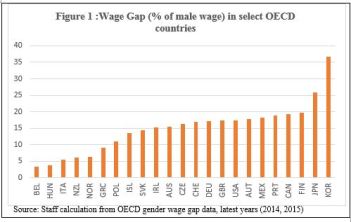
Women in the changing world of work: Not just more jobs but better jobs for women

This year’s International Women’s Day “Women in the Changing World of Work: Planet fig1-wages-iwd_blog50-50 by 2030” places great emphasis on equality and economic empowerment. When countries give women greater opportunities to particip

ate in the economy, the benefits extend far beyond individual girls and women but also to societies and economies as a whole. Addressing gender gaps in accessing good quality jobs is not just the right thing to do from a human rights perspective; it is also smart economics. A recent study shows that raising labor participation of women at par with men can increase GDP in the United States by 5 percent, in the UAE by 12 percent and in Egypt by 34 percent.

Continue reading

To Unlock Potential of Digital Age, Europe Must Go Beyond Internet Access, Says World Bank

BUCHAREST, March 7 2017− Countries in the European Union (EU) must enact policies indexdesigned to better help workers adapt to new jobs being created by the internet if they want to avoid increasing inequality and exclusion in the region, notes a new World Bank Report. According to Reaping Digital Dividends: Leveraging the Internet for Development in Europe and Central Asia, launched in Bucharest today, affordable and nearly universal access to the internet has not been enough for countries in the EU to fully benefit from opportunities being created by digital technologies and more needs to be done to develop a policy environment that can better leverage this access by linking workers to digital jobs.

Continue reading

Building institutional capacity for rural sanitation: India’s Uttar Pradesh State

Uttar Pradesh (UP), India’s most populous state with about 200 million people, has up2historically not performed well on sanitation. According to census figures from 2001 and 2011, the proportion of rural UP dwellers with a toilet increased slightly during the first decade of this century. However, the population grew as well, meaning that, overall, 13 million more people were defecating in the open in 2011.

Factors which have held back UP’s progress on sanitation include poverty, absence of a robust sanitation strategy, and lack of focus and determination from decision-makers.

Continue reading

eC2:Assessment of Fertilizer Regulatory and Value Chain Environment in Myanmar

Deadline:  22-Mar-2017 at 11:59:59 PM (Eastern Time – Washington D.C.)land-administration-page

WBG is seeking to hire a Firm to conduct a regulatory and value chain assessment of the fertilizers produced, imported and sold to farmers in Myanmar, which must include, but is not limited to: (a) assessment of the overall regulatory framework (registration, licensing, etc.); (b) sector profile of producers, importers, distributors, retailers and dealers; (c) product flow (to end users) through the value chain, at formal and informal entry points, to determine where the potential risks are regarding quality, manipulation and usage of fertilizer; and d) develop a capacity building program to fortify risk management systems (public and private sector) in fertilizer quality.
Continue reading