Every year, West Africa sends more than $3.5 billion abroad to buy rice — a staple food that millions of people across the region consume every day. Yet, this is a crop that grows and thrives in the region.
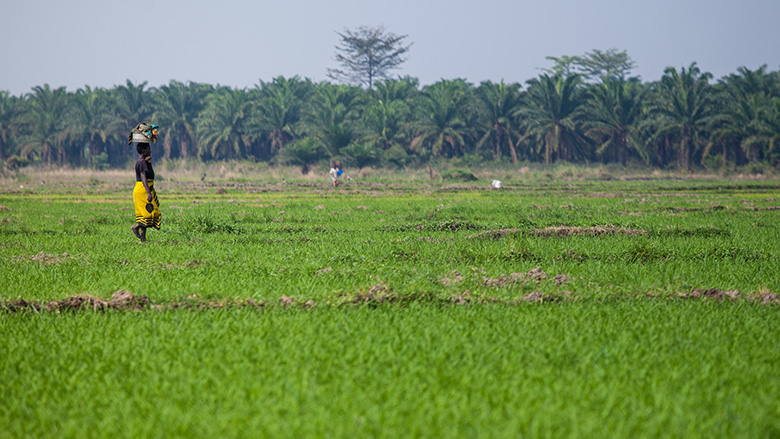

Every year, West Africa sends more than $3.5 billion abroad to buy rice — a staple food that millions of people across the region consume every day. Yet, this is a crop that grows and thrives in the region.
The latest Global Gas Flaring Tracker, an independent report of gas flaring worldwide, reveals that global gas flaring rose for the third consecutive year in 2025, reaching 167 billion cubic meters (bcm), the highest recorded level since 2019. The gas wastefully burned could have powered homes and industries, created jobs, reduced import bills, and extended electricity access and clean cooking fuels for communities that still lack it.

Published annually by the World Bank’s Global Flaring and Methane Reduction (GFMR) Partnership, in collaboration with the Payne Institute at the Colorado School of Mines, the report provides a comprehensive independent assessment of global gas flaring volumes, intensity, and trends.
Continue readingWARSAW, June 22, 2026—Artificial intelligence could increase Poland’s real GDP by between 1.3% and 12.1% by 2035, according to a new World Bank Group report. The scale of the gains will depend on how quickly firms invest, how rapidly workers adapt, and whether policies enable the transition.
Continue reading
WASHINGTON, June 18, 2026—The World Bank’s Board of Executive Directors today approved $1.5 billion in financing to support India’s structural reforms to boost private sector-led job creation and economic growth under the Boosting Job Creation in the Private Sector Development Policy Financing (DPF) Operation.
Continue readingWASHINGTON, D.C., June 15, 2026—The World Bank Group, through the International Finance Corporation (IFC), has closed its second securitization transaction under the Emerging Markets Securitization Program (EMSP), marking continued progress in mobilizing private capital to support private sector growth and build a scalable market for institutional investment in emerging markets.
Continue readingMission 300 is now delivering electricity access at nearly double the pace recorded at the initiative’s launch — proof that coordinated action can drive large-scale change
CAPE TOWN, June 16, 2026 — The World Bank Group and the African Development Bank Group announced today that Mission 300 has connected over 50 million people to electricity across 40 countries — a major milestone toward the initiative’s goal of reaching 300 million people by 2030.
Continue reading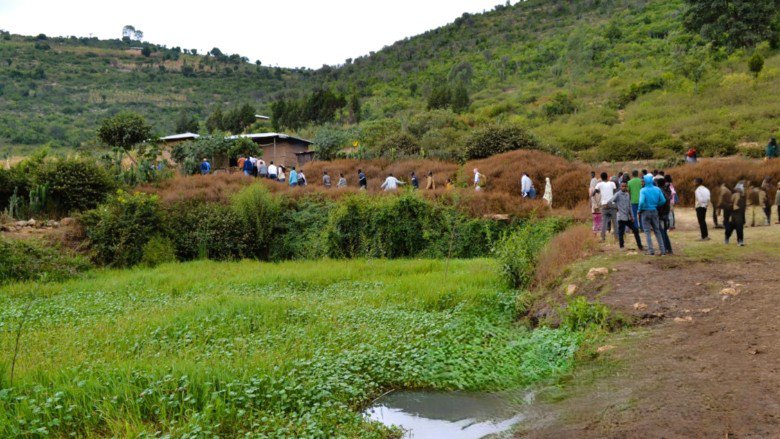
Global food commodity markets entered 2026 on a relatively stable footing, supported by ample grain and edible oil supplies. However, escalating conflict in the Middle East has disrupted that stability, introducing new volatility into food trade and input markets. The World Bank Group’s April 2026 Commodity Markets Outlook projects a 2.5 percent increase in the global food commodity price index this year, but risks are firmly tilted to the upside. The emergence of El Niño conditions, rising energy and fertilizer costs, growing biofuel demand, and potential trade restrictions could all push food prices significantly above current projections.

JUBA, June 9, 2026 — The World Bank Group, in partnership with the Government of the Republic of South Sudan, today launched the South Sudan Urbanization Review: Cities as Anchors of Recovery and Resilience, calling for urgent, coordinated action to harness rapid urbanization as a driver of stability, jobs, and inclusive growth.
Continue reading

You must be logged in to post a comment.