
 Pushpa drops her youngest son off at the day care centre at St. Theresa’s Church in Thimbirigasaya every day. The 37-year-old then heads to work as a maid. There are days when this routine becomes impossible. If her child is feverish, for instance, the day care won’t accept him because he may infect the other children.
Tag Archives: Bangladesh
Towards a cleaner Bangladesh: Safe water, sanitation, and hygiene for all
Community-Led Total Sanitation might be the greatest Bangladeshi export you’ve never heard of. In countries across Asia, Africa and  Latin America, a consensus has emerged that the best approach is Community-Led Total Sanitation, which is widely credited with changing people’s behavior around the world to no longer defecate in the open, which has greatly improved global health.
Bangladeshis can take plenty of pride in these far-away accomplishments. That’s because it is Northern Bangladesh – more specifically the Mosmoil village in Rajshahi district – that pioneered this approach seventeen years ago. Its success at home led to its widespread adoption abroad.
eC2:Sector Diagnostic in Bangladesh Industrial Sector for Energy Efficiency and Conservation
Deadline: 30-Sep-2017 at 11:59:59 PM (Eastern Time – Washington D.C.) 
This study shall address the issues on market barriers, technology barrier, financing barrier, policy barriers, etc. Characteristics of the study will examine to the influence towards investment, saving and expected gains for each sector, and successful adaption of the program. The study should recommend on the role of the IFC advisory services in near future for the sector and techno-commercial feasibility of the program.
World Bank Helps Bangladesh Improve Water and Sanitation Services in Chittagong
On August 6, 2017, The government of Bangladesh signed an additional $47.50 million  financing agreement with the World Bank to continue construction of new water infrastructure in Chittagong, and provide access to safe water to around 650,000 inhabitants in the city.
The additional financing to the Chittagong Water Supply Improvement and Sanitation Project will help the Chittagong Water Supply and Sewerage Authority (CWASA) to complete constructing the Modunaghat Water Treatment Plant and Patenga Booster Pumping Station, as well as to install 60 km of new water transmission pipeline and rehabilitate another 73 km pipeline from Kalurghat to the Patenga Booster Pumping Station.
Flooded rivers: taking a bird’s eye view
. Yet, they are also at particular risk from overflowing rivers. Globally, river floods affect more than 21 million people. By 2030, due to climate change, population growth, and rapid urbanization, this number could rise to 54 million.
How can we enjoy the benefits these locations bring, without putting ourselves at unnecessary danger from floods?
While it is impossible to fully eliminate flood risk, actions can be taken to minimize the impact.
A proactive river basin-wide approach to flood risk management may be one of the solutions.
Bangladesh: A STEP towards better Employability
To ensure better employment opportunities for the Bangladeshi labor force, in both local

and overseas job markets, skills development and vocational education has to be aligned with the market demand. The Skills and Training Enhancement Project (STEP) aims to strengthen public and private training institutions to improve the quality of skills training and employability of trainees, both at home and abroad, including those from disadvantaged socio-economic backgrounds.
Challenges
Bangladesh economy has been registering steady economic growth of around 6 percent over the past decade. As local and global economic shifts continue toward industry and services, demand for skilled manpower is expected to rise at home and abroad. A labor-surplus country, the Bangladesh government is increasingly focusing on workforce development through technical and vocational education training (TVET). This is a timely response as the country prepares to accommodate and capitalize on the ongoing demographic dividend. However, poor training quality, low employability and inadequate wages plague the TVET sector, requiring interventions for addressing these issues.
eC2: Lighting Asia – Bangladesh Consumer Education and Outreach Campaign Evaluation Audit
Deadline: 15-Mar-2017 at 11:59:59 PM (Eastern Time – Washington D.C.)
The objective of this assignment is to probe and develop in depth understanding of the impacts of the Surjobati campaign in creating knowledge, understanding and appreciation of quality verified off grid lighting products as a viable solution to the lighting needs of off-grid or semi off grid population of Bangladesh. Specific parameters that the impact assessment would be done on are a) Reach of the campaign and b) Effectiveness of the campaign. Continue reading
eC2: National Student Assessment, Bangladesh
Deadline: 26-Feb-2017 at 11:59:59 PM (Eastern Time – Washington D.C.)
The National Student Assessment (NSA) 2011, 2013 and NSA 2015 assessed the learning 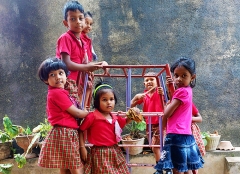 achievement of the aforementioned pupils relative to the learning outcomes prescribed in the primary curriculum. Other objectives were: to investigate differences in pupil achievement by key system, school and pupil factors {e.g., division, district, school type, locality (urban v. rural), and gender}; to examine the relationships between achievement and factors such as school size, class size, pupil-teacher ratio, attendance rate, teachers’ qualifications and training, training of school managers, and frequency of inspection; and to draw implications for improvements in teaching and learning through enhanced policy actions, planning and management, and teacher education. It is expected that relevant Government of Bangladesh (GoB) line agencies will utilize the findings and recommendations in order to inform educational planning of sub-components such as teacher professional development and curriculum reform.
Increasing Salinity in a Changing Climate Likely to Alter Sundarban’s Ecosystem
Story Highlights
- The salinity of river water and soil in Bangladesh’s low-lying southwest coastal region is increasing over time, and will aggravate further with sea-level rise in a changing climate.
- The increase in salinity will reduce the Sunderbans’ key species Sundri, the forest’s highest-value timber species, and increase saline-tolerant species Gewa, Baen and Goran.
- The progressive water salinization will change the availability of many freshwater fish species, thereby depriving the poor of their main source of protein, and adversely impacting the incomes of families. The poor populations that will lose freshwater fish species are about six times greater in number than those who will be gaining brackish fish species.
eC2:Scoping Study for Renewable Energy Opportunities in Bangladesh Textile Sector
Deadline: 26-Jan-2017 at 11:59:59 PM (Eastern Time – Washington D.C.)
Objectives of the assignment
To assess the regulatory environment for rooftop solar PV and PV Hybrid solutions for captive power in the textile industry in Bangladesh
To estimate the rooftop solar PV and PV Hybrid captive power generation potential of the textile industry
To estimate the total financing requirement of the textile industry for a certain percentage of rooftop solar PV uptake
To identify the leading PV solution providers and their business models
To identify the leading EPCs for captive power that are active in Bangladesh
Continue reading
 Netherlands for the World Bank
You must be logged in to post a comment.