eC2: Indonesia Agriculture Insurance Value Chain Mapping

Deadline: 24-Oct-2016 at 11:59:59 PM (Eastern Time – Washington D.C.)

The IFC Indonesia Agriculture Insurance project objective is to contribute to increased _DSC8598investments in agriculture and rural communities by introducing insurance solutions to reduce the risks faced by farmers and lenders/businesses working with farmers due to adverse weather events/risks related to climate change (drought/flood/hurricane, etc.).
IFC invites proposals from qualified consultants/firms to conduct Value Chain Mapping of Agriculture commodities in Indonesia, with the objective of identifying promising Agriculture (index) insurance opportunities at different points along the value chain of at least 3 to 4 Agriculture commodities for this project.

The mapping is to provide a clear picture on: 1) Key agriculture commodities to target; 2) Market size/potential – number of farmers & premium volume; and 3) Distribution partners (Agribusinesses, banks, farmers organizations).

Continue reading

eC2:Agriculture and Irrigation: Zimbabwe Climate Change Technical Assistance Program

Deadline: 10-Oct-2016 at 11:59:59 PM (Eastern Time – Washington D.C.)Wadis

The overall objective of this consultancy is to strengthen the capacity of the Government of Zimbabwe to integrate climate change considerations into the planning, design and implementation of development projects in the agriculture and irrigation sectors.
Continue reading

eC2:Mozambique Agricultural Aggregator Pilot

Deadline:  03-Oct-2016 at 11:59:59 PM (Eastern Time – Washington D.C.)index

This pilot will engage a program manager to (a) select around 8 existing agricultural aggregator schemes in Mozambique and support them with subsidies to incorporate around 4,800 additional out-growers (in total);and (b) design and implement a rigorous cost-benefit evaluation of the financial and economic sustainability of the schemes and of their impact on job creation and farmer incomes, over a 30 month period. The program manager will work in close cooperation with a supervisory committee of World Bank Group staff and technical experts, who will sign off on the choice of aggregators, the amount of incremental subsidy per new out-grower incorporated; and on the evaluation methodology.

Continue reading

When It Comes To Disaster Preparedness, Communities Know Best

STORY HIGHLIGHTSvn-communitybased-disasterrisk-780x439

  • In disaster-prone central Vietnam, community-based disaster risk management puts local villages and communities at the center of preparedness efforts.
  • The Government of Vietnam is spending $18.5 million on community preparedness training, drills and physical infrastructure construction chosen by communities across 100 communes in 10 provinces.
  • The training, infrastructure and public awareness raising efforts are increasing the resilience of local communities to disaster events such as floods, droughts and typhoons.

Continue reading

eC2: Crop Protection and Gender Study in East Java

Deadline: 29-Aug-2016 at 11:59:59 PM (Eastern Time – Washington D.C.)

IFC Indonesia is seeking to recruit an Short-Term Consultant (STC) to lead an Agro-input _DSC8598and Gender study in East Java.

The study will focus on the following areas:

  1. Existing gender roles, in particular with respect to farming and agro-input use;
  2. Existing perceptions on agro-inputs;
  3. Information on agro-inputs;
  4. Purchase decisions;
  5. Agro-input purchases;
  6. Use of agro-inputs.

Continue reading

The challenge to be climate smart with the world’s agriculture

Article published on http://www.worldbank.org on August 11, 2016.

Here’s something you may not be aware of: agriculture and changes in land use already contribute 25 percent of greenhouse gas emissions. It’s a statistic that matters in the face of two unrelenting challenges now facing the globe –how to turn the promises of last December’s historic Paris climate change agreement into reality and how to feed a growing global population.
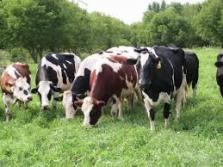
Already more than one billion people on the planet are now undernourished, and the world needs to produce at least 50 percent more food by 2050 to feed an estimated nine billion people. And we have to achieve that while delivering on the Paris agreement to keep the global temperature rise well below two degrees Celsius and to drive efforts to limit the temperature increase even further to 1.5 degrees Celsius above pre-industrial levels.

Continue reading

STHE IMPLEMENTATION OF AN MIS FOR THE AGRICULTURAL & AGRARIAN INSURANCE BOAR

Deadline: 15-Aug-2016 at 11:59:59 PM (Eastern Time – Washington D.C.)

indexObjective of the proposed assignment is to work as a Project Manager to drive the IT
improvements and MIS/IT system implementation at the AAIB. The IT improvements and MIS/IT system implementation are part of a larger project with the International Finance Corporation (IFC) and the AAIB to improve the national agriculture insurance scheme in Sri Lanka.

Continue reading

eC2: Enhancement of Agricultural Perishable Goods Logistics in Haiti Establishing Food logistics Centers

Deadline: 28-Jul-2016 at 11:59:59 PM (Eastern Time – WasAgrabusiness-Story-Bannerhington D.C.)

This component of the “Haiti DTIS implementation project” will produce a Feasibility Study for Collection and Treatment Centers or Logistic Platform suitable for perishables crops located in an agribusiness industrial park promoted by the Ministry of Commerce and Industry. This study will include the assessment of the financial, economic, security, engineering, and market demand aspects of the stages in the Logistic Platform (processing, storage and inspection), as well as the required supporting road infrastructure.
Continue reading

eConsultant2: improve cooperative business management capacities

Deadline: 18-Jul-2016 at 11:59:59 PM (Eastern Time – Washington D.C.)

IFC in Rwanda is looking for qualified service providers to design and implement a business management capacity building program for horticulture producer organizations in Rwanda. The program will initially cover approximately 20 producer organizations, mostly cooperatives. Please refer to the ToRs for more information.

Continue reading