
WASHINGTON, April 25, 2017 — The World Bank Group launched XL Africa, a five-month business acceleration program designed to support the 20 most promising digital start-ups from Sub-Saharan Africa. Start-ups will receive mentoring from global and local experts, learn through a tailor-made curriculum, increase their regional visibility, and get access to potential corporate partners and investors. With support from prominent African investment groups, XL Africa will help the 20 selected start-ups attract early stage capital between $250,000 and $1.5 million.
Tag Archives: Africa
Online: Saturday Highlighted! Spring Meeting Events.

 Follow the event on Twitter with #AfricaSOR
Date: Saturday, April 22nd, 2017
Time: 10 am – 11:30 am ET/ 14:00 – 15:30 GMT
Location: JB-1080, World Bank
Spotlight on Nutrition: Unlocking Human Potential and Economic Growth
Follow the event on Twitter with #InvestInNutrition
Date: Saturday, April 22nd, 2017
Time: 12:00 pm – 1:15 pm ET / 16:00 – 17:15 GMT
Location: MC Atrium, World Bank
Women, cities, and opportunity: Making the case for secure land rights
Lets talk development blog by Klaus Deininger 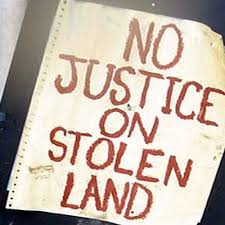
Land and property lie at the center of many of today’s pressing development challenges. Consider that at most 10% of land in rural Africa is reliably registered. At this week‘s annual Land and Poverty Conference here at the World Bank, we will hear how this vast gap in documentation of land gap blunts access to opportunities and key services for millions of the world’s poorest people, contributes to gender inequality, and undermines environmental sustainability.
In Nigeria, Fadama is Synonymous with a Decline in Poverty
INYI, March 14, 2017 – In many parts of Africa, a series of laudatory appellations called  praise songs are widely used to capture the essence of the person or object being praised. In the Inyi village community in Oduma, in Nigeria’s Enugu State, the Fadama project has earned its own praise song.
Inyi women gather in the village hall, dancing and chanting in unison: “Fadama – Ubiam eri mbombo ozo” orin English, “Fadama – poverty has run away, there is no more poverty.”
eC2: Preparation of a Kenya Electricity Sector Investment Prospectus for 2017-2020
Deadline: 16-Mar-2017 at 11:59:59 PM (Eastern Time – Washington D.C.)
The Ministry of Energy and Petroleum in Kenya is mandated to develop and promote  energy technologies in the country. The mission of the Ministry of Energy and Petroleum is to facilitate provision of clean, sustainable, affordable, competitive, reliable and secure energy services for national development while protecting the environment. The Ministry’s vision is to promote equitable access to quality energy services at least cost while protecting the environment.
The overall objective of this consultancy is to facilitate the development and publication of Kenya’s electricity sector investment plan for the period 2017-2020, to meet the stated goals and objectives on energy provision, as well as adhere to international best practice.
eC2: Assessment of Battery Energy Storage Applications in the West African Power Pool Utilities and Countries
Deadline: 23-Mar-2017 at 11:59:59 PM (Eastern Time – Washington D.C.)
The work under this project will be done through the three major tasks described below:
1. Feasibility study of energy storage for frequency support in WAPP power system
2. Assessment of energy storage applications in WAPP countries (on grid systems and off-grid mini grids, building/factory storage, etc.)
3. Financial assessment of incorporating energy storage for grid support
eC2: TECHNICAL ASSISTANCE TO INCREASE CLIMATE RESILIENCE OF KENYAS NATIONAL ROAD NETWORK
Deadline: 06-Mar-2017 at 11:59:59 PM (Eastern Time – Washington D.C.)
The activity aims to enhance climate resilience of the Kenya’s national road network through:
- Conducting vulnerability assessment of priority national road corridors;
- Development of Guidelines for the Climate Change Vulnerability Assessment;
- Development of Guidelines for Climate Resilience Audit of road engineering designs;
- Pilot climate resilience audit of a road engineering design.
The duration of the assignment is about 6 months.
Invigorating Africa’s climate resilient ocean economies
 We are all too aware that difficult times lie ahead for coastal communities
We are all too aware that difficult times lie ahead for coastal communitiesCoastal erosion, especially in West Africa, has already displaced communities, with economic losses costing about 2.3% of GDP in Togo alone. In the past 60 years, sea temperatures in the Western Indian Ocean increased 0.6 C, triggering mass coral bleaching and deadly climate-related disasters across the region. The economic cost of the 1998 coral bleaching event to Zanzibar and Mombasa was in the tens of millions of dollars. The natural cost is still unknown.
How can we help smallholder farmers seize opportunities in Africa?

Agriculture is at the heart of addressing poverty in Africa. I was reminded of that during my recent trip to Addis Ababa, Ethiopia, where different stakeholders had gathered to explore how to transform smallholder agriculture for growth. The recent End Poverty Day activities in Africa, which focused largely on agriculture, was also a reminder of how central the sector is to ending poverty and boosting prosperity. Indeed, the different stakeholders I work with on a daily basis—which includes African governments, development partners, civil societies, the private sector and farmers—all agree: Agriculture is important to the future of Africa.
eC2: Impact Evaluation WASH and Cash Transfer in Niger
Deadline: 04-Jan-2017 at 11:59:59 PM (Eastern Time – Washington D.C.)
The World Bank is seeking a firm to prepare and undertake baseline data collection for a long-term impact evaluation survey in Niger. The survey is a large-scale and complex survey. The sample will include approximately 3,500 households. The instruments will include a household survey that will be provided by the World Bank team and will include anthropometrics measurement of children under 5 years of age and water quality testing.
Baseline data is expected to be collected in approximately 150 villages in Dosso, Maradi, Zinder, Tillaberi and Tahoua. The data collection is expected to take place in late February/ early March 2017.
 Netherlands for the World Bank
You must be logged in to post a comment.