
 Deadline: 11-Jun-2018 at 11:59:59 PM (Eastern Time – Washington D.C.)
The overall objective of this work, on one hand, is to reinforce the knowledge on hazards, vulnerabilities and risks in Central Africa and to provide a monitoring tool on a regional scale and on the other hand to identify the cross-border areas at risks, with specific attention to flood risk. The specific objectives of this assignment are the following: Identification and mapping of hazards and major risks covering the regional extentat a national scale that is relevant at least up to administrative level 2 in the ECCAS region. The creation of a catalog of the reference cartographic data that includes raw data and metadata (small scale). The creation of cartographic reference data related to Disaster Risks and Water » (medium scale). Creation and launch of an operational geo-portal ” Disaster Risks “. Development of a paper and interactive Regional Atlas of Hazards and Major Risks. Assessment of the vulnerabilities of transboundary areas identified at risk.
 The East Asia and Pacific region is vital to global pandemic preparedness. The region has been the epicenter of emerging and re-emerging infectious diseases. China and Southeast Asia alone accounted for approximately 90 percent of SARS cases and two-thirds of the human cases of avian influenza in the world. These outbreaks are driven by several socio-economic, demographic, environmental, and ecological factors, including close contact between humans and animals, encroachment with wildlife, high population density, rapid urbanization, high growth rates, and climate change.
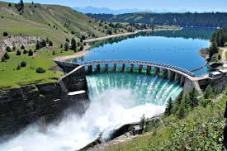
 In many parts of the world, the sharing economy is ever-present for individuals, allowing them to use personal assets—for example, houses and cars—to their fullest potential. If you plan to be away for a period of time, why not rent your space for a few extra bucks?
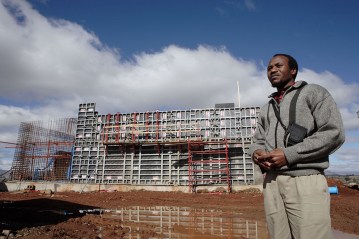 It is broadly understood that public-private partnerships (PPP) are a procurement tool that encompass design, financing, construction and long-term operation of a public infrastructure by the private sector. They can be cost-effective thanks to adequate risk transfer and performance criteria, and help bridge Africa’s large infrastructure gap in many sectors.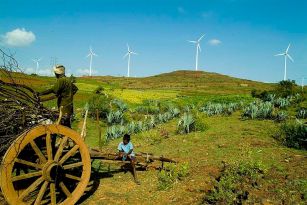
 Netherlands for the World Bank
You must be logged in to post a comment.