
A lively read for companies, investors, governments, and other key players interested in 20160301_OffGridSolarTrendsReport the opportunities and challenges presented by the dynamic off-grid solar market. The report tracks the groundbreaking technological advances and innovative business models which have emerged to transform the lives ofmillions through affordable modern solar energy services.
Category Archives: WBG News & Reports
What’s Food Loss and Waste Got to Do with Sustainable Development? A Lot, Actually.
The very relevant topic of “Food Loss and Waste” rehashed below. – September 23, 2015 , World Resources Institue (WRI).
More than 150 world leaders will meet in New York this weekend to adopt the Sustainable Development Goals (SDGs), a set of global targets intended to end extreme poverty, fight inequality and injustice, and curb climate change. The SDGs will help set the global development agenda for the next 15 years, focusing attention on the opportunities that will allow for more a sustainable future.
One such priority included is reducing global food waste. Specifically, SDG Target 12.3 will call for the world to cut per capita food waste in half by 2030. If met, this ambitious target will not only boost food security, but also improve livelihoods, reduce greenhouse gas emissions and save land and water. In short, curbing food waste is both a goal in itself and a means of achieving other SDGs.
Upcoming events
We are almost half way through 2016 so to better prepare you for doing business with the World Bank we have updated the list of the ”most relevant” events for the Dutch private sector below.
We understand that it may be difficult to attend the events in person but not to worry the majority of the events will be broadcast by live stream.
Please email us if you plan on attending and with any questions you may have.
World Bank Raises 2016 Oil Price Forecast, Revises Down Agriculture Price Projections
Posted 26 April, 2016
WASHINGTON, April 26, 2016— Amid improving market sentiment and a weakening dollar, the World Bank is raising its 2016 forecast for crude oil prices to $41 per barrel from $37 per barrel in its latest Commodity Markets Outlook, as an oversupply in markets is expected to recede.
Improving Social Networks for Ugandan Farmers

KAMPALA, April 19, 2016 – By exploiting the power of social ties, social network interventions offer a lower-cost alternative to traditional agricultural training programs and can be particularly effective at improving the productivity of women, according to the results of a new study.
Leaders Aim to Put a Price on Half of All Global Carbon Emissions

Ten leaders, including Chancellor of the Federal Republic of Germany Angela Merkel, Mexican President Enrique Peña Nieto, and World Bank Group President Jim Yong Kim, have laid out goals in a joint vision statement to expand carbon pricing to cover 25 percent of global emissions by 2020, and achieve 50 percent coverage within the next decade.
Currently, some 40 governments and 23 cities, states and regions put a price on carbon pollution, accounting for 12 percent of annual global greenhouse gas emissions. This marks a three-fold increase over the past decade.
World Bank Group Urged to Help Solve Refugee Crisis, Other Challenges
Government ministers from around the world confronted the refugee crisis, a slowing economy, and other global challenges at the 2016 World Bank Group-IMF Spring Meetings.
“Forced Displacement and Development” was the only item on the agenda at the 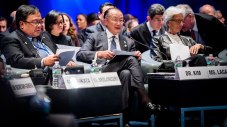 Development Committee meeting on Saturday. The committee, which represents the 189 shareholder countries of the Bank Group and the IMF, urged its members to take action to support vulnerable people who have been forced to flee their homes, and encouraged the institutions to partner with humanitarian organizations to help forcibly displaced people and host communities confront the root causes of the problem.
New approaches in water resource economics
The report below was posted on the World Bank Water Blog by SUSANNE M. SCHEIERLING ON WED, 03/30/2016.
 In many parts of the world, changing demand and supply patterns are contributing to an increasing physical scarcity and competition for water resources. Historically, new demands have been met by developing additional supplies—with the incremental cost of water remaining relatively constant over time due to the ready availability of water development project sites to meet growing demands. As the water economy moves from an expansionary to a mature phase, incremental costs are sharply rising, and interdependencies among users and uses are greatly increasing. With this move, the issues to be addressed by water economists tend to become more pressing, broader and more complex. While in the expansionary phase structural or engineering approaches to water management tend to be the main focus, in a maturing water economy nonstructural or institutional options for solving water problems receive increasing attention. In particular, resource allocation and valuation issues move to the forefront of economic inquiry.
To read the full blog post click here.
To access the report click here.
City Partnership Program (CPP) Launched to Foster “Best Practice” Approaches to Urban Development
Tokyo, March 23, 2016 – Tokyo Development Learning Center (TDLC), partnership project of Japan and the World Bank Group, launched City Partnership Program (CPP) which aims to accelerate the urban development in developing countries by utilizing Japanese expertise on 6 key thematic areas: urban planning, urban service provision, urban management, social development, disaster risk management, and municipal finance.
IFC Demonstrates Opportunities for Private Investors in Changing African Markets
Africa remains a region with enormous potential for private investors despite economic headwinds and reduced liquidity that are creating challenges in managing risks and mobilizing partners around investments.
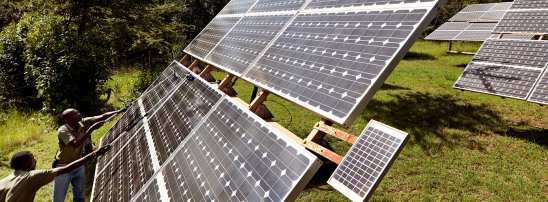
In a report released March 22, 2016 in partnership with the Africa CEO Forum, IFC concludes that even in difficult economic and risk environments, methods of financing that better mitigate risk can be more widely adopted to fund successful investments on a larger scale in Africa.


You must be logged in to post a comment.