eC2: Conduct Energy Audits of 16 Municipal Committees and Develop Energy Management Plans (including Investment Plans)

energyDeadline: 11-Jun-2018 at 11:59:59 PM (Eastern Time – Washington D.C.)

The overall approach for the energy audits will be: Analyze energy consumption and costs: Collect, organize, and analyze past energy bills. Compare energy performance: Determine the energy use and resources that can help compare them internally from one period to another, from one facility to a similar one, or from one system to another. Profile energy use patterns: Determine the time and relationships of energy use such as the electricity demand profile. Inventorize energy use: Prepare a list of all energy-consuming loads/efficiencies in the audit area and measure their consumption and demand. Identify Energy Management Opportunities (EMOs): Include operational and technological measures to reduce energy usage. Assess the benefits: Measure the potential energy and cost savings, along with any other benefits.

See full tender here:

eConsultant2 website: https://wbgeconsult2.worldbank.org/wbgec/index.html  

Tender notification: # 1257724

Assignment Countries:

  • PK – Pakistan

eC2:Capacity Building on the Hazard and Exposure Database for Pacific Catastrophe Risk Assessment and Financing Initiative (PCRAFI)

Deadline:  06-Jun-2018 at 11:59:59 PM (Eastern Time – Washington D.C.) vn-communitybased-disasterrisk-780x439

The following Terms of Reference (ToR) describes the requirement of the project to update the regional hazard and exposure database of 14 countries that underpins the PCRAFI Insurance Program. The PICs have limited capacity in this area and the engagement of a firm with regional experience in hazard and exposure databases will assist them to build their capacity in this area to undertake the work going forward. In 2010, the WB began implementing the Pacific Catastrophe Risk Assessment and Financing Initiative (PCRAFI), a regional technical assistance activity to lay down the foundation for a regional catastrophe risk pool for PICs, primarily to establish a regional repository of hazard and national exposure data (e.g. public infrastructure, buildings, homes; land-use, etc.) required to assess the viability of pooling climate and disaster risk across 14 PICs. The model that would contain the data has already been developed, piloted, and used in determining pay-outs over the past three years. However, the data is from 2010 and must be updated as soon as possible for the model to accurately protect household, business and government assets that face exposure to disaster related risks.

Continue reading

eC2:Regional Assessment of Hazards, Vulnerabilities and Risks in ECCAS countries

vn-communitybased-disasterrisk-780x439Deadline:  11-Jun-2018 at 11:59:59 PM (Eastern Time – Washington D.C.)

The overall objective of this work, on one hand, is to reinforce the knowledge on hazards, vulnerabilities and risks in Central Africa and to provide a monitoring tool on a regional scale and on the other hand to identify the cross-border areas at risks, with specific attention to flood risk. The specific objectives of this assignment are the following: Identification and mapping of hazards and major risks covering the regional extentat a national scale that is relevant at least up to administrative level 2 in the ECCAS region. The creation of a catalog of the reference cartographic data that includes raw data and metadata (small scale). The creation of cartographic reference data related to Disaster Risks and Water » (medium scale). Creation and launch of an operational geo-portal ” Disaster Risks “. Development of a paper and interactive Regional Atlas of Hazards and Major Risks. Assessment of the vulnerabilities of transboundary areas identified at risk.

Continue reading

eC2: Technical Assistance and Advice on Information Management in solid waste management in Gaza.

Deadline: 05-Jun-2018 at 11:59:59 PM (Eastern Time – Washington D.C.)
The scope of work is anticipated to include the following: (i) Needs assessment of the JSC-KRM to validate the needs of the system; (ii) Review of options for IT equipment and hardware through carrying out of a comprehensive review of available technologies and recommending hardware requirements which will be subsequently purchased by the JSC.(iii) Program and establish data collection protocol for testing and adoption by JSC technical staff; (iv) Provide advice for cost estimation and human resource capacity for delivery control; (v) processing procedures/guidelines for IT operation and maintenance; (vi) Providing training and employment and encouraging innovation in the Gaza IT sector through execution of the above tasks.

Continue reading

eC2: Zambia Water Supply and Sanitation (WSS) Sector Diagnostic

Deadline: 28-May-2018 at 11:59:59 PM (Eastern Time – Washington D.C.) water

The assignment involves carrying out a technical and institutional analysis of Zambia’s flagship WSS sector programs i.e. the National Rural Water Supply and Sanitation Program (NRWSSP) and National Urban Water Supply and Sanitation Program (NUWSSP). The objective is to identify opportunities for enhancing the effectiveness and outcomes of both programs, and to inform government strategies in the WSS sub-sector. The analysis will focus on five key areas: (i) strategic relevance and technical soundness of both programs, including issues such as rural-urban linkages, inclusion, health and nutrition; (ii) institutional arrangements and sustainability; (iii) expenditure framework for both programs, including sources of financing and opportunities for cost efficiency; (iv) program results framework and M&E capacity; and (v) economic and fiscal analysis of the programs, including an assessment of the hidden fiscal burden Zambia’s underperforming commercial utilities.

Continue reading

eC2: Mapping and prioritization of hydropower resources in the Democratic Republic of Congo

HYDRODeadline: 10-Jun-2018 at 11:59:59 PM (Eastern Time – Washington D.C.)

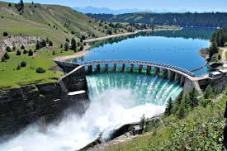
The objective of this activity is to inform the Government of DRC (GoDRC)s plan to develop its vast and untapped hydropower resources. The activity will (i) assess and map geospatially DRCs hydropower resources; (ii) rank small, medium, and large green field hydropower sites based on technical and economic considerations; (iii) provide narrowed/priority lists of sites by category, with a focus on mid-size sites (10 100 MW), and based on multi-criteria analysis jointly identified with the Government and the World Bank; (iv) provide in-country advice and training to enable stakeholders to participate in the production, maintenance and future enrichment of the database and related information created and (v) offer practical advice for implementation of priority site development. The priority lists and implementation advice will form practical guidance based on which the GoDRC will launch prefeasibility or feasibility studies of selected medium size hydropower sites funded separately under IDA resources.
Continue reading

eC2:Research: Business Case for Gender Lens-Investing in Private Equity in Emerging Markets

Deadline: 30-May-2018 at 11:59:59 PM (Eastern Time – Washington D.C.) gender_accelerating_womens_economic_empowerment_780x439

IFC seeks to procure a firm to research the business case for gender-lens investing for private equity (PE)and venture capital (VC)funds in emerging markets. Gender-lens investing, the use of gender as a category of analysis in investment decision making, is relatively small, but the market for integrating gender into the investment selection process is growing in both size and sophistication. Women are heavily under-represented when it comes to PE fund managers, angel and VC investors, and as fund investees. Yet, we also know that financial performance of companies is correlated to gender diversity. Limited representation of women may be hurting fund performance portfolios. PE/VC funds play a critical role in enterprise growth, job creation, innovation, and financial security and can play a catalytic role in closing economic participation gaps between men and women. The research will support IFC efforts to close gender gaps in access to jobs and assets.

Continue reading

eC2: Mekong Delta Pillar: Firm climate-resilient livelihood models and transition strategies

Qiangtang River BasinDeadline:  24-May-2018 at 11:59:59 PM (Eastern Time – Washington D.C.)

The Consultant will provide technical expertise across a range of fields including agro-ecology, livelihood adaptation, agricultural economics and value chain, and community and gender, to review, identify and provide analysis of sustainable climate-resilient transition models in agriculture, aquaculture, and horticulture livelihoods in the Mekong Delta.

Continue reading

eC2: Communication Consultant – Banjul Port PPP

public-Private-PartnershipDeadline: 21-May-2018 at 11:59:59 PM (Eastern Time – Washington D.C.)

The Government of the Gambia (GoTG) wishes to implement a public private partnership (PPP) to rehabilitate, operate and develop the Port of Banjul. Established in 1972, the Port is managed by the Gambia Port Authority (GPA) and is currently operating as service port. It accounts for almost 90% of the countrys trade and serves as a secondary regional hub, with volumes going to the hinterland (Southern Senegal, Guinea Bissau, Guinea and Western Mali). Throughput has grown substantially in the past decade, with a compounded annual growth rate of 7.3%. between 2007 and 2017 and 105,000 TEUs in 2017.

Continue reading

eC2:Technical Assistance on Project Screening and Prioritization and Outline Business Cases (OBCs) Development for PPPs in Infrastructure Sector

Deadline: 30-May-2018 at 11:59:59 PM (Eastern Time – Washington D.C.) PPPs

Description: The objectives are to provide technical assistance and advisory services to BAPPENAS Directorate of PPP and Financial Engineering, specifically on: (a) PPP project screening and prioritization; and (b) development of outline business cases (OBCs) for selected PPP projects. The technical assistance under this TA will be structured into two main activities: (i) project screening and prioritization; and (ii) development of OBCs. The activity outcomes are to screen and prioritize the projects and expected to feed into the subsequent OBCs development for the most priority projects.
Continue reading