Tender: Water Supply And Sanitation Construction Works in Uganda

The Republic of Uganda has received a loan from the World Bank for a Water Management and Development Project, and intends to applywater part of these proceeds to payments under the contract for construction works for water supply and sanitation in Rukungiri Municipality, Katwe-Kabatoro and Koboko Town.
Deadline: November 10, 2015

Continue reading

Technical Assistance To Department Of Health Services

The Government of the Republic of Liberia has Laboratoryreceived financing from the World Bank toward the costof the Ebola Emergency Response Project (EERP), and intends to apply part of the proceeds for consulting services (Technical Assistance to Department of Health Services) for the Ministry of Health.

Deadline: 18 September, 2015

Continue reading

Ethiopia – Second Agricultural Growth Project signed

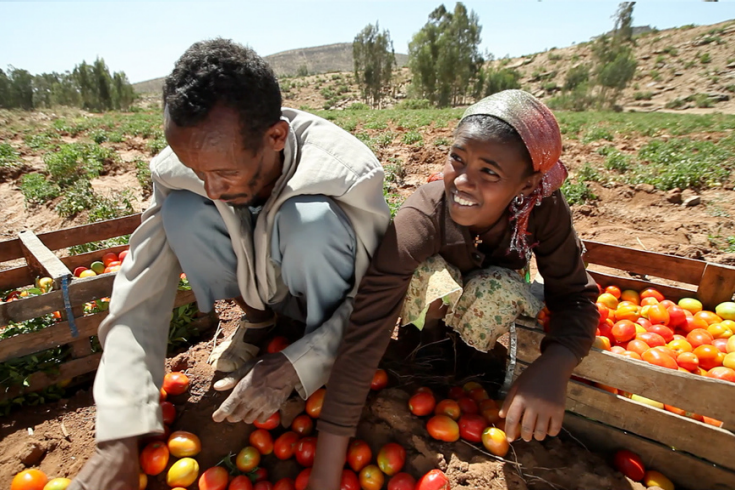
Ethiopia’s second agricultural growth Ethiopia agproject, which was adopted by the World Bank Board of Directors on March 31, 2015, has now been signed. The project involves a total of $365 million, of which $350 million is provided by the World Bank.

The development objective of the Second Agricultural Growth Project for Ethiopia is to increase agricultural productivity and commercialization of small holder farmers targeted by the project. The project comprises of five components: Continue reading

India – Jhelum and Tawi Flood Recovery Project

The Jhelum and Tawi Flood Recovery Project for India, worth a total of $250 million, will support the recovery and increase disaster resilience in Project Areas, and increase the capacity of the Project Implementing Entity to respond promptly and effectively to an eligible crisis or emergency. The flood affected region consists of 22 districts, affecting 12.5 million people.

The project development objective is to support the recovery and increase disaster resilience in Project Areas, and increase the capacity of the Project Implementing Entity to respond promptly and effectively to an eligible crisis or emergency.

Continue reading

Bangladesh – National Agricultural Technology Program – Phase II Project

The World Bank approved a total of $176.06 million for the Second National Agricultural Technology Program. The project development objective is to increase agricultural productivity of smallholder farms and improve smallholder farmers’ access to markets in selected districts. This is to be achieved through the following components: Continue reading

Myanmar National Electrification Project

The World Bank is currently negotiating with the government of Myanmar a National Electrification Project worth a total of $567, of which $400 will be provided by the World Bank.

The project development objective is to help increase access to electricity in Myanmar. This is to be achieved through the following components: Continue reading

Update: Vietnam Sustainable Agriculture Transformation Project

On June 22, we reported that the World Bank Board of Directors was to discuss the Vietnam Sustainable Agriculture Transformation Project, worth a total of $314 million, of which $238 million is provided by the World Bank. This project is now approved.

The Project Development Outcome is to improve farming practices and value chains in the targeted project areas, and promote institutional strengthening of relevant public agencies in effective support to implementation of the Agricultural Restructuring Plan. The project consists of three different components:

Continue reading

World Bank Approves Largest Ever Guarantees for Ghana’s Energy Transformation

Article originally posted on the World Bank website on July 30, 2015. The project website for the Ghana Sankofa Gas Project can be found here, which also features the detailed Project Appraisal Document.

The World Bank’s Board of Directors today approved a record investment of $700 million in guarantees for Ghana’s Sankofa Gas Project – a transformational project that will help address the country’s serious energy shortages by developing new sources of clean and affordable natural gas for domestic power generation.

The Board approved a unique combination of two guarantees for the Project – an IDA Payment guarantee of $500 million that supports timely payments for gas purchases by Ghana National Petroleum Corporation and an IBRD Enclave Loan guarantee of $200 million that enables the project to secure financing from its private sponsors. Together, the guarantees are expected to mobilize $7.9 billion in new private investment for offshore natural gas, representing the biggest foreign direct investment in Ghana’s history.

The exploration and commercialization of the gas will be carried out by two private investors, Eni of Italy and Vitol Group of the Netherlands

Continue reading

DR Congo – Quality and Relevance of Secondary and Tertiary Education Project

The World Bank Board of Directors has recently approved the Quality and Relevance of Secondary and Tertiary Education Project in the Democratic Republic of the Congo. The project, worth a total of $200 million, is partly financed by an IDA grant ($70m) and partly by an IDA loan ($130m).

The focus is on Secondary education (40%), Tertiary education (25%) and Vocational training (35%).

The project’s objectives are to: (i) improve the teaching and learning of mathematics
and science in general secondary education, and (ii) enhance the relevance of TVET in priority sectors at secondary and tertiary education levels.

Continue reading

Haiti – Sustainable Rural and Small Towns Water and Sanitation Project

Haiti has been provided with an IDA Grant by the World Bank Board of Directors. This grant, worth a total of $50 million, was awarded in March for the Sustainable Rural and Small Towns Water and Sanitation Project.

The proposed objectives of the Project are to: (i) increase access to improved water supply and sanitation in targeted rural areas and small towns in zones affected by cholera; (ii) strengthen the Recipient’s water and sanitation service delivery mechanism at the deconcentrated level; and (iii) improve the Recipient’s capacity to respond promptly and effectively to an Eligible Emergency.

This will be done through the following components: Continue reading