Unknown's avatar

About NL4WorldBank

The World Bank Team at the Royal Netherlands Embassy tweets about news related to Dutch organizations interested in working with the #WorldBank. #NL4WorldBank

eC2:SUSTAINABLE FINANCIAL STRATEGY FOR ULAANBAATARS PUBLIC TRANSPORT SECTOR

Deadline: 05-Jan-2017 at 11:59:59 PM (Eastern Time – Washington D.C.)general-transport-mosaic-main.jpg

The assignment is to formulate a sustainable financial strategy for Ulaanbaatars public transport sector and to carry out related studies. The consultants work will consist of four parts: (1) Diagnosis of the public transport sector in UB; (2) Sustainable Financial Strategy for Ulaanbaatars public transport sector; (3) Recommendations for the Financial Sustainability of Ulaanbaatars public transport sector and roadmap for the implementation; and (4) Workshops and trainings. Travel to Ulaanbaatar and face-to-face discussions with relevant city officials and staff are expected.
Continue reading →

eC2:Mainstreaming Climate Resilience in the Road Transport Management

Deadline: 21-Jan-2017 at 11:59:59 PM (Eastern Time – Washington D.C.)images

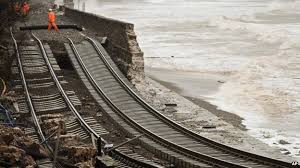
The objective of the assignment is to support the government in establishing a foundation for mainstreaming climate resilience considerations in the road transport sector management in the Republic of Serbia by developing an effective methodology for assessing vulnerability of the road transport network to the climate related risks, providing set of recommendations for improvements of the current practices and capacities of key stakeholders, piloting of the proposal, and setting the path for development of structured and systematic response plans. The assignment should provide a foundation for sustainable technical, legislative, institutional, and managerial framework for climate resilience monitoring and planning of the road transport network. The proposed vulnerability assessment methodology and recommendations for improvement of the road asset management will be piloted and tested on 250km of roads in Valjevo region, but it is expected to be applicable to the entire country.

Continue reading →

Climate-smart transport is a key piece of the sustainable development puzzle

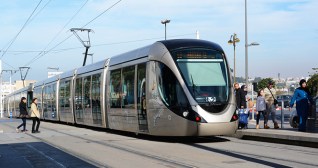
When it comes to climate change, the transport sector is both a vicmo-rabat-tram-lukakikina-shutterstocktim and a perpetrator. On the one hand, transport infrastructure is particularly vulnerable to the effects of climate change such as higher temperatures, increased precipitations, and flooding. At the same time, transport is responsible for 23% of energy-related greenhouse gas (GHG) emissions, and is one of the sectors where emissions are rising the fastest. This statistic alone makes it pretty clear that there will be no significant progress on climate action without greener, more sustainable mobility.

Continue reading →

The New Gold: Providing Quality Water and Sanitation in Bulgaria

STORY HIGHLIGHTS ( Full WB Article )bg-water-story2
  • Almost all Bulgarians have access to drinking water in their homes, but a significant number of people still suffer seasonal rationing due to incomplete construction of dams.
  • The World Bank–supported Municipal Infrastructure Development Project will guarantee a reliable and high-quality water supply for 170,000 Bulgarians through the completion of three dams.
  • Two unfinished dams will be completed under this project, while a third will be rehabilitated.

Continue reading →

eC2:Community Urban Risk Mapping – Cookbook

Deadline: 16-Jan-2017 at 11:59:59 PM (Eastern Time – Washington D.C.) water

Consultancy for the review and documentation of the Ramani Huria urban flood risk mapping project, methodology and lessons and the introduction of this documented methodology in university curricula for Tanzanian university students. Ramani Huria is a Dar es Salaam based partnership of Ardhi University, University of Dar es Salaam, Dar es Salaam City Councils, Disaster Management Department, Red Cross, and with support from the World Bank.

Continue reading →

Invigorating Africa’s climate resilient ocean economies

­_bo_5646_0.jpgWe are all too aware that difficult times lie ahead for coastal communities

Coastal erosion, especially in West Africa, has already displaced communities, with economic losses costing about 2.3% of GDP in Togo alone. In the past 60 years, sea temperatures in the Western Indian Ocean increased 0.6 C, triggering mass coral bleaching and deadly climate-related disasters across the region. The economic cost of the 1998 coral bleaching event to Zanzibar and Mombasa was in the tens of millions of dollars. The natural cost is still unknown.

Continue reading →

eC2:Geodata and data Wrangling Workshops and Assessment

Deadline: 16-Jan-2017 at 11:59:59 PM (Eastern Time – Washington D.C.) index

The objective of this consultancy is to design and conduct a workshops in both mainland Tanzania and Zanzibar that will improve fluency with geospatial data across government in order to support and improve geospatial capacity in Tanzania and in particular understanding of open geospatial data. This will provide skills development for data collection and management, help participants improve the content and quality of geospatial datasets and strengthen the knowledge of open geospatial principles and standards.

Continue reading →

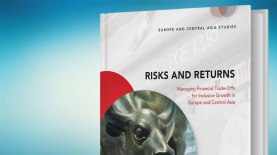
Risks and Returns: Managing Financial Trade-Offs for Inclusive Growth in Europe and Central Asia

Full reporteca-risk-returns-780

“Risks and Returns: Managing Financial Trade-Offs for Inclusive Growth in Europe and Central Asia” argues that striking the right balance across all dimensions of financial development (stability, efficiency, inclusion, and overall depth) is crucial for achieving and sustaining inclusive growth.

Emerging Europe and Central Asia, perhaps now more than ever, faces the urgent need for financial sector reforms. Reforms are needed not only to make the region more resilient to financial shocks but also to support efforts to strengthen income growth, particularly that of the middle- to lower-income earners, many of whom since the global financial crisis have questioned the benefits of greater economic and financial integration.