
Deadline: 20-Feb-2020 at 11:59:59 PM (Eastern Time – Washington D.C.)
The Government of Mauritania (GoM) has laid out a new vision for the country’s  development, under its Accelerated Growth and Prosperity Sharing Strategy (SCAPP, the acronym in French). SCAPP’s Vision for the Future, “The Mauritania We Want in 2030,” aims for strong, inclusive and sustainable growth to meet the basic needs of citizens and ensure their well-being. In the energy sector, the Government aims to ensure universal access to quality services at the lowest cost and to provide economic actors with reliable and secure electricity, through: (a) Development of new production capacities from local resources, mainly natural gas; (b) Expansion of the transport network and interconnection with neighboring countries; (c) Increasing the share of renewable energy in the energy mix and (d) Implementing decentralized solutions in remote rural areas. The strategy seeks to increase access rate to 95% in urban areas and 40% in rural areas, in order to reach an overall electrification rate of 70% at the national level by 2030.
The proposed National Electrification Analysis would provide analysis and insight on various electricity access options for Mauritania, specifically through: (a) data collection and analysis; (b) assessment of service quality levels; (c) identification of potential least-cost technology options for electrification; and (d) identification of potential options and arrangements for scaling up electrification in Mauritania in line with national access targets.
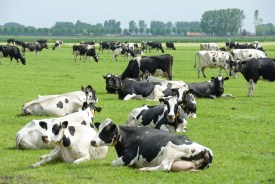 and also build the Veterinary Drugs and Feed Administration and Control Authorities capacity to enable it execute its role more efficiently.
 carried out with funding provided by a WB Technical Assistance Programme, in selected communities and municipalities in the Departments of Chuquisaca, Potosi, Cochabamba and Oruro. The baseline data will provide inputs for the Project design, including the implementation strategy in its water supply, energy and irrigation components; and the design of the community development and behavior change activities. The study will also set a baseline to monitor the project results and adjust its design and implementation if needed.
 development of markets for modern off grid lighting and energy products in Africa where majority of the population use expensive, hazardous and low quality fuel- based lighting products. The program was piloted in Kenya and Ghana but has now been replicated in 10 countries across Africa (including Tanzania) and Asia.
 water canal.
 Netherlands for the World Bank
You must be logged in to post a comment.