
In this blog space in October 2017, we discussed the role of private sector in land administration and mentioned our unit would undertake an assessment and conduct  global consultations on the issue. Our idea was to discuss current experience and explore ways to enhance this kind of partnership.
Last month in Vienna, we completed the third consultation where 40-some participants joined us—split equally between government and private sector representatives. This followed two consultations held in Dubai last October and Kuala Lumpur in February.
Our consultations addressed several questions:
• What models of PPP in land administration should be considered?
• What are their minimum requirements?
• What risks are involved and how can they be mitigated?
 among poor people and communities can achieve outcomes that promote poverty reduction, enhanced welfare and create new and expanded employment opportunities. The final output would cover, the potential role of CE in development; case studies and assessment of market potential; different policy approaches for scaling CE, and; recommendations to governments. The consultancy will be based on desk review, economic modeling and detailed case studies that will be selected collaboratively. This EOI was tender for a smaller amount and is now being retendered with an updated amount and TOR.
 Improvement Project (DPTIP) by i) assessing and improving institutional regulatory framework and client capacity to increase private sector participation in the public transportation sector in Dhaka; and ii) assessing and recommending specific PPP options and business-financial models for the operation of the feeders associated with the BRT line from Gazipur to Mohakhali, for the associated BRT infrastructure and for the operations of the city-wide bus service. The extent of PPP potential must be well assessed and structured based on client capacity, similar experiences in Bangladesh, the relative appetite of banks and investors in Bangladesh to invest in the transport sector (including through the exploration of financing options such as leasing), and the cost/access to finance for private operators and investors.
 government to provide funds to help with the recovery. The Dutch government contributed 550 million euros of which EUR 470 million placed in a trust fund, managed by the World Bank Group, and EUR 80 million used for emergency aid and other activities needed to offer immediate relieve to the people of St. Maarten.
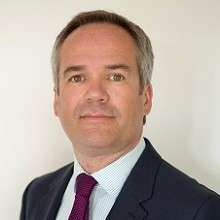 Bank Group. I am incredibly proud to represent the Netherlands and 12 other countries at this important global institution. I cannot think of a mission more important than ending extreme poverty, boosting shared prosperity and achieving the sustainable development goals. I have seen the World Bank achieve results all over the world, most recently when I worked in Mali.
 than 25 million are considered refugees.


 implement the Java 3 800MW combined cycle gas-fired Independent Power Producer (“IPP”) project in Gresik, East Java (the “Project”) on build-own-operate-transfer basis.
 Netherlands for the World Bank
You must be logged in to post a comment.