

Can’t attend the Spring Meetings in person? Attend the Spring Meetings LIVE Online! The first LIVE ONLINE event is on Innovations to Prevent Gender-Based Violence: Building Evidence for Effective Solutions, April 18th at 2:30pm ET / 18:30 GMT.
To support the prevention of violence against women and girls, the World Bank Group and Sexual Violence Research Initiative will award 10 teams from around the world with funds to support research and innovation to help address this global epidemic. Nearly 1 billion women and girls across all countries and cultures will experience intimate partner violence or non-partner sexual violence in their lifetime. Violence experienced by women and girls is an obstacle to development gains, as it impedes their full participation in society, limits access to education and economic participation, and hinders efforts to achieve gender equality. Award winners will share their motivations and successes in developing effective prevention and response interventions, which the World Bank can also incorporate into its development work.
 gifted?” A gap like this—in perceptions and expectations—is not new. Myths about ‘gendered’ learning gaps have persisted since at least the
  lead author of the UFGE-funded study
  decades, about 50 percent of the labor force. Yet there are stark differences in the outcomes they achieve: Women are only half as likely as men to have a full-time wage-earning job. The women who do have paid jobs earn as much as one-third less than men. Fewer women than men are involved in trade or own registered companies. And women are more likely to work in low-productivity activities or informal employment.
 technical assistance program administered by the World Bank. It provides analytical and advisory services to low- and middle-income countries to increase their know-how and institutional capacity to achieve environmentally sustainable energy solutions for poverty reduction and economic growth. Supporting over a hundred activities in countries around the world at any given time, ESMAP is an integral part of the
  World Banks Africa Gender Innovation Lab and the World Bank Trade and Competitiveness Global Practice (henceforth the WB research team) is conducting an experiment to measure the impact of providing women entrepreneurs with adequate information, technical support, coaching and know-how, as well as necessary exposure, in succeeding as entrepreneurs in male dominated productive sectors.
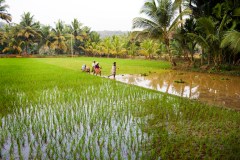 and Gender study in East Java.
 lens to agribusiness projects at the WBG. Working within the framework of the WBGs Gender Strategy, the team will develop an agribusiness specific application tool, in the form of Guidelines to inform and enable better gender inclusion in its project development across the regions, and across different WBG units working on agribusiness.
 Netherlands for the World Bank
You must be logged in to post a comment.