
Deadline: 04-Sep-2018 at 11:59:59 PM (Eastern Time – Washington D.C.)
Assignment Description:
The World Bank is currently working with Saint Lucia (SLU) and Saint Vincent and the Grenadines (SVG) in the Caribbean to help improve the resilience of the power systems of these two countries to extreme weather events that will become more severe due to climate change. The World Bank will offer similar support to three other OECS countries afterwards. These Terms of Reference (TOR) are for a Power System Engineering Consulting Firm to support the World Bank energy team by conducting an assessment of the impacts of past storms (2 -3) on the power systems of SLU, SVG, St. Kitts and Nevis (SKN), and Antigua and Barbuda (A&B), identifying key risks and vulnerabilities, and offering energy resilience enhancement recommendations associated with utility power generation assets as well as transmission and distribution systems. The consulting firm will also develop an investment plan with the estimated cost of these recommended measures.
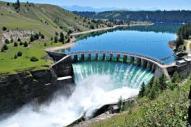 Mpatamanga Hydropower Project in Malawi, using the BEta version of the World Bank’s Hydropower Sector Climate Resilience Guidelines.
 carbon units held by account holders and (ii) enable the exchange of carbon units between account holders. with the support from the Partnership for Market Readiness (PMR), the Government of Sri Lanka aims to design a national registry system for recording project or mitigation action details, registration and approval, reporting of monitoring data, and the transactional features of carbon units. The registry is an essential tool through which the success of the mechanism will be measured and improved. It will be used for all reporting, collecting, and checking purposes, storing compliance data and identifying any cases of enforcement. It will also track the emissions and trading activity for registered users over the life of a particular scheme.
 revenue requirement of the electric utilities during 2018-2030; and (b) analyze the current electricity tariff structure and propose options for tariff optimization.
 and key barriers for distributed clean power generation solutions in Myanmar. This study will primarily focus on the potential for distributed PV solutions providing power to clients on a commercially viable scale, including both grid-connected and off-grid facilities. In particular, it should focus on the market for commercial and industrial customers, rather than minigrids or other residential applications. The result of this study will be a market mapping of the potential customers that could serve as a pipeline of projects for suppliers and investors in the future, including the key characteristics of these customers, analysis of market segments, and a review of the main barriers these customers face in adopting PV solutions. The study will also profile the business models prevalent in Myanmar, to inform potential financing structures that could help unlock needed capital in the sector.
 Deadline: 18-Jul-2018 at 11:59:59 PM (Eastern Time – Washington D.C.)

You must be logged in to post a comment.