Educating Girls, Ending Child Marriage

Every day, 41,000 girls marry before they are 18 years old. That’s 15 million girls every year. While child marriage can happen to both boys and girls, in most places around the world, the practice mostly affects girls.

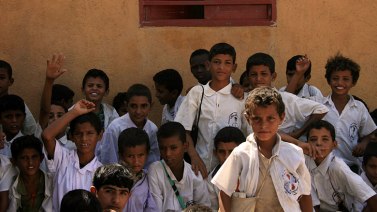
Girls like Nafissa* (not her real name), from Niger.

“I stopped (going to) school in order to marry,” says the young teen, “It was because of people’s mentality and their prejudices. I was married during a school break and, before I could return, I became pregnant. After that, I never returned.”

Continue reading

eC2: Global Partnership for Education: Capacity review of country level operating model and Education Sector Investment Case

Deadline: 07-Sep-2017 at 11:59:59 PM (Eastern Time – Washington D.C.)sd-basic-education-in-sudan-the-long-road-to-stability-780x439

GPEs new Financing and Funding Framework (FFF) calls for enhancement of GPEs core funding mechanisms, through a focus on both improved operational efficiency and innovative approaches to mobilizing greater levels of resources from DCPs and development partners.

Continue reading

Improving Vocational Education Brings Opportunities for Young People in Yunnan

Yunnan Province, on China’s southwestern border, is well known for its beautiful natural landscape and rich ethnic culture. Yet it is also one of the country’s poorest provinces. Its per capita GDP in 2010 was only half of the national average. With 84% of mountainous land, the majority of its 45 million people live in rural areas – 1/3 of them belongs to 25 ethnic minority groups.

The labor force in Yunnan generally possesses low levels of education and skills. Most have completed just nine years of compulsory education or less, and professional and technical workers often lack skills certificates.

Continue reading

To Unlock Potential of Digital Age, Europe Must Go Beyond Internet Access, Says World Bank

BUCHAREST, March 7 2017− Countries in the European Union (EU) must enact policies indexdesigned to better help workers adapt to new jobs being created by the internet if they want to avoid increasing inequality and exclusion in the region, notes a new World Bank Report. According to Reaping Digital Dividends: Leveraging the Internet for Development in Europe and Central Asia, launched in Bucharest today, affordable and nearly universal access to the internet has not been enough for countries in the EU to fully benefit from opportunities being created by digital technologies and more needs to be done to develop a policy environment that can better leverage this access by linking workers to digital jobs.

Continue reading

eC2:Development of curriculum and training materials for a PhD program in Educational Measurement and Evaluation

Deadline: 20-Mar-2017 at 11:59:59 PM (Eastern Time – Washington D.C.)index

The goal of the assignment is to develop an international level capacity for training of professionals at a Ph.D. level in Russia in Educational Measurement and Evaluation area. Specific objectives of the assignment are to establish a Ph.D. (Philosophy Doctor) program in Educational Measurement and Evaluation.

Continue reading

eC2: National Student Assessment, Bangladesh

Deadline: 26-Feb-2017 at 11:59:59 PM (Eastern Time – Washington D.C.)

The National Student Assessment (NSA) 2011, 2013 and NSA 2015 assessed the learning for-better-early-childhood-care-and-education-in-sri-lankaachievement of the aforementioned pupils relative to the learning outcomes prescribed in the primary curriculum. Other objectives were: to investigate differences in pupil achievement by key system, school and pupil factors {e.g., division, district, school type, locality (urban v. rural), and gender}; to examine the relationships between achievement and factors such as school size, class size, pupil-teacher ratio, attendance rate, teachers’ qualifications and training, training of school managers, and frequency of inspection; and to draw implications for improvements in teaching and learning through enhanced policy actions, planning and management, and teacher education. It is expected that relevant Government of Bangladesh (GoB) line agencies will utilize the findings and recommendations in order to inform educational planning of sub-components such as teacher professional development and curriculum reform.
Continue reading

eC2: Monitoring, Evaluation, and Implementation Support of Education Programs

Deadline: 02-Feb-2017 at 11:59:59 PM (Eastern Time – Washington D.C.)index

To reach these objectives, the firm will be expected to carry out the following activities
(a) Process monitoring/evaluation of the programs, including assessing which procedures proved difficult/problematic and why and making practical and concrete recommendations on how to improve the programs;
(b) Spot-checks to give external validation on the monitoring and reporting data;
(c)In-depth and tailored investigation to delve issues identified through preceding monitoring activities, just-in-time evaluation and technical support to respond to emerging issues/demands, and operational research/feasibility study to delve how the programs can be further improved;
(d)Technical support/assistance to the implementers (MoE at different levels) of the programs including with the aim of building their capacity for M&E.

Continue reading

eC2:Study of Vulnerable Lebanese and Syrian Refugee children for Lebanon Education Research for Results Program

Deadline: 30-Jan-2017 at 11:59:59 PM (Eastern Time – Washington D.C.)2030-promo-getty

The primary objective of the Research for Results (R4R) program is to generate new evidence on student and teacher performance across school types and to create policy recommendations to strengthen the efficiency and quality of education services by public, private and non-state providers. Furthermore, the research program includes system-level analyses and stakeholder outreach to create and share new information about education services for uptake by policy makers and system stakeholders. The R4R program is governed by a Steering Committee, chaired by MEHE, and a Technical Committee, chaired by the Center for Educational Research and Development (CERD), and is financed by the United Kingdom Department for International Development (DFID) and United States Agency for International Development (USAID). Under the R4R program different studies are designed to understand the causes and factors associated with the variation at all type of schools, public or private, in order to support the government initiatives to ensure learning for all children in Lebanon. One of these studies is looking into the school enabling environment covering four dimensions: school finances, school management and leadership, teachers, and school physical and learning environment. Other ongoing studies are focusing on student learning outcomes as well as teacher observation and classroom practices.

Continue reading

eC2:Early Learning Partnership (ELP) Systems Research

The project below is divided into 4 tenders, the descriptions and requirements are the same but the country of execution is different.

Deadline: 27-Oct-2016 at 11:59:59 PM (Eastern Time – Washington D.C.)index

The goals of the ELP Systems Research program are (1) to provide policymakers in a set of focus countries with actionable information to help guide the delivery of quality, equitable early learning at scale; and (2) to build the international evidence base in the emerging field of systems research in early childhood education. Funding is available for one research team for each of the following focus countries/regions: Ethiopia; Liberia; the province of Punjab, Pakistan; and Tanzania. An additional focus country may be added at a later time depending on the availability of funds.

Continue reading