

Deadline: 06-Jun-2018 at 11:59:59 PM (Eastern Time – Washington D.C.) 
The following Terms of Reference (ToR) describes the requirement of the project to update the regional hazard and exposure database of 14 countries that underpins the PCRAFI Insurance Program. The PICs have limited capacity in this area and the engagement of a firm with regional experience in hazard and exposure databases will assist them to build their capacity in this area to undertake the work going forward. In 2010, the WB began implementing the Pacific Catastrophe Risk Assessment and Financing Initiative (PCRAFI), a regional technical assistance activity to lay down the foundation for a regional catastrophe risk pool for PICs, primarily to establish a regional repository of hazard and national exposure data (e.g. public infrastructure, buildings, homes; land-use, etc.) required to assess the viability of pooling climate and disaster risk across 14 PICs. The model that would contain the data has already been developed, piloted, and used in determining pay-outs over the past three years. However, the data is from 2010 and must be updated as soon as possible for the model to accurately protect household, business and government assets that face exposure to disaster related risks.
 Deadline: 11-Jun-2018 at 11:59:59 PM (Eastern Time – Washington D.C.)
 The East Asia and Pacific region is vital to global pandemic preparedness. The region has been the epicenter of emerging and re-emerging infectious diseases. China and Southeast Asia alone accounted for approximately 90 percent of SARS cases and two-thirds of the human cases of avian influenza in the world. These outbreaks are driven by several socio-economic, demographic, environmental, and ecological factors, including close contact between humans and animals, encroachment with wildlife, high population density, rapid urbanization, high growth rates, and climate change.
 In many parts of the world, the sharing economy is ever-present for individuals, allowing them to use personal assets—for example, houses and cars—to their fullest potential. If you plan to be away for a period of time, why not rent your space for a few extra bucks?
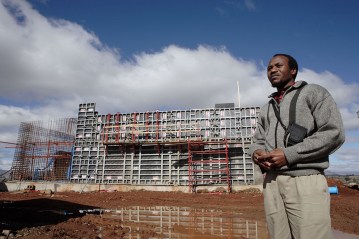 It is broadly understood that public-private partnerships (PPP) are a procurement tool that encompass design, financing, construction and long-term operation of a public infrastructure by the private sector. They can be cost-effective thanks to adequate risk transfer and performance criteria, and help bridge Africa’s large infrastructure gap in many sectors.

You must be logged in to post a comment.