 Follow the event on Twitter with #SocialAcc
Date: Thursday, February 23rd, 2017
Time: 16:30 – 18:00 GMT/ 11:30 am – 1:00 pm ET
Location: MC C2-131, World Bank, DC
 Follow the event on Twitter with #SocialAcc
Date: Thursday, February 23rd, 2017
Time: 16:30 – 18:00 GMT/ 11:30 am – 1:00 pm ET
Location: MC C2-131, World Bank, DC
Deadline: 20-Mar-2017 at 11:59:59 PM (Eastern Time – Washington D.C.)
The goal of the assignment is to develop an international level capacity for training of professionals at a Ph.D. level in Russia in Educational Measurement and Evaluation area. Specific objectives of the assignment are to establish a Ph.D. (Philosophy Doctor) program in Educational Measurement and Evaluation.
World Bank Group President Jim Yong Kim – World Government Summit, Dubai, United 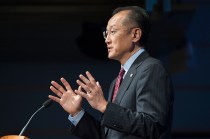 Arab Emirates
Good afternoon, your Excellencies, distinguished guests, ladies and gentlemen.
I am grateful to the people of the United Arab Emirates and to His Highness Sheikh Mohammed bin Rashid Al Maktoum for inviting me again to this year’s World Government Summit.
I can’t think of a more fitting place than Dubai to give this speech.
Deadline: 14-Mar-2017 at 11:59:59 PM (Eastern Time – Washington D.C.)
The overall objective of this assignment is to review and update the current Draft National Transport Policy and Strategy 2014, and include logistics and green transport policy and strategy elements, in order to produce a revised National Transport & Logistics Policy and Strategy. The revised policy and strategy is envisioned to be more holistic, and one that would set the directions as to how transport can contribute to the countrys economic development and competitiveness. This should be developed in support of the achievement of Governments Vision 2040 middle income status goal in an inclusive and sustainable manner.
Deadline: 28-Feb-2017 at 11:59:59 PM (Eastern Time – Washington D.C.)
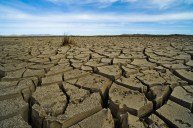
The study will identify climate risks associated to the areas of intervention for the Pilot Program for Climate Resilience (PPCR) in the country that are relevant to the private sector (water management and infrastructure, agriculture and food security, meteorological knowledge management and climate data). Based on the identified risks, the study will consider how the private sector, including commercial banks, can protect themselves from those climate risks as well as deliver essential products and services to help communities and businesses tackle climate challenges. The study will also analyze the existing enabling environment and market barriers that prevent the private sector from engaging in climate adaptation. Moreover, the study will identify potential private sector investments.
Deadline: 28-Feb-2017 at 11:59:59 PM (Eastern Time – Washington D.C.)
Specific objectives include:
1) Individual assessments and summary report of 20 municipalities including what tabular and spatial data exists, what format this data is in, how existing data is being used, what data must still be collected, what technology, including equipment, is currently being used to apply the data to the planning process of the municipality;
2) Study of data standards/specifications being used for collection and maintenance of data pertaining to cadastral, critical infrastructure, land use, etc. as well as broader planning and hazard/risk assessments;
3) Recommendation on what municipal services could be linked with geospatial data; and,
4) Preparation of a strategy for enhancement of technical capacity and equipment for different types of municipalities.
Deadline: 24-Feb-2017 at 11:59:59 PM (Eastern Time – Washington D.C.)
Lusaka Water and Sewerage Company (LWSC)is currently implementing a World Bank-assisted Lusaka Sanitation Project which aims to increase access to improved sanitation services and strengthening LWSC’s institutional capacity to deliver on its mandate. Within the context of the project, LWSC management has requested the Bank to support an urgent technical assistance (TA) activity aimed at reviewing LWSCs current organizational structure in order to inform important HR-related decisions that LWSC management and Board of Directors are considering as they embark on the process of transforming the utility. The objective of the TA is to review and advise on an improved and sustainable organizational structure and staff conditions of service for LWSC. The outputs from this activity will help inform critical decisions on maximizing staff productivity and performance, and reducing skyrocketing staff costs.
Ineffective policies can persist, while potentially effective policies are often not adopted.  The World Development Report 2017: Governance and the Law explores why some policies fail to achieve desired outcomes and what makes other policies work. The main messages of the WDR 2017 are:
Download full report here.
Deadline: 26-Feb-2017 at 11:59:59 PM (Eastern Time – Washington D.C.)
The National Student Assessment (NSA) 2011, 2013 and NSA 2015 assessed the learning  achievement of the aforementioned pupils relative to the learning outcomes prescribed in the primary curriculum. Other objectives were: to investigate differences in pupil achievement by key system, school and pupil factors {e.g., division, district, school type, locality (urban v. rural), and gender}; to examine the relationships between achievement and factors such as school size, class size, pupil-teacher ratio, attendance rate, teachers’ qualifications and training, training of school managers, and frequency of inspection; and to draw implications for improvements in teaching and learning through enhanced policy actions, planning and management, and teacher education. It is expected that relevant Government of Bangladesh (GoB) line agencies will utilize the findings and recommendations in order to inform educational planning of sub-components such as teacher professional development and curriculum reform.
Article published on http://www.worldbank.org.
Most people agree that water is an extremely valuable resource—for farmers who depend  on it to grow crops, for factories that need it to cool machines and spin turbines and, of course for life itself. But . The very fact that water is so important to people, economies, and the environment means that it is tough to even agree on a common way of valuing it.
No less an economic mind than Adam Smith was stumped by this challenge. As he famously observed, “Nothing is more useful than water: but it will purchase scarcely anything. A diamond, on the contrary, has scarcely any use-value; but a very great quantity of other goods may frequently be had in exchange for it.”
 Netherlands for the World Bank
You must be logged in to post a comment.