
Deadline: 29-Aug-2016 at 11:59:59 PM (Eastern Time – Washington D.C.)
Environmental and Social Impact Assessment (ESIA) guidelines for hydropower 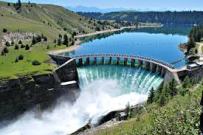 development in Myanmar are required to provide clear, consistent and comprehensive guidance on:
(i) the legal requirements for impact assessment;
(ii) key issues to be considered in project design, construction, commissioning, operation and decommissioning, and assessed during the ESIA process; and
(iii) management plans to be prepared, to seek project approval and to effectively design, construct, commission, operate and decommission projects in a sustainable manner.
This includes application of the mitigation hierarchy to anticipate and avoid impacts to the fullest extent possible, and where avoidance is not possible minimize (e.g. abate, rectify, repair and/or restore) those impacts, and where residual impacts remain, compensate/offset for risks and impacts.
 contribute 25 percent of greenhouse gas emissions.
  from individual firms or consortia that specialize in identifying, investigating, and facilitating business model diffusion in emerging markets. The core goal of the assignment is to facilitate identification, market validation and adoption of 2-3 business models in the renewable energy sector through the facilitation of uptake by existing companies in Kenya and South Africa. Throughout the piloting process, CTP aims to generate concrete lessons learned and insights that will be applied by public or private institutions to do further business model diffusion pilots or to scale up validated pilots. This assignment will include activities to be designed and implemented over a 12-18 month period.
 competitively priced, utility-scale solar photovoltaic (PV) power in Sub-Saharan Africa through a coordinated, packaged and largely standardised joint World Bank Group (World Bank, IFC, and MIGA) solution based on a templated Public Private Partnership (PPP) transaction. To date, three countries have signed up to the program and more countries are expected to follow shortly. In relation to Scaling Solar Madagascar, IFC intends to hire a firm to provide reliable on-site measured solar resource data for a site in Madagascar for a period of 1 year. The firm is to install, manage and maintain a solar resource measurement station at the site in order to provide bankable solar resource data.
 needs of consumers who rely predominantly on fuel-based kerosene lamps and candles by enabling them gain access to non-fossil fuel-based, low-cost, high-quality, safe, and reliable lighting products.
 The 2030 Water Resources Group, hosted at IFC, has
 Netherlands for the World Bank
You must be logged in to post a comment.