
ABIDJAN, June 28, 2016 — A new assessment of the quality of government policies and 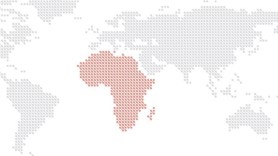 institutions that support growth and poverty reduction in Africa shows some progress for a few countries but flat or deteriorating scores for the majority, according to a new World Bank Review.
The latest Country Policy and Institutional Assessment (CPIA) for Africa describes the progress made in low-income African countries to strengthen their policies and institutions that help to spur better development outcomes.
 baseline survey in relation to the Livestock Micro Reforms in Agribusiness (L-MIRA) project. The baseline information will be critical to measuring the success of L-MIRA project in achieving its objectives, which are: (i) to improve dairy and poultry farmers’ access to quality inputs; and (ii) to reduce regulatory compliance cost for dairy and poultry SMEs (processors, off-takers etc.). The outcome of this assignment will also be used to support policy reforms /advocacy in the future. Therefore, a firm with experience in successfully linking M&E with policy reforms and/or program improvements will have an advantage.
 than 50 years, the World Bank’s Young Professionals Program has been the preeminent program preparing global development leaders. If you have a passion for international development and a drive to lead, we want to hear from you. The short window of opportunity is now!
 estimates of gross national income (GNI) per capita for the previous year is revised. As of 1 July 2016, low-income economies are defined as those with a GNI per capita, calculated using the
  IFC is looking for an experienced firm specialized in impact evaluations to conduct the baseline of an impact evaluation of IFC and GAFSP (Global Agriculture and Food Security Program) invested projects in Cameroon. The IFC projects are part of a joint World Bank/IFC initiative consisting of a comprehensive public-private partnership to support the vertical integration of producer organizations (POs) of cassava, maize, and sorghum into the value chain of commercial agribusiness off-takers. IFC and GAFSP investments facilitate the critical links to private banks and to the private sector by providing risk sharing facility (RSFs) and/or loans to participating financial institutions. The evaluation is to measure impact of the projects on yields, farmer income, poverty, food security and women.
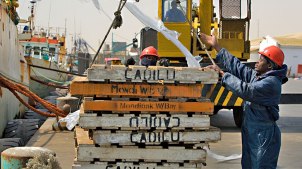 Germany meet the quality standards of global logistics operators, compared to only 40% in Bolivia? Or that importing goods into Georgia requires traders to deal with just one agency, but in Madagascar, traders must deal with 10?
 Netherlands for the World Bank
You must be logged in to post a comment.