World Bank Group Exceeds its Climate Finance Target with Record Year

Fiscal Year 2018 sets record with $20.5 billion in finance for country-level climate action

WASHINGTON, July 19, 2018 – The World Bank Group announced today that in fiscal appyear 2018, 32.1 percent of its financing had climate co-benefits – already exceeding the target set in 2015 that 28 percent of its lending volume would be climate-related by 2020. This amounted to a record-setting $20.5 billion in climate-related finance delivered in the last fiscal year – the result of an institution-wide effort to mainstream climate considerations into all development projects.

The 28 percent target was a key goal of the Bank Group’s Climate Change Action Plan, adopted in April 2016, and was designed to support countries to deliver on their national goals under the Paris Agreement on climate change.

Continue reading →

How can Indonesia achieve a more sustainable transport system?

Indonesia, a vast archipelago of more than 17,500 islands, is the fourth most populous id-street-scene-jakarta-un-women-flickrcountry in the world, with 261 million inhabitants, and the largest economy in Southeast Asia, with a nominal Gross Domestic Product of $933 billion.

Central government spending on transport increased by threefold between 2010-2016. This has enabled the country to extend its transport network capacity and improve access to some of the most remote areas across the archipelago.

Continue reading →

eC2:Improving energy, water and chemicals use efficiency in the textile sector

Deadline: 26-Jul-2018 at 11:59:59 PM (Eastern Time – Washington D.C.) waterkraan-nieuws-header

A local (South Africa) consulting firm is being sought who will undertake the following work:
1. Establish baselines and collect key performance indicators data on the water, energy and chemicals use and wastewater generated.
2. Design and propose a resource efficiency improvement program (energy, water and chemicals).
3. Prepare a financial plan for the resource efficiency program. The financial plan must explore different investment and business model options and describe which fits the best a selected client.
4. Assess the financial feasibility of implementing power generation projects such as solar photovoltaic, natural gas generators and combined heat and power system.

Continue reading →

eC2: Social Inclusion and Youth Development Survey

Deadline:  25-Jul-2018 at 11:59:59 PM (Eastern Time – Washington D.C.)Survey

The services include implementation of surveys that will include modules on: household characteristics; access to and perceptions of local infrastructure; access to and perceptions of education; social networks, social capital, and collective action and associations; local governance; the daily activities and interactions among youth; use of IT and social media; gender; and violent extremism. The survey must be implemented using CAPI system and will cover approximately 5,000 households. The sample will be distributed nationally in Tajikistan using a standard 2-stage approach wherein stratification ensures sufficient sample distribution by region and rural/urban areas. The team plans to oversample respondents in some districts and towns.

Continue reading →

Applications open for third round of funding for collaborative data innovation projects

The Global Partnership for Sustainable Development Data and the World Bank uganda-cncDevelopment Data Group are pleased to announce that applications are now open for a third round of support for innovative collaborations for data production, dissemination, and use. This follows two previous rounds of funding awarded in 2017 and earlier in 2018.

This initiative is supported by the World Bank’s Trust Fund for Statistical Capacity Building (TFSCB) with financing from the United Kingdom’s Department for International Development (DFID), the Government of Korea and the Department of Foreign Affairs and Trade of Ireland.

Continue reading →

eC2:Pre-Feasibility study for a financing facility to improve water utilities efficiency in the Danube River Basin Region

Deadline: 31-Jul-2018 at 11:59:59 PM (Eastern Time – Washington D.C.) water

The World Bank ECA Water team is considering different options to support client countries in the development of special financing facilities for water utilities, with a focus on facilities extending targeted lending to utilities for increasing their operational efficiency directly impacting their financial situation. A regional, multi-country or national financing facility would aim to achieve the following objectives: i) provide financing for small investments resulting in efficiency improvements which can contribute to achieving long term sustainability of WSS services; ii) improve cost recovery and financial sustainability and utility creditworthiness; and iii) contribute to building up a commercial banking market for WSS utility lending by developing the skills of commercial banks to take municipal/utility risk. See attached TOR for further details. The Firm to be selected will undertake a feasibility study to support the design of such financing facility.

Continue reading →

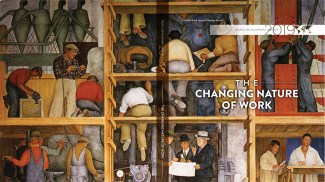
What will be the future of work?

Do you wonder if the good fortune and opportunities that you’ve enjoyed in your wdr_2019_coverprofessional life will be available to your children, and to their children? At a time of strong global economic growth, it may seem paradoxical that we face an existential crisis around the future of work. But the pace of innovation is accelerating, and the jobs of the future – in a few months or a few years – will require specific, complex skills. Human capital will become an ever more valuable resource.

Continue reading →

The Race for Universal Energy Access Speeds Up

STORY HIGHLIGHTS energy

  • A billion people still live without electricity, but certain countries are starting to adopt new approaches to expand electricity services – reaching millions of people in the past few years.
  • The number of people gaining access to electricity in Sub-Saharan Africa has begun to outstrip population growth for the first time. In South Asia, progress has been even faster.
  • Much more work will be needed to achieve universal electrification by 2030, as called for in SDG7. The World Bank is significantly ramping up financing for energy access programs, with support for mini-grid and off-grid projects growing the fastest.

Continue reading →

Call for Proposals for Innovation in Addressing Gender-Based Violence

The World Bank Group and the Sexual Violence Research Initiative (SVRI) announced a new open call for awards recognizing promising innovations aimed at preventing and responding to gender-based violence. Applications for the Development Marketplace for Innovation in Addressing Gender-Based Violence must be received online by September 5, 2018.

Continue reading →