To better understand AI’s labor market impact in the developing world, in a recent paper we analyzed data from 25 countries, covering a population of 3.5 billion people. For workers in those countries, we assessed the level of AI exposure, which captures to what extent their jobs could be performed using AI. Our findings suggest that AI’s effects on jobs will be more gradual in the Global South, particularly in low-income countries.
As part of its Evolution Process, the World Bank Group is reviewing its country engagement approach to align it with its new vision and mission while becoming more efficient, outcome-focused, and more systematic in tapping into private sector solutions wherever possible.
To inform the new country engagement approach, we will hold formal consultations with external stakeholders. Online consultations opened on January 16, 2025, and consultation meetings will be held in all seven operational regions of the WBG starting February. The consultations will close on March 21, 2025. The meetings will follow a hybrid format, combining in-person and virtual participation. Rethinking the Approach to WBG Country Engagementwill provide the basis for consultations. To see the consultations outreach plan, click here.
This blog post is part of a special series titled “Spatial Insights into the Gender Employment Gap”, powered by the World Bank’s Geospatial Operations Support Team. Read the series’ first and second installments.
Operational procurement is a crucial part of the World Bank’s efforts to become a Better Bank and fulfill our mission. Effective procurement enables our clients to achieve value for money, transparency, efficiency, and fairness in Bank-financed operations. By setting quality standards in international procurement, we respond to our clients’ needs by driving market innovation, attracting top suppliers, expanding options, and fostering global competition to deliver development outcomes with speed.
Starting March 1, 2025, the World Bank will introduce a range of measures aimed at delivering better outcomes in procurement under Investment Project Financing. These new requirements reflect extensive feedback from our clients and the business community and demonstrate our commitment to modern procurement practices. First, we will require a 50 percent minimum quality weighting for most internationally competitive procurement. Second, for contracts with an estimated value over $10 million, early market engagement will be an integrated part of our processes to attract high-caliber bidders and optimize procurement strategies. Third, we will collaborate with clients to aggregate smaller contracts into larger packages and offer direct payment options to reduce supplier payment risks.
Training programs on these new approaches will be provided to clients and World Bank staff. We will also increase our support, oversight, and scrutiny of project procurement strategies, market engagement approaches, rated criteria, quality weightings, and related procurement actions.
To align with this new mandate and to support implementation, we have published:
We look forward to working together and remain committed to modern, fair, and transparent procurement processes that lead to better development outcomes for people in our client countries.
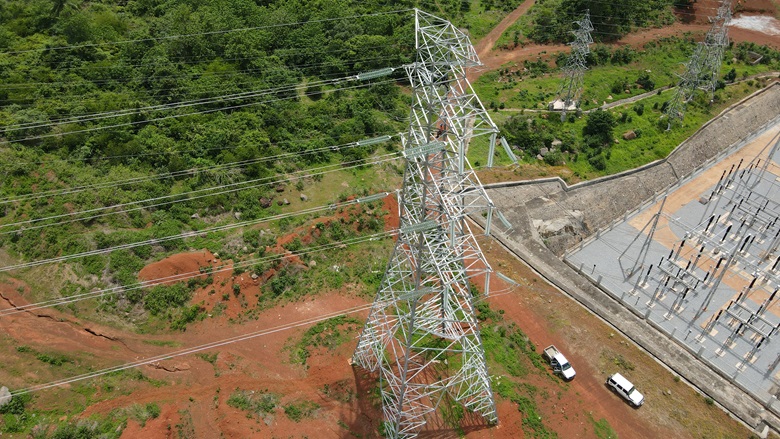
The construction of a 1,303 km 225 Kilovolt (kV) transmission line connecting the electricity grids of Côte d’Ivoire, Guinea, Liberia, and Sierra Leone (CLSG) has facilitated cross-border electricity trade and delivered affordable, renewable, and abundant electricity to approximately 2.8 million people across Guinea, Liberia, and Sierra Leone. This initiative has also contributed to a reduction in greenhouse gas emissions, amounting to about 13.8 million tons of CO2.
A newly built 228 km 225 kV transmission line connecting Kayes in Mali and Tambacounda in Senegal has significantly improved electricity supply and access for 404,000 people in Mali, Mauritania, and Senegal.
The Gambia River Development Organization (OMVG) Interconnection has helped improve access to clean, lower-cost, and more reliable electricity service for more than 2.5 million households and businesses, equivalent to 15 million beneficiaries in Guinea, Guinea-Bissau, Senegal and The Gambia.
The construction of a 913 km 330/225 kV transmission line connecting Benin, Burkina Faso, Niger, and Nigeria under the North Core Interconnection project is expected to successfully deliver 600 MW of affordable, renewable, and abundant electricity to Niger, Burkina Faso, Benin, and Togo, and provide rural electrification to approximately 1.2 million people across Niger and Burkina Faso.
Two years ago, Türkiye was shaken by a series of devastating earthquakes, which claimed over 50,000 lives and caused direct damages exceeding $34 billion and associated reconstruction costs estimated at $ 81.5 billion. Entire neighborhoods were reduced to rubble, with thousands of homes, schools, hospitals, and transportation networks destroyed. More than 1.5 million people were displaced, and millions face an uncertain future in the wake of the immense loss and disruption.
With a national electricity access rate of 84%, Senegal is making progress towards universal energy access, yet more than 30 % of rural communities remain disconnected from the grid.
As part of the Just Energy Transition Partnership, Senegal has committed to bold reforms to increase renewable energy to 40% of its generation mix by 2030 and expand total generation capacity by 70%.
The Senegal Energy Access Scale-Up Project is building and rehabilitating nearly 4,000 kilometers of power lines and will bring electricity to 200,000 households, electrify 600 health clinics and 200 schools, and ensure that all distribution infrastructure is flood-resilient.
Seating in her bedroom in Ndorong Serere, a village located 100 kms from Senegal’s Capital Dakar, Khady studies her natural science textbook under the steady glow of an electric lamp. Her dream of becoming a doctor fuels her focus, the conditions around her now match her aspirations. Just weeks ago, the scene was starkly different – she had to ration her flashlight batteries carefully, limiting her study time each evening and often struggling to complete her homework before the batteries died completely.
“I can now study my lessons in better conditions at night”. Khady attributes her recent academic progress not only to her teachers and her commitment but also to the arrival of reliable lighting. “Last year at this same time, I had a grade of 10 in natural sciences. This year, I have a grade of 17,” she says with a proud smile.
I learned and practiced carpentry at 10 kilometers from Ndorong Serere, but when electricity came to this locality, I didn’t hesitate to return and open my first carpentry workshop.
Djaraf,
Carpenter
Electricity sparks change in a Senegalese village
Bridging the energy divide
Khady’s story reflects Senegal’s broader journey toward universal electricity access. The country has made significant strides, with a national access rate of 84% according to government sources. This progress has transformed millions of lives, yet the journey is far from over. While urban areas enjoy near-universal access, over 30 % of rural communities remain disconnected from the grid.
Carpenter Djaraf using the electric plug for his works. Credit: LayeproPhotos / World Bank.
For Ndorong Serere, the arrival of electricity has been a catalyst for transformation. Djaraf, a skilled carpenter, is one of the many who seized new opportunities. “I learned and practiced carpentry at 10 kilometers from Ndorong Serere, but when electricity came to this locality, I didn’t hesitate to return and open my first carpentry workshop,” he explains.
Beyond economic opportunities, electricity has restored dignity and improved quality of life. Village elder Cheikh Dioufrecalls past struggles: “When someone passed away, residents had to travel 10 kilometers to get ice to preserve the body while waiting for the deceased’s family to come.” Now such basic challenges are a thing of the past, as energy access has fundamentally reshaped the community’s daily reality.
Cheikh Diouf during his prayers. Credit: LayeproPhotos / World Bank.
Powering progress: Senegal’s ambition
Senegal’s commitment to universal electricity access is supported by innovative financing and strategic partnerships, including the Senegal Energy Access Scale Up Project with a $150 million financing from the International Development Association (IDA). The project aims to build and rehabilitate nearly 4,000 kilometers of power lines. It will bring electricity to 200,000 households, electrify 600 health clinics and 200 schools, and ensure that 100% of distribution infrastructure is resilient to climate related events. A least-cost geospatial electrification plan is also in development to optimize efforts. Senegal’s energy strategy prioritizes mobilizing $2 billion in private investments. Recognizing that achieving universal access cannot rely solely on public resources, the approach leverages private sector innovation and efficiency to meet ambitious targets.
Embracing a sustainable energy future
The Government’s vision for the sector goes beyond access to embrace sustainability. Exploiting its gas reserves, Senegal has embarked on an ambitious plan to convert its heavy fuel production to gas and increase its renewable energy share to 40% of its generation mix by 2030, while expanding total generation capacity by 70%. This effort is part the Just Energy Transition Partnership (JETP), a global financing initiative through which Senegal partners with France, Germany, the European Union, the United Kingdom, and Canada to achieve universal energy access and develop a sustainable, low-carbon energy system by promoting renewable energy technologies. Additionally, the country is accelerating access to clean cooking solutions, aiming for an annual growth rate of 11.3%, up from the current 3.25%.
This push for clean energy access would benefit more people, with particular focus on women and communities disproportionately burdened by traditional cooking methods. The initiative aligns with the broader “Mission 300” movement, which aims to connect 300 million Africans to electricity by 2030.
In Ndorong Serere, these national ambitions are already creating tangible change. It is a scene that Senegal hopes to replicate across every village and town, illuminating the path toward a more equitable and sustainable future.
Ethiopia has made significant progress in energy access in recent years; however, despite a 94% electrification rate in urban areas, around 60 million Ethiopians remain without electricity access.
The World Bank-supported Ethiopia Electrification Program (ELEAP), has facilitated nearly 1.3 million on-grid connections, providing electricity to about 6.3 million people, and more than 19,000 public facilities such as schools, healthcare centers, and administrative government buildings, across Ethiopia.
ELEAP has supported the installation of 11 mini-grids, bringing electricity to nearly 20,000 people in isolated communities, promoting social and economic growth, and particularly benefiting rural women.
You must be logged in to post a comment.