
HAMBURG, Germany, July 8, 2017—On the occasion of the G20 leaders’ summit, the 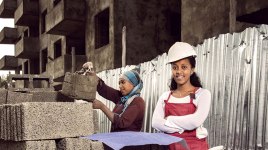 World Bank Group today announced the creation of an innovative new facility that aims to enable more than $1 billion to advance women’s entrepreneurship and help women in developing countries gain increased access to the finance, markets, and networks necessary to start and grow a business.
The United States initiated the idea for the facility and will serve as a founding member along with other donor countries.


 brown water they had no choice but to drink.
 give a presentation about their activities. MIGA contributes to the World Bank Group’s goals of ending extreme poverty and promoting shared prosperity by facilitating private investment into developing member countries and supporting projects that bring broad developmental impact. MIGA-supported investments help bring jobs, innovation, technology, and skills transfer.
 challenge that has been shown to contribute to a number of harmful consequences, including school dropout, early pregnancy, intimate partner violence and infant mortality. But what are the economic impacts of child marriage? Join the International Center for Research on Women (ICRW) and the World Bank to discuss the findings from a groundbreaking research project to uncover the economic costs of child marriage.


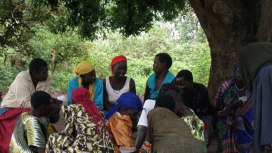 dable finance, especially before the planting season when cash flow is low but need for farming inputs is high. In Kenya, agriculture is one of the most underfinanced sectors of the economy. CGAP aims to lower the risk and cost for financial institutions and input suppliers to meet this unmet demand. We wish to test a digital financial solution that links smallholder farmers to inputs and credit in Kenya. The solution should help smallholder farmers save as well as securely borrow toward the purchase of agricultural inputs such as fertilizers, seeds.

You must be logged in to post a comment.