
 While reading a newspaper over the holidays, one of us came across an article with an often common story: “car collision causes mass fatalities on mountain road”. The collision resulted in 51 deaths, after a bus–one of the vehicles involved, plunged down a cliff in Peru. Many of the dead were returning to Lima after celebrating the New Year’s holiday with family outside the city.
Tag Archives: Wereldbank Groep
eC2: Evaluation of the Networked Carbon Markets Initiative
Deadline: 12-Apr-2018 at 11:59:59 PM (Eastern Time – Washington D.C.) 
Objective: An independent evaluation of NCM activities supported by SECO is proposed. The purpose of this evaluation is to: Evaluate the NCM initiative and its outputs against its objective of supporting post-2020 climate markets through the operationalization of Article 6 of the Paris Agreement; Evaluate the contribution of NCM activities shaping work programs towards operationalizing Article 6 and the use of market instruments to enhance ambition of climate action at the World Bank; Assess the use of SECO funding towards the achievement of NCM objectives; Inform future program development based on results achieved thus far.
eC2: Technical and Specialist Advice on Medical Diagnostic Imaging Procurement

Reducing Greenhouse Gas Emissions through Energy Efficiency – and Learning from One’s Peers
China, India, Indonesia, the Philippines, Pakistan, and Vietnam are critical for global climate action. Why? Among other reasons, because three-fourths of all new coal-fired power plants to begin operations before 2020 globally will be in these six Asian countries. Fostering more energy efficiency will be imperative in the countries’ efforts to adopt a low carbon energy path.
One initiative that supports efforts to scale up energy efficiency and clean energy – and lower greenhouse gas emissions – in these six countries is the Energy Transition in Asia program managed by the Energy and Extractives Global Practice.
eC2: Mainstreaming Disaster Risk Management to Sustain Local Infrastructure- A Case Study on Resilient Roads Planning.
Deadline: 05-Apr-2018 at 11:59:59 PM (Eastern Time – Washington D.C.) 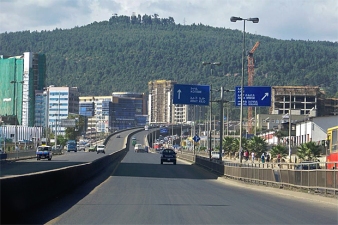
Objective: The objective of this technical assistance (TA) is to increase the capacity and knowledge of selected LGU/s in dealing with climate/disaster risks faced by local transport infrastructure and pilot an institutionalized coordination process with the national agencies to better inform local roads planning, using a learning-by-doing approach. The activity will revolve around three important areas: (a) high-resolution risk mapping based on existing hazard information; (b) a prioritization of corrective investments, including primarily those for roads improvement and flood management, based on life cycle approach; and (c) planning, design standards and asset management frameworks especially for local roads are reevaluated in light of future climate and natural hazard risks. The firm has to demonstrate experience working on previous assignments in the Philippines. Because of the capacity building component and learning by doing approach, international firms are encouraged to tap a local entity for this purpose such as a local firm, university, research/think tank group, NGO, or individual. The TA site is still to be agreed with government.
Working Together to Weather Future Storms
 STORY HIGHLIGHTS
- Meteorological and hydrological services – hydromet – play a vital role in mitigating the impacts of weather and climate extremes
- Hydromet is not only about early warning systems, but also giving countries, regions, communities, and individuals weather information and reliable predictions to make informed decisions for many sectors of the economy – from agriculture to logistics to hydropower, and many more
- The World Bank and the Global Facility for Disaster Reduction and Recovery (GFDRR) are supporting efforts to strengthen collaboration in global weather monitoring across the public and private sectors
eC2: Development of Roadmap Towards Sustainable Development Goals for Water Supply
 Deadline: 09-Apr-2018 at 11:59:59 PM (Eastern Time – Washington D.C.)
Objective: The World Bank is seeking consultancy services to support development of a national roadmap for water supply sector development towards achievement of Sustainable Development Goals in Indonesia. The roadmap will need to layout the set of priority of actions that need to be implemented in the short term (5 years horizon, mid- and longer term, for the following key aspects: (i) regulations/policy development, (ii) investment/financial framework, (iii) institutional development, and (iv) water security that includes climate change and resilience perspective. The short-term priority actions will feed into preparation of the next National Mid-Term Development Plan (RPJMN) 2020-2025.
eC2: SCOPING STUDY ASSESSING THE ENERGY ACCESS SPACE IN AFGHANISTAN AND DEVELOPING A PROGRAM
Deadline: 02-Apr-2018 at 11:59:59 PM (Eastern Time – Washington D.C.) 
Objective: The objective of this study is to evaluate the potential to develop an energy access program exploiting renewable sources, focused on two market sectors: i) solar lighting devices (solar lanterns and solar home systems, SHS) and ii) solar water heaters (SWH) based on sound market intelligence. It includes development of an initial concept for a SHS program with the purpose of developing a functioning market for supply, after-sales service and financing of such systems for the electrification of off-grid areas in Afghanistan. It is expected that the consultant will assess the current market conditions from the supply side (i.e. solar equipment and micro-finance providers) and the demand side, i.e. consumers. On the supply side, information should be gathered through stakeholder interviews and field visits whereas for the consumer side, a detailed market intelligence survey is expected to be conducted (household level, suggested 1,600 interviews). Based on the data collected, the consultant is expected to develop an initial concept for a SHS program.
Meet the Human Faces of Climate Migration
STORY HIGHLIGHTS 
- A new World Bank report has found that by 2050 the worsening impacts of climate change in three densely populated regions of the world could see more than 140 million people move within their countries’ borders.
- With concerted action, however, including global efforts to cut greenhouse gas emissions and robust development planning at the country level – this worst-case scenario could be dramatically reduced, by as much as 80 percent, or 100 million people.
- The report identifies “hotspots” of climate in- and out-migration. These include climate-vulnerable areas from which people are expected to move, and locations into which people will try to move to build new lives and livelihoods
eC2: Technical assistance to Sierra Leone on infectious disease outbreak investigation and rapid response
Deadline: 30-Mar-2018 at 11:59:59 PM (Eastern Time – Washington D.C.) ![medical-appointment-doctor-healthcare-clinic-health-hospital-medicine[7]](https://nl4worldbank.org/wp-content/uploads/2015/09/medical-appointment-doctor-healthcare-clinic-health-hospital-medicine7.jpg?w=339&h=226)
Objective: The assignment is to provide TA to improve the capacity in Sierra Leone for rapid response to infectious disease outbreaks at district and national levels by developing, equip and training district and national rapid response teams, specifically to:


You must be logged in to post a comment.