
Deadline: 18-Dec-2019 at 11:59:59 PM (Eastern Time – Washington D.C.) 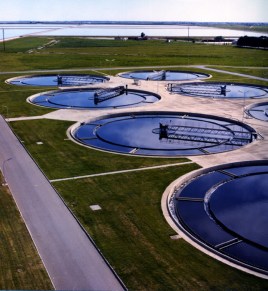
To ascertain the potential energy savings and cost reductions, the World Bank will engage a consultant to conduct a detailed energy and water audit of the Cutzamala system to identify, assess and recommend opportunities for improving energy efficiency and load management.
The assignment is expected to be conducted in three Phases:
Inception Phase Preliminary Assessment
Phase I Assessment of energy efficiency, load management & renewable energy opportunities
Phase II Identification and assessment of new technologies and financing options
 safety and investment. There is an urgent need for international partners to mobilise financing through coordinated regional action. The World Bank and Netherlands Water Partnership (NWP) are on their way to formalising their partnership to exchange knowledge, expertise and information, and to increase business opportunities for the Dutch water sector. Last week, NWP’s Josephine Damstra attended the first Finance Marketplace in Ivory Coast, which was organised as part of the World Bank’s West Africa Coastal Areas Management Program.
 and Romania came to the Netherlands for a World Bank study tour on nature-based solutions organized by the Netherlands Water Partnership. One of the participants was Ivane Vashakmadze, Tourism Expert and World Bank Consultant from Georgia. In his blog, he shares his experiences and his lessons learnt on nature-based solutions.


 that the rural population in LAC is decreasing in relative terms. In 2001, official figures indicated that 125 million people in LAC resided in rural areas representing 24% of the total LAC population. In 2013, this value decreased to 21% (130 million out of a total population of 609 million inhabitants), and it is estimated that by 2030, the rural population will decrease to represent 16.5% of the total (CEPAL, 2014).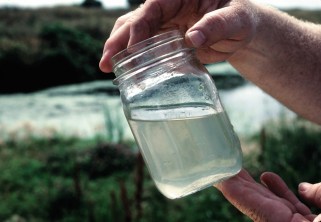
 he (the first female engineer had not graduated yet) would not recognize much of the technology we have today. Personal computers, cell phones, cars, planes, and antibiotics would probably be unfathomable to him. But he would definitely recognize our current piped water and sanitation (WSS) infrastructure, as it looks and operates almost exactly the same as it did 150 years ago. Certainly, there have been significant improvements in the sector, especially in water and wastewater treatment, but the principles on which the piped WSS technology is based have not seen any fundamental changes since the 1860s, when it was (re)introduced on a large scale.

You must be logged in to post a comment.