
August 28 to September 2, 2016 , world leaders, development professionals and water experts gathered in Stockholm for the world’s leading annual event on water and development- World Water Week 2016. A recap of the 5 most viewed blogs written by the World Bank Group.
Tag Archives: Topsector Water
Promoting partnership for a water-secure world
Article published on The Water Blog, Saturday 08/27/2016.
The global water community is gathering in Stockholm for World Water Week 2016. This year’s theme, “Water for Sustainable Growth,” comes at a critical time, as we are mobilizing to achieve the Sustainable Development Goals (SDGs), in which water plays an essential part.
China’s Flood Control Project: a Bigger Role for Farmers and a Better Alert System
After many years as a migrant worker in various cities, Chen Yin returned to Tuoxi village recently to pick up farm work again.
How can water utilities provide reliable water to poor people in African cities?
Sustainable Development Goal (SDG) 6 targets“universal and equitabl e access to safe and affordable drinking water for all”. However, just accessing water is a daily struggle for many poor families
 . While Africa’s urban population is expected to triple by 2050, the proportion of people with improved water supply has barely grown since 1990, and the share of those with water piped to their premises has declined from 43 percent in 1990 to 33 percent in 2015. Poor families bear the brunt of these inadequacies through poor health, the long time required to collect water, and higher costs when purchasing from on-sellers’
The World Bank at World Water Week 2016
The global water community is gearing up for Stockholm World Water Week 2016. T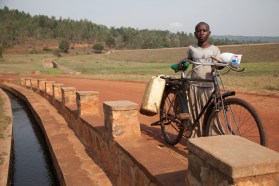 his year’s theme, “Water for Sustainable Growth,” comes at a critical time, as we are mobilizing to achieve the Sustainable Development Goals (SDGs), in which water plays an essential part.
Water touches nearly every aspect of development.  It drives economic growth, supports healthy ecosystems, and is fundamental for life. However, water can threaten health and prosperity as well as promote it. Water-related hazards, including floods, storms, and droughts, are already responsible for 9 out of 10 natural disasters, and climate change is expected to increase these risks. As water resources become increasingly strained, the risk of conflict and instability may also grow.
Water, Water (Not) Everywhere: the Imperative of Increasing Water Use Efficiency
Today, nearly 1.6 billion people live in countries with physical water scarcity – a figure that may double in just two decades.
As economies and populations grow, their demand for water also grows. Water is not only essential for human life, it is a vital factor for production – meaning that diminishing water supplies can translate into lower economic growth. A recent assessment, “High and Dry: Climate Change, Water and the Economy”, a report by the Water Global Practice of the World Bank, found that some regions could see their growth rates decline by as much as 6% of GDP by 2050 due to water-related losses in various sectors.
Article: Climate Change Expected to Magnify Water Scarcity
Article published on http://www.worldbank.org, August 18, 2016
Story highlights
- Nearly 1.6 billion people live in countries with physical water scarcity – a figure that
 may double in the coming two decades.
- As the potential for developing new sources of water diminishes, making more efficient use of water becomes essential to meeting future demand.
- The World Bank works with countries around the world to help ensure water resources remain secure through water efficiency measures, including improved agricultural practices.
eC2: Consultant for 2030 Water Resources Group Bangladesh
Deadline: 24-Aug-2016 at 11:59:59 PM (Eastern Time – Washington D.C.)
Working under the supervision of the Bangladesh Program Coordinator for 2030 World  Resources Group (WRG) the Consultant will support the 2030 WRGs Bangladesh secretariat including:
1. Support organization of workshops, focused group discussions and high level meetings related to the Bangladesh Water Multi-Stakeholder Partnership and its three work-streams
2. Prepare agenda, presentations, case studies for the events
3. Liaise with stakeholders from the government, private sector and civil society to seek their inputs into event design and execution
4. Support communication and PR functions and provide all logistical support
5. Support the analytical studies Water Governance and Sustainability work-stream and associated Task Forces.
6. Support the Investment Plan of the Bangladesh Delta Plan
7. Support the Greater Dhaka Watershed Restoration (GDWR) and Agri-Water work-streams as needed
Continue reading
eC2: Options Analysis for WASH PPP in Tanzania
Deadline: 28-Aug-2016 at 11:59:59 PM (Eastern Time – Washington D.C.)
The objective of the assignment and anticipated outputs is to support the MoW in  examining Public Private Partnership (PPP) options for improving provision of water supply and sanitation services for the larger urban areas, as well as looking at the potential projects that have already been the subject of studies in Tanzania, both as set out below:
Priority Urban Areas
1. Regional Towns -Arusha, Singida and Dar es Salaam
2. District Towns -Kisarawe, Mkuranga and Namtumbo
3. National Project for PPP- HTM, Wangingombe, Makonde and Mugango Kiabakari
Potential Projects
1. Handeni Trank Main (HTM) Development of Business Case Options and Analysis of Involvement of Private Sector Xs-Axis Consulting GmBH
2. Detailed design and Tender documents for Kisarawe, Mkuranga, Namtumbo, Mugango Kiabakari and Wangingombe National Project.
3. Feasibility Studies Report for Makonde and HTM National Project
eC2: Development of ESIA Guidelines for Hydropower Projects in Myanmar
Deadline: 29-Aug-2016 at 11:59:59 PM (Eastern Time – Washington D.C.)
Environmental and Social Impact Assessment (ESIA) guidelines for hydropower 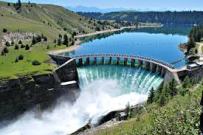 development in Myanmar are required to provide clear, consistent and comprehensive guidance on:
(i) the legal requirements for impact assessment;
(ii) key issues to be considered in project design, construction, commissioning, operation and decommissioning, and assessed during the ESIA process; and
(iii) management plans to be prepared, to seek project approval and to effectively design, construct, commission, operate and decommission projects in a sustainable manner.
This includes application of the mitigation hierarchy to anticipate and avoid impacts to the fullest extent possible, and where avoidance is not possible minimize (e.g. abate, rectify, repair and/or restore) those impacts, and where residual impacts remain, compensate/offset for risks and impacts.
 Netherlands for the World Bank
You must be logged in to post a comment.