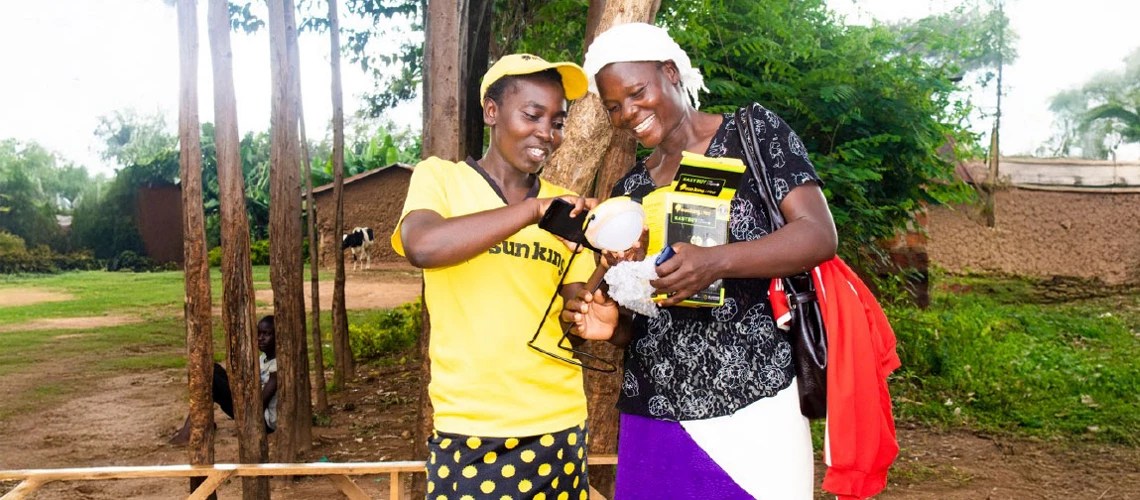
The extraordinary lack of energy in Africa–affecting about 300 million women-has profound effects on women’s economic opportunities. Women are already disproportionately affected by energy poverty, especially in rural areas. On average, women and girls spend 50 hours a week just fetching firewood, cooking, and collecting water. That’s 50 hours spent on subsistence, not on growing a business, pursuing education, or improving their health. In fact, 900 million African women and girls who lack access to clean cooking technology suffer from smoke inhalation-related diseases. That’s a huge barrier to their health, education, and economic potential.
Small businesses can play an impactful role in fragile and conflict affected situations (FCS). They can create jobs and directly provide necessity goods and services such as food, water, health, education, and transportation. They can also contribute to the resilience of local populations during periods of conflict.
However, small businesses operating in FCS countries endure numerous setbacks to their activity, from frequent electricity cuts to bribery to armed attacks. Surviving and growing in these situations is difficult. Navigating daily challenges without access to affordable credit is almost impossible.
Figure 1. Access and use of financial services by SMEs
Image
Source: Author’s elaboration on WBES data
What drives SME financial exclusion in FCS countries vis-à-vis non-FCS countries? In a recent paper we examine this question, focusing in particular on the role of economic fundamentals and institutional factors. Economic fundamentals matter for SME financial inclusion. Higher incomes and better physical infrastructure increase savings and the pool of funds in the economy and improve access to finance while macroeconomic and financial stability can positively affect credit and other financial services to SMEs.
Institutions—the rules of the game in a society—matter too. Institutions influence the development of entrepreneurship and can support SME financial inclusion by improving the information environment and strengthening contract enforcement, as well as supporting equal treatment of firms in access to financial services.
On both counts, FCS countries generally lag behind non-FCS countries, especially, as would be expected, in terms of institutional development (figure 2). But what do we find in the data?
Figure 4. Macroeconomic, financial sector, institutional and business environment features
Image
Source: Author’s elaboration on WDI, GFD, WGI, WDI, Heritage Foundation
The results of our analysis show that output growth has a negative impact on SME financial inclusion in FCS countries, probably reflecting demand for countercyclical finance — typically backed by the government — by financially constrained SMEs that otherwise tend to resort to internal funds to finance their operations and investment.
On the other hand, price stability, a key sign of macroeconomic stability, is associated with higher SME financial inclusion in FCS countries. Moreover, access and usage of financial services by SMEs in FCS countries tends to increase with economic development, for example, income levels.
Other economic fundamentals also play a role in SME financial inclusion in FCS countries. Economies with large informal sectors tend to face tighter constraints on SME financial inclusion. Similarly, the lack of economic diversification also has a significant impact. Financial sector characteristics also affect SME access and usage of finance. The quantity of financial intermediation, such as deeper credit markets, helps enhance SME financial inclusion, and this is particularly important in FCS contexts.
The quality of financial intermediation is equally important because government and state-owned enterprise financing can crowd out credit to the private sector, including SMEs. In our sample of FCS countries, available credit tends to go proportionally more to the public sector than the private sector compared to non-FCS countries. Our analysis suggests that a significant role is played by crowding out effects in FCS countries. A lack of competition among banks reduces SME financial inclusion in FCS countries. Reducing banking market concentration is found to have a positive impact on SME access and usage of formal financial services in FCS countries. Finally, banking sector soundness, as measured by the quality of lending (NPL ratio), significantly and strongly supports SME financial inclusion.
Turning to institutional factors, strong governance and stable institutions exert a significant influence on SME access and usage of formal financial services in FCS countries. Voice and accountability, political stability, government effectiveness, and control of corruption are all positively correlated with SME financial inclusion. The importance of government effectiveness and control of corruption is particularly strong for FCS countries.
Credit information is also a key factor for SME financial inclusion. Rules affecting the scope, accessibility, and quality of credit information available through public or private credit registries can greatly facilitate banking relationships, and they are especially important for FCS countries.
Constraints to the quality of contract enforcement, property rights, and the effectiveness of courts, as well as to the ability of the authorities to formulate and implement policies and regulations that permit and promote private sector development, are negatively correlated with SME access and usage of formal financial services. Their impact is significantly stronger for FCS countries, suggesting that improvements in the overall business environment can have relatively sizable effects on SME financial inclusion in those countries.
Deadline: 23-May-2022 at 11:59:59 PM (Eastern Time – Washington D.C.)
The International Finance Corporation: IFC, a member of the World Bank Group, is the largest global development institution focused exclusively on the private sector in developing countries. We apply our financial resources, technical expertise, global experience, and innovative thinking to help our partners overcome financial, operational, and other challenges. In addition to its investment work, IFC provides advisory services to a number of its clients to support them in meeting specific development goals. IFCs advisory support to the financial sector is implemented via its Financial Institutions Group and is organized around the following main themes: Innovation/Base of Pyramid: including Microfinance, Mobile Financial Services, Housing Finance, Rural Finance. Banking Services: SME Finance, Sustainable Energy Finance, Insurance, Agri finance, Leasing, Trade Finance, Gender, Risk Management and Corporate Governance. Financial Infrastructure: Credit Reporting, Collateral Registries and Secured Transactions, Securities
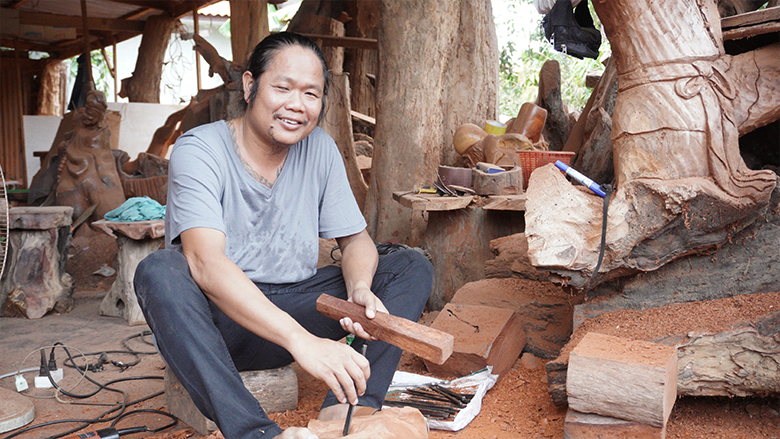
March 11 marks one year since COVID-19 was officially declared a pandemic. While the past year has been tremendously challenging, there have been remarkable stories of human resilience, ingenuity, and creativity. On this grim anniversary, we wanted to bring you stories from around the world that inspire. The following six stories are not billion-dollar projects, but the tales of everyday entrepreneurship and innovation happening on a small scale with a big impact. The World Bank Group is continuing to support the poorest countries as they look to a build a sustainable, resilient, and inclusive recovery.
1. Lao PDR: Unlocking the Full Potential of Small- and Medium-Sized Enterprise
Deadline: 04-Sep-2019 at 11:59:59 PM (Eastern Time – Washington D.C.)
The objective of the project is to support the SMEs in Cote d’Ivoire to effectively participate in the on-going procurement reform and win more procurement contracts through a transparent and competitive process. The winning firm is expected to design and roll out a training program to train SMEs, in coordination with the authority. The selected firm is required to put forward a team that includes an individual who is well versed in the public procurement policy and institutional framework of Cote d’Ivoire as well as an individual with extensive experience in providing capacity building with thorough understanding of the reality of SMEs in Cote d’Ivoire.
The assignment is expected to be a fixed budget contract of $300,000.
Deadline: 06-Aug-2019 at 11:59:59 PM (Eastern Time – Washington D.C.)
This market study will produce new information and data about the jobs growth potential and constraints faced by the Mozambican SMEs that will be of use to this project and more in general to the Lets Work Partners and other development programs working in the labor demand agenda in Mozambique.
The main objective of this consultancy is to estimate potential appetite of firms (SMEs) and entrepreneurs for a Business Plan Competition type of intervention, promoted under a project of the Government of Mozambique (supported by the World Bank)that seeks to increase empowerment, access to education, and employment opportunities for targeted youth. hence investment-retained in response to project interventions. Continue reading →
Have you ever walked around a megastore, lost in the aisles of choices, only to go home without the one item you set out for? Conversely, have you ever wandered into a much smaller “mom and pop” shop and found everything you need?
Many reasons compel us to support small and medium businesses: tailored knowledge, personalized service, and the satisfaction of contributing directly to the local economy. Continue reading →
Deadline: 26-Jul-2017 at 11:59:59 PM (Eastern Time – Washington D.C.)
Interested firm should be experienced with the design and implementation of financial (IT) solutions, preferably focusing on SMEs and retail consumers. The firm/consortium is required to demonstrate (i) proven expertise (with concrete examples) in designing, developing and implementing financial IT solutions (ii) proficient in Arabic and building multi-language applications; (iii) local presence in Middle-East region, preferable in Jordan with management staff and ICT experts; (iv) experience working with government agencies and multi-lateral and international institutions. Assessment of proposals will be based on the qualification criteria.




 A few weeks ago, the international community agreed to a record $93 billion financing package for the world’s poorest countries.


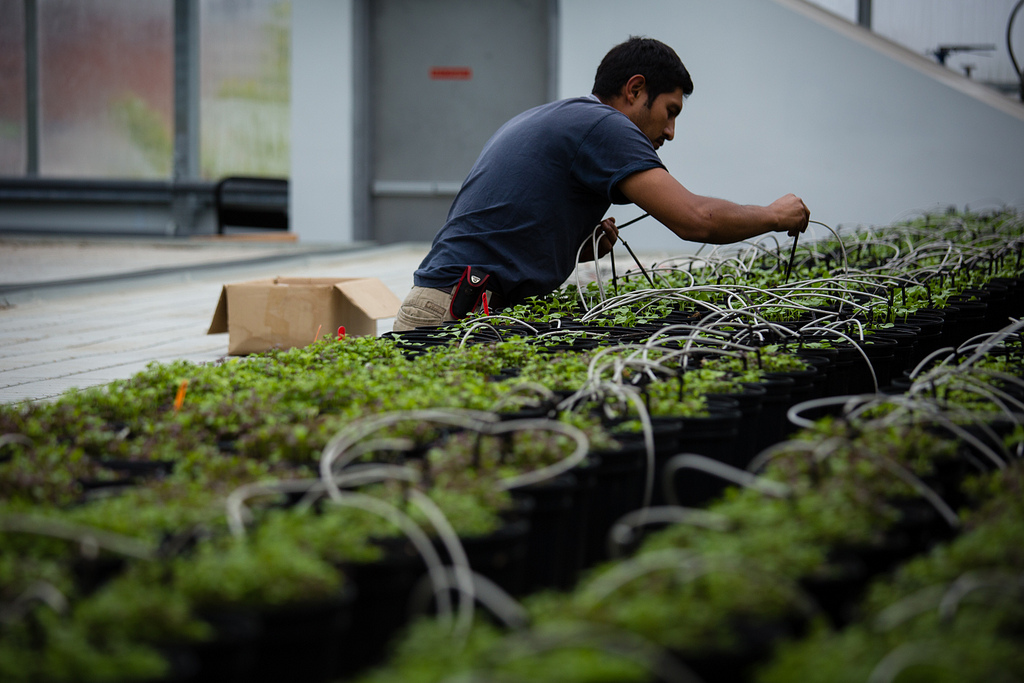 without the one item you set out for? Conversely, have you ever wandered into a much smaller “mom and pop” shop and found everything you need?
 Netherlands for the World Bank
You must be logged in to post a comment.