
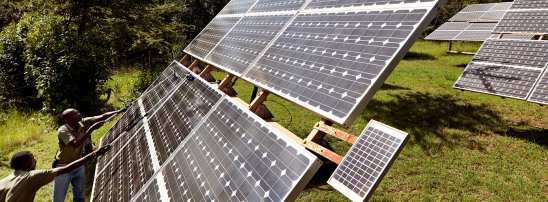
A mini grid is an electric power generation and distribution system that provides electricity to a localized community. Mini grids will be critical in achieving universal electricity access by 2030. According to a new World Bank report “Mini Grids for Half a Billion People: Market Outlook and Handbook for Decision Makers”, mini grids are often the most economically viable solution for remote areas with high population density and demand and where extending the main grid is prohibitively expensive.

Afghanistan, Myanmar, India and Nepal have the highest number of mini grids, followed by China, Philippines, Indonesia. Analysis by the Energy Sector Management Assistance Program (ESMAP) shows that

 infrastructure disruptions are an everyday concern that affects people’s well-being, economic prospects, and quality of life.
 productive environments to attract investments, increase economic efficiency, and create livable environments that prevent urban costs from rising with increased population densification. What are the central obstacles that prevent African cities and towns from becoming sustainable engines of economic growth and prosperity? Among the most critical factors that limit the growth and livability of urban areas are land markets, investments in public infrastructure and assets, and the institutions to enable both. To unleash the potential of African cities and towns for delivering services and employment in a livable and environmentally friendly environment, a sequenced approach is needed to reform institutions and policies and to target infrastructure investments. This book lays out three foundations that need fixing to guide cities and towns throughout Sub-Saharan Africa on their way to productivity and livability.
 emerging carbon pricing initiatives around the world including national, sub-national and corporate activities, emissions trading systems, carbon taxes, and crediting mechanisms Building on the efforts made in 2018, it will include a discussion on the carbon pricing trends. It will also address the feedback received last year and focus on developing clearer lessons learned from the various carbon pricing initiatives and from various publications (including WBG ones), improved infographics featuring key facts and numbers. In addition, it will feature a section on the various ways to price carbon, including through implicit and negative carbon pricing policies. Finally, the report will continue to complete the online dashboard that was launched in 2017, and which allows for direct access to this data and more regular updates. This report is expected to have approximately about 50 pages.
 facilitating the Bank managements and task teams access to analytical expertise for supporting engagements on challenging and high-priority complex water systems. COWS supports the World Bank Group-wide priority engagements that require technical expertise, for understanding and providing solutions to the challenges involving multiple sectors, parties, and time scales.
 This report marks the end of the IFC-led
 Netherlands for the World Bank
You must be logged in to post a comment.