
In a bustling marketplace on the outskirts of Addis Ababa, Lula Maygag Guray’s food stall hums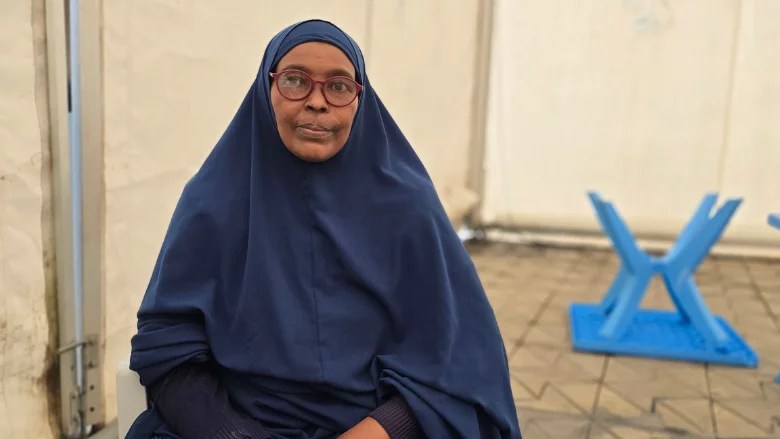 with activity. The smell of injera and samosa draws a crowd each day. However, ever since she arrived in Ethiopia, Lula has run her business informally because she did not have the right to work as a refugee. Continue reading
Tag Archives: Refugees
We need to change the way we support refugees – now !
We are at a pivotal moment in shaping the future of education. The potential for generative AI to improve teaching efficiency and enhance teacher effectiveness is immense. It’s a potential that is in the process of being realized in small classrooms and large educational systems alike.

Teachers are arguably the most important school-based determinant of whether and how much students learn. Given this complex and important job, how can generative AI-driven technologies help teachers, and what policy measures should be prioritized to harness the potential of the technology?
Continue readingWe need to change the way we support refugees – now !
On a recent joint visit to Adré, a town in Eastern Chad at the border with Sudan—on an arid land where nothing seems to grow except tents set up by UNHCR—we witnessed tragedy and hope. Tragedy because of the horrific tales from recently arrived refugees who had to leave their lives behind due to the violence in Sudan—the killings, the rapes, the ransacks. Hope, because despite dire development challenges, Chad is offering protection and safety, at least until refugees can return safely to Sudan.
Better Migration Policies Can Help Boost Prosperity in All Countries
Competition for workers rising as populations age in rich and middle-income countries
WASHINGTON, April 25, 2023—Populations across the globe are aging at an unprecedented pace, making many countries increasingly reliant on migration to realize their long-term growth potential, according to a new report from the World Bank.
Does the impact of refugees on host communities pass down through generations?
Following decades of violent conflicts in Burundi, Rwanda, South Sudan and the  Democratic Republic of Congo (DRC), Tanzania became home to thousands of refugees seeking shelter. , making it one of the top four refugee-receiving countries in Sub Saharan Africa. The majority of these refugees settled in 13 main camps in the northwestern districts of Karagwe, Ngara, Kasulu, Kigoma and Kibondo. In some of these districts, refugees outnumbered Tanzanians five to one— making it perhaps the most pronounced forced displacement crisis. By the end of May 1994, the Benaco refugee camp in Ngara district had become the largest in the world.
World Bank Blogs
Making markets work for all: Unlocking the private sector’s role in supporting refugees
Of the more than 70.8 million forcibly displaced persons worldwide, around 41 million are people who have been displaced from their homes but remain in their home country and nearly 25.9 million are refugees who have fled their countries.
One surprising fact:
World Refugee Day 2019: Building a stronger international response to the challenge of forced displacement
This year, World Refugee Day finds me in Addis Ababa with representatives from more  than 50 governments to review the work of the International Development Association (IDA), the arm of the World Bank Group that provides financing to the poorest countries, and discuss priorities for the years ahead.
Ethiopia is among the countries that is taking major steps forward. Here, for example, we have supported the government in adopting a new legal framework for refugees which will allow them to gradually move out of camps, find jobs, and access education and health services. This is no small measure for the more than 900,000 refugees who are hosted along Ethiopia’s borders with Somalia, Eritrea, Sudan, and South Sudan. It is the difference between having a chance to restart their lives or be condemned to dependency and destitution.
Global Compact on Migration
 The Global Compact on Migration (GCM) – a global agreement being negotiated by over 200 countries –can promote safe, orderly and regular migration, but first it will need to address a number of challenges to non-migrants. These include maintaining national identity in the face of large immigration flows, perceived (and actual) job competition impacting native workers in host countries, and the difficulties faced by family members of migrants who are left behind in the country of origin. These are critical missing components, for which there are no simple answers, and which will be even more challenging in the coming decades.
While the final GCM agreement is expected to be signed at the end of 2018, there is much work to be done, and the draft could benefit from several improvements.
Strong thirsts in fragile countries: walking the water scarce path of refugees
 Imagine that you must flee home at once. You may be fleeing violence, social tensions, poor environmental conditions, or even persecution. You and your loved ones may walk for several days to find safety, and may even go for periods without food.
What would you need to survive?
The answer is clean water. Finding drinkable water is one of the first steps in your journey to a new home. If you instead consume contaminated water, you risk exposure to several diseases. Drinking water unfit for consumption may not only harm your health in the short run — drinking unclean water may cause life-long health problems. And of course, these problems multiply if entire communities, or even cities, face these health problems.
Agricultural Activities Allow Refugees to Return to a Normal Life in Southern Chad
STORY HIGHLIGHTS
- A massive influx of refugees triggered by the crisis in the Central African Republic is straining the limited resources of Goré’s already vulnerable local population.
- The WFP and the FAO have implemented a World Bank-financed emergency operation to tackle the food crisis and allow refugees be self-reliant.
- Some 70,000 refugees and returnees are rebuilding their lives and livelihoods through income-generating agricultural activities.
 Netherlands for the World Bank
You must be logged in to post a comment.