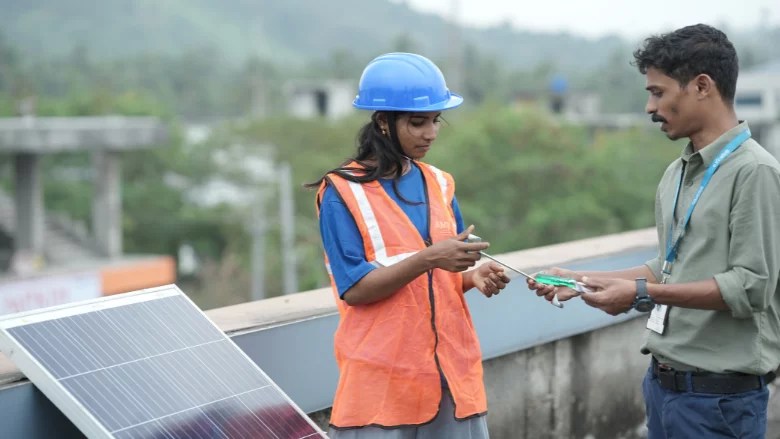
Can AI give small scale producers the right advice?

The World Bank has long recognized the critical importance of agricultural extension services – ranging from training and data to technology transfer – which make up the second-largest share of its agriculture portfolio.  Yet farmers have often been slow to adopt the very methods and tools these services are designed to deliver—limiting their own productivity and the sector’s potential to create jobs.

That’s in large part because they depend on limited numbers of extension agents: the field advisors responsible for providing them with data, training and advice. Most countries have just one extension agent for every 1,000 to 2,000 farmers.

Continue reading

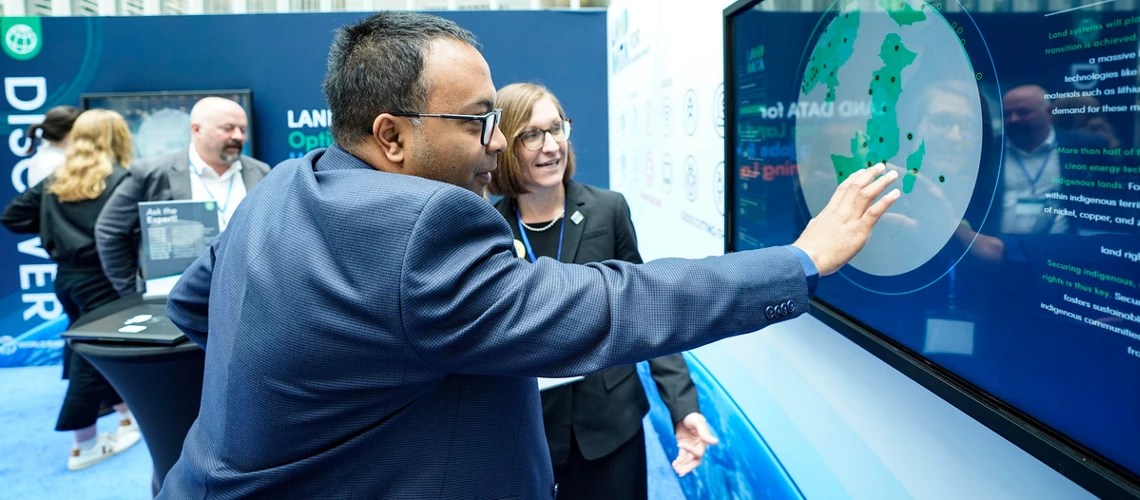
From open data to AI-ready data: Building the foundations for responsible AI in development

The production and use of development data have undergone significant transformation over the past two decades. The shift from paper-based records to digital formats has made data more accessible and easier to share. The open data movement has dramatically increased the availability of government and institutional datasets, which in turn catalyzed greater opportunities for analysis, transparency, and innovation. And major advances in big data and data science have further expanded both the volume and diversity of information guiding development policy.

Amid rapid advances in artificial intelligence (AI), development data has now reached another pivotal juncture: the evolution to AI-ready development data—data that is readily discoverable, comprehensible, accessible, and usable by both humans and AI applications.

Continue reading

The Global Collaborative Co-Financing Platform: A Big Step Forward for Development Finance

One Year Anniversary of the Co-financing Platform

Launched in April 2024, the Co-financing Platform currently has 16 members, including MDBs and bilateral partners. It presently hosts over 160 pipeline projects and 10 projects have had their financing needs met.

Read more about the Platform’s journey in this immersive story!

Robust Policies for Better Public Services in Africa: The 2025 Country Policy and Institutional Assessment (CPIA) Report in 6 Charts

Since 2006, The World Bank’s annual Country Policy and Institutional Assessment (CPIA) Report has been a guide for countries, policymakers, and investors, identifying key trends and best practices that support effective public service delivery and foster a more resilient and prosperous future for Sub-Saharan Africa (SSA). The CPIA is an annual diagnostic tool for SSA countries eligible for financing from the International Development Association (IDA), the part of the World Bank that helps the world’s low-income countries by providing grants and low to zero-interest loans for projects and programs that boost economic growth, reduce poverty, and improve people’s lives. The CPIA Report aims to capture the quality of each country’s policies and institutional arrangements, focusing on the elements within the country’s control. The scores are designed to assess sustainable growth and poverty reduction. The CPIA provides scores for each country, and an overall regional score, on a scale of 1 (lowest) to 6 (highest) in four clusters: economic management, structural policies, social inclusion and equity policies, and public sector management and institutions. The scores inform governments of the impact of each country’s efforts to support inclusive growth and poverty reduction, and the overall score helps determine the size of the World Bank’s concessional lending and grants to low-income SSA countries. The report includes scores for IDA-eligible countries and acts as a touchstone for country monitoring and regional best practices.

Continue reading

Bangladesh: Bold, Urgent Reforms Can Accelerate Inclusive Growth, Create Jobs

DHAKA, July 16, 2025—The World Bank Vice President for South Asia, Johannes Zutt, concluded his first official visit to Bangladesh today, reaffirming the World Bank’s continued commitment to help the country address its development priorities and to support the people of Bangladesh.

Continue reading

Reforms to Boost Job Creation Could Help Transform the Philippines into a Middle-Class Society by 2040

MANILA, July 15, 2025 – Strategic reforms that enhance foundational investments in connectivity and human capital, promote smarter regulations and competition, and mobilize private investments for stronger job creation could propel the Philippines closer to a 7-percent growth trajectory, transforming it into a middle-class society by 2040.

Continue reading

Safer, Climate-Resilient Roads Set to Improve Lives of 13,000 people in Comoros

Washington, July 7, 2025—Comoros is set to rehabilitate 12 kilometers of climate-resilient roads, restoring vital connectivity and strengthening disaster resilience for 13,000 people in one of the country’s most cyclone-affected regions. Additional financing of $12.5 million through a grant from the World Bank Group’s International Development Association (IDA), will complete the critical Mtsangadjou–Foumbouni corridor, enhancing access and safety for vulnerable coastal communities.

Continue reading

Unlocking Futures: How the IDA Private Sector Window Is Creating Jobs Where They Are Needed Most

STORY HIGHLIGHTS

  • By leveraging IFC and MIGA business platforms, the IDA PSW creates an opportunity for the strategic use of public resources to catalyze private investment, making it possible for companies and industries to operate in high-risk, fragile, and conflict-affected settings.
  • A total of $5.4 billion from the IDA PSW has catalyzed over $31 billion in commercial investments in low-income and fragile countries and is expected to create 3 million jobs, provide 4 million additional loans to micro, small, and medium-sized enterprises (MSMEs), and expand digital connectivity to 31 million subscribers.
  • From agribusiness in Mozambique to telecom infrastructure in West Africa and clean water access in Haiti, IDA PSW-supported investments are building the ecosystems needed to sustain jobs, boost resilience, and spark inclusive economic growth.
Continue reading