
MANILA, PHILIPPINES, December 4, 2025 — World Bank Group President Ajay Banga and Asian Development Bank (ADB) President Masato Kanda today announced the first two Pacific projects to be delivered under the Full Mutual Reliance Framework, an innovative cofinancing model that will boost development impact.
Continue readingTag Archives: IFC
International Debt Report 2025
The International Debt Report (IDR) is a longstanding annual publication of the World Bank featuring external debt statistics and analysis for the low- and middle-income countries that report to the World Bank Debtor Reporting System (DRS).
For five decades the IDR, along with the associated International Debt Statistics (IDS) database, has helped shape policies in development finance by sharing timely and comprehensive external debt data and analysis with the international community. Drawing on data collected through the World Bank’s Debtor Reporting System, the IDR has tracked evolving borrowing patterns and new lending instruments over the years, measured the impact of initiatives to relieve debt burdens, and promoted best practices in debt recording and reporting.
The newly published IDR 2025 includes an analysis of end-2024 external debt flows and debt stock positions as well as the macroeconomic and debt outlook for 2025 and beyond, and updates on the debt transparency agenda.
In addition, the IDS-DSSI database includes the actual debt service deferred from by each bilateral creditor and the projected monthly debt-service payments owed to all bilateral creditors.
“Credit: World Bank Group. All rights reserved”
Innovation in development: Lessons from World Bank experience
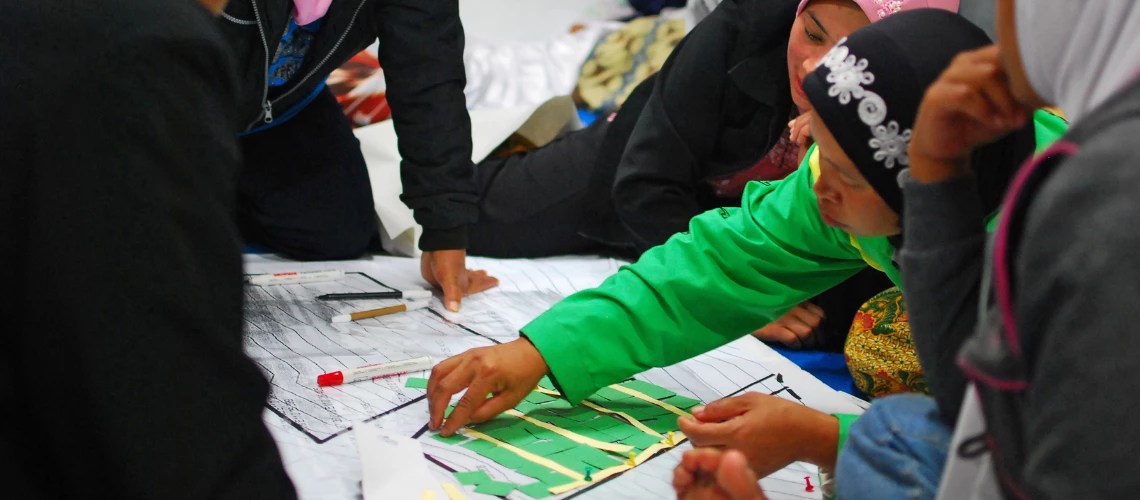
Think of this: In a small, rural community a mother receives a mobile alert that her monthly cash transfer has arrived just in time to buy school supplies and food. Down the road, the local council approves a small grant to build a footbridge that will connect the community to markets, schools, and a clinic.
Continue readingWorld Bank Group and the Global Fund Join Forces to Strengthen Health Systems and Expand Sustainable Health Financing
World Bank Group and Global Fund sign a new Memorandum of Understanding to strengthen primary healthcare and the fight against HIV, tuberculosis, and malaria
Washington, D.C. / Geneva, 6 December 2025 – The World Bank Group and the Global Fund to Fight AIDS, Tuberculosis and Malaria have signed a Memorandum of Understanding (MoU) to help developing countries build stronger, more resilient health systems and secure sustainable financing for primary health care and the fight against HIV, tuberculosis, and malaria.
Continue readingBrazil’s Northeast can be a Catalyst for Jobs, Growth, Clean Energy, and Economic Opportunity
Brazil’s Northeast is poised to play a pivotal role in the country’s progress and prosperity, according to a new World Bank report, “Routes to the Northeast: Productivity, Jobs, and Inclusion,” which outlines how the region can unlock its potential and create jobs by pivoting to a more dynamic growth model. Home to 54 million residents—80 percent of them of working age—, the region offers one of Brazil’s largest and most dynamic labor pools.
Continue readingEconomic growth in 2025 has defied the gloomy expectations
2025 has been a year of steep ups and downs for the global economy—at least where growth forecasts have been concerned. The consensus forecasts of economists have swung from optimism to pessimism and back again. Yet actual economic activity has remained remarkably resilient. Forecasters now expect global growth of about 2.7 percent—broadly in line with expectations at the start of the year (figure 1A).
Continue readingDialogue Session visit Gallina Vincelette (Vice President of Operations & Country Services) and Hiba Tahboub (Chief Procurement Officer)
On Wednesday, November 19th, Gallina Vincelette, Vice President of Operations Policy & Country Services, and Hiba Tahboub, Chief Procurement Officer at the World Bank, visited the Netherlands as part of a three-day tour of Europe, which also included stops in Brussels and Berlin. During their visit to The Hague, TIO at the Netherlands Enterprise Agency hosted a Dialogue Session with 16 representatives from Dutch companies and organizations to discuss recent World Bank procurement reforms, as well as the challenges and opportunities encountered by practitioners. In a lively and open exchange, participants shared their experiences with the Bank’s procurement system and offered practical suggestions for further improvement.
Continue readingIFC, EU, and the Netherlands Back Ukraine’s Astarta to Boost Jobs, Agriculture, and the Economy
- New $40 million financing package to establish Ukraine’s first soy protein concentrate plant
- Funds de-risked with guarantees from the EC’s Ukraine Investment Framework and the government of the Netherlands in support of IFC’s Economic Resilience Action (ERA) Program
- Investment to create jobs, enhance agri-competitiveness, and diversify exports
Kyiv, Ukraine, May 14, 2025—IFC today announced a $40 million investment in Astarta, a leading Ukrainian agricultural group, to support the construction of the country’s first soy protein concentrate plant. The investment is in line with an up to $80 million financing package approved by IFC’s Board of Directors on April 1, 2025. The project is expected to boost employment, enhance agricultural productivity, and drive economic growth.
Continue readingUnlocking Global International Financial Institution Opportunities: How RVO and the Washington Embassy Support Dutch Business
Dutch entrepreneurs looking to expand globally through International Financial Institutions (IFIs), the strategic partnership between the RVO Team International Organisations (TIO) and the Embassy of the Kingdom of the Netherlands in Washington D.C. (WAS) offers a vital support network. TIO serves as the primary point of contact for initial advice on a wide range of institutions—including the IADB, ADB, AfDB, and UN—while the WAS team specializes in providing in-depth guidance for DC-based organizations like the World Bank Group and IADB. Together, they ensure that the Dutch private sector is well-positioned to navigate the complex landscape of international procurement and partnership.
Continue readingPublication: Keys to Energy-Efficient Shipping
Abstract
This report quantifies the extent to which energy efficiency measures can reduce greenhouse gas (GHG) emissions and fuel costs in global shipping. Drawing on a fleet-wide analysis across key vessel segments (bulk carriers, container ships, and tankers), it assesses the untapped potential of technical and operational efficiency measures through to 2050. Findings show that maximizing energy efficiency can cut global shipping’s GHG emissions by up to about 40% by 2030, exceeding current IMO interim targets, while simultaneously lowering the costs of the energy transition. Roughly half of these potential GHG savings by 2030 pay for themselves, offering savings of up to $220 billion annually in total costs as green fuel supply chains develop, and helping to build resiliency against fuel price volatility and rerouting shocks. The report highlights the role of short-term operational measures (such as forms of port call and speed optimization) and medium-term technical innovations (for example, wind-assisted propulsion) in achieving substantial efficiency gains. It identifies persistent economic, behavioral, and organizational barriers to uptake and illustrates them through deep dives on port call optimization and wind-assisted propulsion, showcasing innovative industry initiatives being applied to overcome these barriers. Finally, the report offers targeted recommendations for policymakers, industry, ports, and financiers to accelerate the adoption of energy efficiency solutions at scale.
“Credit: World Bank Group. All rights reserved”
 Netherlands for the World Bank
You must be logged in to post a comment.