IFC Reengagement with the Central African Republic’s Private Sector

This article was originally published on the IFC website.

As part its efforts to re-engage with the CASACentral African Republic, IFC, a member of the World Bank Group, supported the organization of a five-day national forum on private sector development presided over by Catherine Samba-Panza, the country’s transitional Head of State. The forum was co-financed by IFC’s Conflict Affected States in Africa Initiative (CASA), which is supporting private sector growth in nine fragile countries in Africa (Burundi, CAR, Côte d’Ivoire, DR Congo, Guinea, Liberia, Mali, Sierra Leone, South Sudan). CASA is supported by donor partners Ireland, the Netherlands, and Norway.

Workshops during the forum focused on forestry, mining and agriculture as key development sectors, and introduced a public-private partnership (PPP) model to infrastructure development. Other key issues discussed included taxation, investment incentives, women entrepreneurship, and inclusion in the regional economy. IFC has previously worked with public and private sector partners in the CAR to improve the investment climate and support small business growth, particularly in and around the capital, Bangui.

Jean Christophe Carret, World Bank Country Manager for the CAR, said, “The World Bank Group is open to re-engagement with key internal and external stakeholders in the CAR to promote private sector-led growth through support to the health and infrastructure sectors, including transport and energy.” The forum’s goals included identifying bottlenecks hindering the development of the private sector, and nurturing a new economic development approach for the country


Improving Lives: Health & Education Strengthening Human Capital

Article originally published in the IFC’s Annual Report 2015.

Across the world, more than a billion Health-Edu-Story-Bannerpeople lack access to quality health services. Nearly three-fourths of the 38 million worldwide deaths from chronic illnesses — such as cancer — occur in developing countries. Globally, more than 57 million children do not attend school, with 30 million of them in Africa alone.

These statistics highlight a major obstacle to ending extreme poverty and boosting shared prosperity: high-quality education and health-care services still aren’t as widely available and affordable as they need to be. This is a challenge that’s best addressed when the public and private sectors act in concert to advance the interests of society.

Continue reading

Building Resilience: Climate Change Helping Contain a Global Threat

Article originally published in the IFC’s Annual Report 2015.

Climate change will hit developing Climate-Change-Story-Bannercountries hardest — posing significant threats to their efforts to tackle water, energy, and food-supply needs.

Developing countries will need large sums of money to cope with climate change: up to $1 trillion a year. The private sector has an indispensable role to play, and IFC is at the forefront in mobilizing private capital to address climate change.

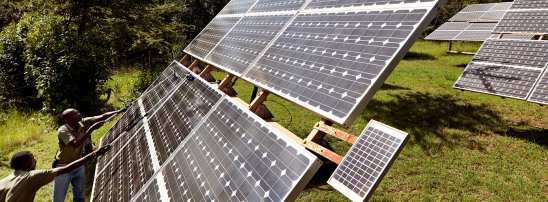
We provide finance and advice for energy-efficient and renewable-energy solutions — such as green buildings and solar power. Since 2005, we have made long-term investments totaling more than $13 billion in climate-related projects. This includes $2.3 billion in 103 projects in 31 countries in FY15. We also mobilized $2.2 billion from other investors.

Continue reading

Building Resilience: Agribusiness Feeding the World Sustainably

Article originally published in the IFC’s Annual Report 2015.

By 2050, the worldwide demand Agrabusiness-Story-Bannerfor food and crops will double. That poses a formidable challenge for the global community: how to feed the world’s expanding population without depleting its already scarce resources.

IFC is partnering with the private sector to address the challenge. Through our agribusiness investments, we aim to increase the supply of affordable and nutritious food, and ensure it is available to those who need it most.

In FY15, our agribusiness-related investments across the food supply chain totaled $3.2 billion, including funds mobilized from other investors. These investments in production, food processing, logistics, and distribution helped benefit 3.4 million farmers worldwide.

Continue reading

eConsultant2: Energy and Resource Efficiency In-Depth Assessment for a Firm in Mexico

Deadline: 05-Oct-2015 at 11:59:59 PM (Eastern Time – Washington D.C.)alcdsb-environmental-education-wiki-licensed-for-non-commercial-use-1051x1050

IFC is looking to hire a consultancy firm to support its client in the automotive sector in Mexico to identify cost-effective solutions to improve electric and thermal energy efficiency. The in-depth assessment will involve a detailed analyses of energy uses and related costs, measured estimation of energy loses, identification of technical solutions, estimation of associated investment costs and an action plan prioritized by payback.

Continue reading

eConsultant2: Odisha Affordable Health Centers

Deadline: 22-Sep-2015 at 11:59:59 PM (Eastern Time – Washington D.C.)

These hospitals will be designed to provide modern and quality healthcare services at affordable rates for the next few decades in the state.

IFC will advise the Government on the following broad aspects:Hospital

1. Selection of bouquet of services
2. Identification of possible sites
3. Design templates/ architectural briefs for the hospitals based on modern trends aimed at minimizing capital and operational costs while enhancing quality of clinical services
4. Financing of the project
5. Transaction advisory: selection of private partners to design, build finance, operate, manage and transfer assets

Continue reading

eConsultant2: STCs for IFC PPP Advisory Services – Asia Pacific

Deadline: September 20, 2015

IFC Seeks to hire up to five (5) Short Term public-Private-PartnershipConsultants (STCs) to help originate and execute Public Private Partnership (PPP) projects across the Asia pacific Region. These consultants will work as core team members in IFC Business Develop Initiatives and PPP Project Execution related activities. The consultants will be based across Asia-Pacific region with the following tentative locations, which are subject to change: Continue reading

Short Term Consultants for IFC PPP Advisory Services in Asia

public-Private-PartnershipIFC Seeks to hire up to five (5) Short Term Consultants (STCs) to help originate and execute Public Private Partnership (PPP) projects across the Asia pacific Region. These consultants will work as core team members in IFC Business Develop Initiatives and PPP Project Execution related activities.

Continue reading

A (welcome) word from Ambassador-designate Schuwer

I am honored to present you with the fifth schuwer-henneedition of the NL for World Bank newsletter on my first day as the newly appointed ambassador to the United States. As Ambassador-designate, I am keenly aware that the Embassy’s resort includes not only the 50 American states, but also the largest development bank in the world: the World Bank Group.

At first glimpse, the contrast between the work of the embassy’s World Bank team and the staff focused on the United States could hardly be starker, perhaps only exceeded by the contrast of the World Bank being a mere two blocks away from the White House. Continue reading

IFC & Dutch firm help Kenyan farming co-operatives get access to financing

Article originally published by Business Daily Africa on August 23, 2015.

A rating agency has come up with a formula that Printranks agriculture-focused co-operative societies and small-scale businesses in a move that will make it easier for them to access loans and social investor funds.

SCOPEInsight, the company supported by the Embassy of Netherlands and partnering with International Finance Corporation (IFC), has developed a rating system that identifies the strengths and weaknesses of co-operative societies. This will prepare them to get financial support. Continue reading