Deadline: 03-Mar-2020 at 11:59:59 PM (Eastern Time – Washington D.C.)![medical-appointment-doctor-healthcare-clinic-health-hospital-medicine[7]](https://nl4worldbank.org/wp-content/uploads/2015/09/medical-appointment-doctor-healthcare-clinic-health-hospital-medicine7.jpg?w=286&h=191)
Assignment Description: Redesigning service delivery: integrating design-thinking into World Bank programs to accelerate impact on health outcomes

Deadline: 03-Mar-2020 at 11:59:59 PM (Eastern Time – Washington D.C.)
Assignment Description: Redesigning service delivery: integrating design-thinking into World Bank programs to accelerate impact on health outcomes
The TechEmerge Health East Africa program was launched at CES 2020 as part of a  World Bank Group (WBG) – CES Global Tech Challenge. TechEmerge brings technologies to new markets to drive sustainable innovation in regions that need it the most.

The TechEmerge Health East Africa program was launched at CES 2020 as part of a World Bank Group (WBG) – CES Global Tech Challenge. TechEmerge brings technologies to new markets to drive sustainable innovation in regions that need it the most.
The TechEmerge Health East Africa program was launched at CES 2020 as part of a World Bank Group (WBG) – CES Global Tech Challenge. TechEmerge brings technologies to new markets to drive sustainable innovation in regions that need it the most.
WHY APPLY? 
The TechEmerge Health East Africa program was launched at CES 2020 as part of a World Bank Group (WBG) – CES Global Tech Challenge. TechEmerge brings technologies to new markets to drive sustainable innovation in regions that need it the most.
Deadline: 13-Jan-2020 at 11:59:59 PM (Eastern Time – Washington D.C.)
In order to inform possible investments to improve urban primary health care services, ![medical-appointment-doctor-healthcare-clinic-health-hospital-medicine[7]](https://nl4worldbank.org/wp-content/uploads/2015/09/medical-appointment-doctor-healthcare-clinic-health-hospital-medicine7.jpg?w=303&h=202) the World Bank is seeking to hire a firm to undertake a detailed assessment of outpatient delivery capacity of government health facilities in Dhaka South, Dhaka North and Chattogram City Corporation areas.
the World Bank is seeking to hire a firm to undertake a detailed assessment of outpatient delivery capacity of government health facilities in Dhaka South, Dhaka North and Chattogram City Corporation areas.
The assessment will be conducted with the overall aim of understanding better the existing public sector primary and out-patient healthcare services in urban areas in terms of available inputs and resource usage. The assessment will be completed in all government health facilities that provide out-patient and primary health care services in Dhaka South, Dhaka North and Chattogram City Corporation areas.
A month after world leaders met at the UN General Assembly to recommit to financing 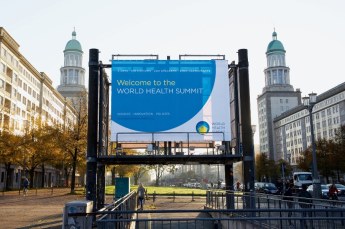 for universal health coverage, the global health community gathers in Berlin for the World Health Summit. Under the patronage of German Chancellor Angela Merkel, French President Emmanuel Macron and European Commission President Jean-Claude Juncker, this year’s summit will focus on universal health coverage and human capital in Africa, the role of the G7 and G20 in global health and how the Global Action Plan can be implemented.
This blog is part of a series on Universal Health Coverage (UHC). The series  includes contributions from external bloggers and reflects their view. Follow the conversation on Twitter #HealthForAll
The G-20’s recent call for finance and health ministries to collaborate in pushing toward Universal Health Coverage (UHC) is both overdue and welcome. Without such collaboration, the necessary decisions cannot be made for raising substantial resources and spending them effectively. But it is also a collaboration that holds promise for preventing much of the disease and death that is looming on the horizon, especially in today’s middle- and low-income countries. Everyone wins when countries can generate more health for the money —an effort that demands joint action by the people who raise funds and those who spend it. Countries also get a win-win from raising taxes on harmful products like tobacco, alcohol, and sugary beverages by preventing unnecessary disease and by raising revenues.
On October 11, at the Human Capital Summit 2018 Philips CEO Frans van Houten co- signed an open letter, to the world community highlighting the need for greater investment in human capital – the knowledge, skills, and health that people accumulate throughout their lives – through better nutrition, health care, education, jobs and skills. The publication of the open letter coincided with the launch of the World Bank Group’s Human Capital Index – a simple but effective metric for human capital outcomes such as child survival, early hard wiring of children for success, student learning, and adult health. Philips has made a commitment to improve the lives of 3 billion people by 2030. We are working with the World Bank Group (among others) to reach this goal.


You must be logged in to post a comment.