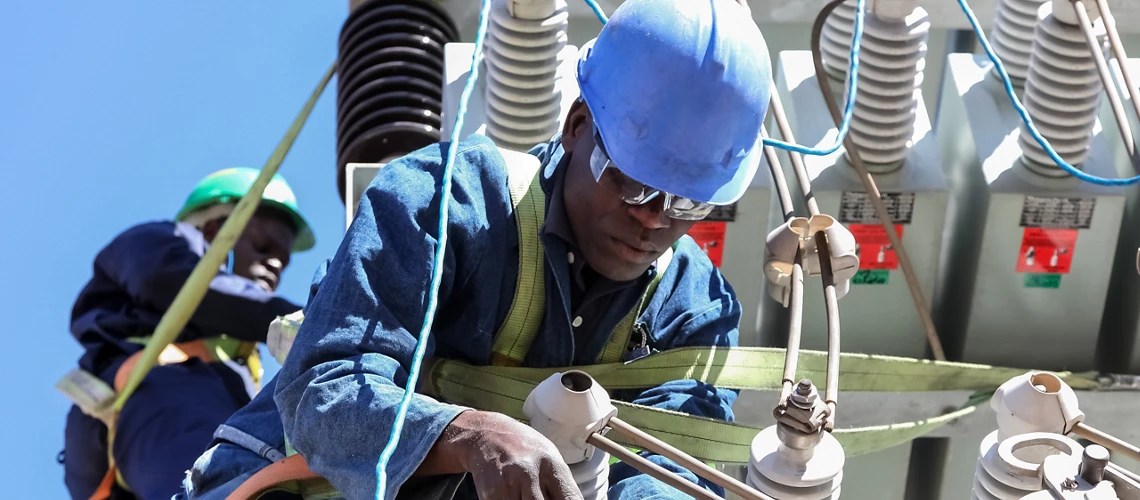
Africa is home to the largest share of the world’s unelectrified population—an estimated half a billion people, mostly in rural areas. In recognition of the significant role of electricity in economic development, the region is poised to erase this unwelcome statistic by achieving universal access by 2030 through several national and multilateral initiatives.
Continue readingTag Archives: Electrification
eC2: Preparation of a National Electrification Analysis in Mauritania
Deadline: 20-Feb-2020 at 11:59:59 PM (Eastern Time – Washington D.C.)
The Government of Mauritania (GoM) has laid out a new vision for the country’s
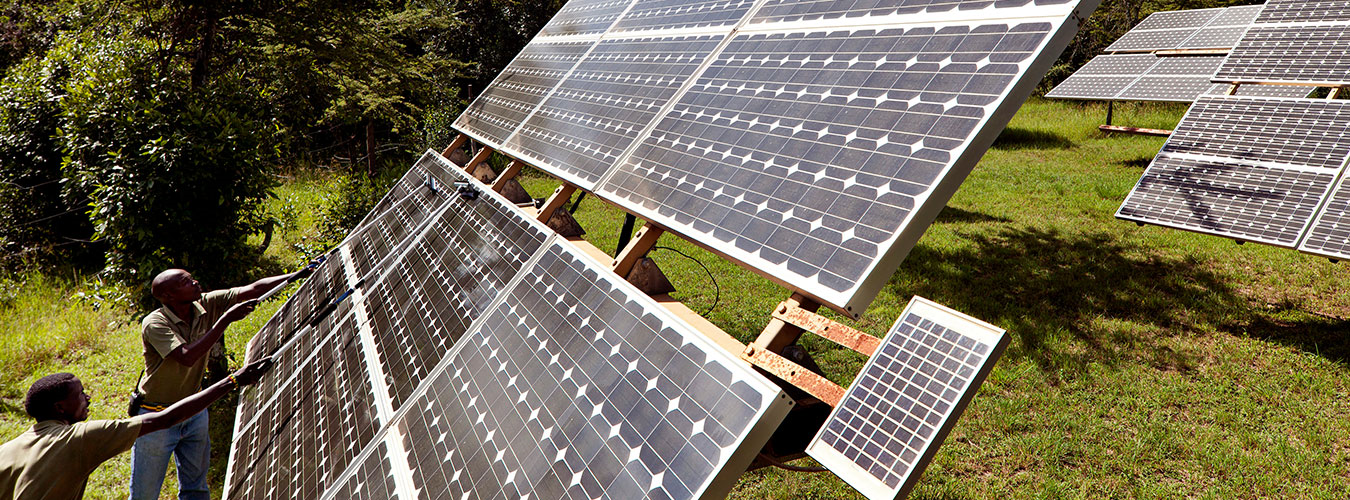
development, under its Accelerated Growth and Prosperity Sharing Strategy (SCAPP, the acronym in French). SCAPP’s Vision for the Future, “The Mauritania We Want in 2030,” aims for strong, inclusive and sustainable growth to meet the basic needs of citizens and ensure their well-being. In the energy sector, the Government aims to ensure universal access to quality services at the lowest cost and to provide economic actors with reliable and secure electricity, through: (a) Development of new production capacities from local resources, mainly natural gas; (b) Expansion of the transport network and interconnection with neighboring countries; (c) Increasing the share of renewable energy in the energy mix and (d) Implementing decentralized solutions in remote rural areas. The strategy seeks to increase access rate to 95% in urban areas and 40% in rural areas, in order to reach an overall electrification rate of 70% at the national level by 2030.
The proposed National Electrification Analysis would provide analysis and insight on various electricity access options for Mauritania, specifically through: (a) data collection and analysis; (b) assessment of service quality levels; (c) identification of potential least-cost technology options for electrification; and (d) identification of potential options and arrangements for scaling up electrification in Mauritania in line with national access targets.
eC2: Mobilizing the Private Sector for the Electrification of Selected DRCs Provincial Capital Cities
Deadline: 11-Dec-2019 at 11:59:59 PM (Eastern Time – Washington D.C.)

The objective of this assignment is to support the Government of DRC in attracting the private sector for the electrification of provincial capitals. To this end, the consultant will review the legal/regulatory/PPP framework and tools, use the results of a technical prefeasibility study to develop financial models for 2 to 4 provinces, consult local/regional/international private operators/utilities, develop appropriate PPP contract samples, assist the government over the procurement process, and develop a comprehensive capacity strengthening plan for 2 to 4 provincial governments and the regulator.
eC2: National Electrification Analysis: Assessment of Electrification Options for Angola
Deadline: 02-May-2019 at 11:59:59 PM (Eastern Time – Washington D.C.)

The Government of Angola (GoA) has requested support from the World Bank Group to complete a National Electrification Analysis (NEA), addressing all key aspects of investment planning, institutional and contracting arrangements, and needed financing and regulations for providing reliable electricity service, ultimately achieving the national electricity access targets. Thus, the World Bank Group is seeking to hire a consulting firm or consortium to help complete the NEA. The scope of work encompasses: (a) preparation of a geographic information system (GIS)-based database; (b) identification of least-cost electrification options based on different locations/density levels/electricity needs; and (c) identification of suitable implementation options for scaling up electrification in Angola in line with national electricity access targets.
eC2: BANGLADESH RURAL ELECTRIFICATION PROGRAM: FINANCIAL SUSTAINABILITY REVIEW
Deadline: 11-Oct-2018 at 11:59:59 PM (Eastern Time – Washington D.C.)
Assignment Description: Assess financial sustainability of BREB and PBSs; develop pathways and actions plans to meet universal access target by 2021; and ensure financial sustainability of the institutions going forward.
The Race for Universal Energy Access Speeds Up
STORY HIGHLIGHTS 
- A billion people still live without electricity, but certain countries are starting to adopt new approaches to expand electricity services – reaching millions of people in the past few years.
- The number of people gaining access to electricity in Sub-Saharan Africa has begun to outstrip population growth for the first time. In South Asia, progress has been even faster.
- Much more work will be needed to achieve universal electrification by 2030, as called for in SDG7. The World Bank is significantly ramping up financing for energy access programs, with support for mini-grid and off-grid projects growing the fastest.
eC2: National Electrification Strategy and Plan for Chad, Mali and Mauritania
Deadline: 25-Jul-2018 at 11:59:59 PM (Eastern Time – Washington D.C.)

Elaboration of National Electrification Strategy (NES), National Electrification Plan (NEP) and Investment Prospectus (IP) for Chad, Mali and Mauritania
eC2: Performance Diagnosis & Preparation of an Action Plan for the Performance Improvement of the Tunisian Electricity and Gas Company (STEG)
Deadline: 30-Jun-2018 at 11:59:59 PM (Eastern Time – Washington D.C.) 
To support the improvement of STEGs financial, technical, and commercial performance by (i) undertaking an operational and management diagnosis of the utility; (ii) designing a detailed plan for STEG to carry out necessary investments and reforms to meet the targets of its performance contract; and (iii) determining the current revenue requirement of STEG based on their cost structure and identifying the efficient revenue requirement for the next 10 years based on the improvements proposed in the performance improvement plan above.
eC2: GIS- Based electrification Study for the ECOWAS Regional Access Project
Deadline: 21-Mar-2018 at 11:59:59 PM (Eastern Time – Washington D.C.)
Objective: The objective of this assignment is to prepare a geospatial analysis and present the least cost options for electrification for villages located within the radio of 100 km of the substations of the OMVG in The Gambia and Guinea Bissau, and the Substations of the OMVS in Mali. The analysis will provide detailed estimation of investment and operating cost requirements.
Continue reading
eC2: Rural Electrification Strategy for Togo
Deadline: 17-Oct-2017 at 11:59:59 PM (Eastern Time – Washington D.C.) 

You must be logged in to post a comment.