eC2: Design support for developing a Farmer Loyalty Program

Deadline: 25-Jun-2018 at 11:59:59 PM (Eastern Time – Washington D.C.)  ls-a-day-in-the-life-of-a-vegetable-farmer-in-lesotho-780x439
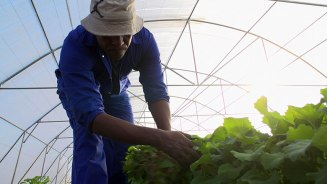
The International Finance Corporation (IFC), in collaboration with its global partners – Bayer AG, Netafim and Swiss Re – launched the Better Life Farming Alliance (BLFA) in April 2018. The objective of BLFA is to support smallholders sustainably improve farm yields and incomes and improve their lives. India is one of the countries covered under the BLFA where two projects are under implementation – in Uttar Pradesh and Jharkhand – for smallholder farm yield improvements. IFC and the BLFA partners are interested in developing a farmer loyalty program such that there are incentives or benefits for farmers to continue to engage with the BLFA partners. The farmer loyalty program should have a clear business rationale for the BLFA partners, as well as clear and articulated value for the farmers who choose to engage in BLFA projects. IFC is planning to recruit a specialized firm to design the farmer loyalty program for a pilot deployment with India BLFA farmers with potential to scale-up.
Continue reading

eC2: Natural Hazard Assessment for the Reconstruction of Critical Transport Infrastructure

Deadline: 21-Jun-2018 at 11:59:59 PM (Eastern Time – Washington D.C.)

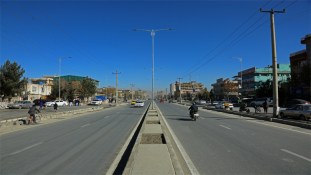
KUTEI (Kabul Urban Transport Effciency Improvment)

The World Bank provides technical assistance to the Government of Myanmar to support technical solutions for Chin State by hiring an international consulting firm to prepare a hazard and vulnerability assessment for road rehabilitation to inform planned investments under the Myanmar Floods and Landslides Emergency Recovery Project in Chin State in Myanmar. The overall objective of the assignment is to contribute to the increase of capacities of the relevant ministries and agencies of the Government of Myanmar in the adoption of appropriate natural hazard assessment approaches in designing transport and infrastructure. The activity will (i) help provide technical solutions on geohazards specifically for Kalay Hakha road; (ii) draw out lessons along the above process, including data gaps and recommend solutions for improvement; (iii) and provide capacity building for the Ministry of Construction on this practice. The assignment is expected to be completed within the period of an estimated six months upon mobilization.

Continue reading

eC2: Myanmar Distributed Generation Scoping Study

Deadline: 28-Jun-2018 at 11:59:59 PM (Eastern Time – Washington D.C.) energy

The International Finance Corporation (IFC) is seeking consultancy services to undertake an analysis of the current market and key barriers for distributed clean power generation solutions in Myanmar. This study will primarily focus on the potential for distributed PV solutions providing power to clients on a commercially viable scale, including both grid-connected and off-grid facilities. In particular, it should focus on the market for commercial and industrial customers, rather than minigrids or other residential applications. The result of this study will be an overview of the commercial and regulatory environment for these types of projects, and the potential business models that would be viable in the Myanmar context; as well as a market mapping of the main companies active in this space in Myanmar and potential customers that could serve as a pipeline of projects for suppliers and investors in the future.

Continue reading

eC2: NATIONAL HEALTH FACILITY SURVEY (NHFS) IN NIGERIA

Deadline: 20-Jun-2018 at 11:59:59 PM (Eastern Time – Washington D.C.)

The consultant will conduct facility surveys at primary health facilities and referral secondary hospitals using the methodology approved by the World Bank in the selected sample facilities. These surveys will be in approximately 3,300 randomly selected facilities in total, with a minimum of 90 facilities in each of the 36 states and the FCT. The survey instrument comprises 5 modules. The survey firm will work with World Bank Consultants and FMOH staff to review the survey instruments, training materials and field manual; program electronic devices for data collection; deploy trained enumerators and supervisors for field work using CAPI; provide supervision and oversight over data entry and ensure compliance with quality standards; produce full clean database of the survey information; and full report and presentation summarizing the results using an agreed outline.

Continue reading

eC2: Developing a Unitary Human Resources Management System within the Public Administration in Romania

untitled

Deadline: 18-Jun-2018 at 11:59:59 PM (Eastern Time – Washington D.C.)

As part of the baseline diagnostic exercise and initial stakeholder exercise, a survey will be conducted with the aim of examining factors that influence HRM, and the attitudes and experiences of employees. In particular, the survey will focus on issues that are priority areas of reform for the government (e.g. the recruitment process, competencies, and performance management). The data collected through the survey will allow to investigate the main HRM issues that the public administration is currently facing through quantitative and qualitative analyses.

Continue reading

eC2: Project Officer: Empowering Women in the Private Sector

Deadline:  20-Jun-2018 at 11:59:59 PM (Eastern Time – Washington D.C.) Senegal-Woman-at-Well-800

The objective of this assignment is to provide on-the-ground coordination and implementation support for IFCs gender team to ensure Project activities are delivered in a timely manner and objectives are achieved. The appointment is for an initial probationary period of 60 working days. It is expected that upon satisfactory completion of the probation period the contract will be extended up to 150 days per year upon agreement between IFC and the Project Officer. The position can be filled on a part-time (3 days per week or shorter work hours 5 days per week) basis.

Continue reading

eC2: Sustainable Lowland Agriculture in Indonesia

Deadline:  11-Jun-2018 at 11:59:59 PM (Eastern Time – Washington D.C.) indonesia

This study forms an important part of the World Bank’s Indonesia Landscapes Program. With many of the peatlands drained and in a state of degradation, rural livelihoods need to adapt to new threats and opportunities within the landscape. Given the government’s plans to restore currently drained and occupied lowland areas, an assessment is needed to identify potential alternative crops and sustainable production systems that are appropriate for smallholders in the affected lowlands. The outcomes of the analysis would inform an important policy discussion among the various government institutions, including the Ministries of Agriculture and Public Works and the Peatland Restoration Agency, to shape the business case for improved management of natural resources in Indonesia’s lowlands.

Continue reading

eC2: Remote sensing of Agricultural Land Use in Kyiv, Mykolaiv and Lviv Oblasts, Ukraine

Deadline:  04-Jun-2018 at 11:59:59 PM (Eastern Time – Washington D.C.) agriculture-youth

  1. Identification of preliminary classification of land cover, development of list of spectral characteristics and a rout for field data collection for typical representatives of each class, in order to develop training data. Assess the learning and validation sample and data collection report for Kyiv oblast for Summer 2017. Preprocessing of available satellite imagery (radiometric calibration and correction, noise filtering, etc.) for the territory of Kyiv oblast for summer 2017 and 2018.
  2. Collection of training data and validation sample; establish spectral library for the categories of land cover in Kyiv oblast.
  3. Processing of satellite imagery (Sentinel-1, Sentinel-2, Landsat-8) for recognition of information on actual land use, development of descriptive statistics for the categories of land cover in Kyiv oblast, estimation of NDVI, identification of irrigated land.

Continue reading

eC2: Analysis of Ethiopias Human Development (education and health) and safety net delivery systems in the lowlands

Deadline:  12-Jun-2018 at 11:59:59 PM (Eastern Time – Washington D.C.) untitled

There exist horizontal (inter-regional, intra-regional and inter-woreda) and vertical (income distribution) disparities in human development outcomes. Ethiopia is impacted by droughts which have the potential to undermine the development gains the country has made if not anticipated and responded to. Furthermore, Ethiopia is deeply affected by forced displacement and the country is hosting the second-largest refugee population in Africa with most refugees hosted along Ethiopia’s borders with the majority of the refugee camps situated in the lowlands where the implications of long-term refugee hosting have been felt most acutely. The increasing number and extent of droughts, coupled with the remaining challenges to ensure access to services for the most vulnerable, highlights the need to examine Ethiopia’s service delivery modalities and financing systems with a view to plan and prepare for chronic crisis adapting delivery to maximize investments in human development and to improve systems to respond to crises and ensure hard won development gains are not lost.

Continue reading

eC2: Support to the Government of Benin, Burkina Faso and Togo for the Evaluation of Urban Transport and Mobility Management and the Development of a Strategy for Sustainable Urban Mobility

general-transport-mosaic-mainDeadline:  11-Jun-2018 at 11:59:59 PM (Eastern Time – Washington D.C.)

The purpose of the study is to develop comprehensive, coherent and applicable policy recommendations, a relevant strategy, shared by all stakeholders and a priority action plan for the sustainable management of urban transport and mobility in the countries, through a swift assessment of the legislative and regulatory framework of the institutions in charge of the transport sector, a diagnosis of the functioning of the urban transport sub-sector. The study also aims to propose a guide for urban transport improvement and establish a strategic plan for sustainable mobility for the main secondary cities, based on the findings of a comprehensive assessment of one pilot city to be chosen in agreement with the respective Governments.

Continue reading