IFC Reengagement with the Central African Republic’s Private Sector

This article was originally published on the IFC website.

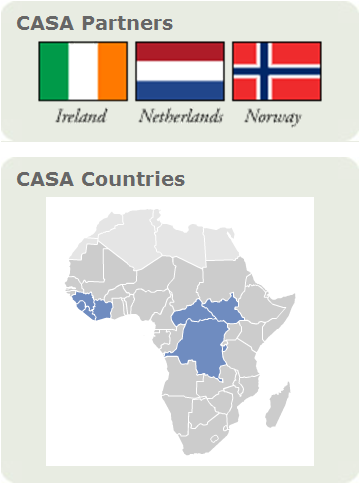
As part its efforts to re-engage with the CASACentral African Republic, IFC, a member of the World Bank Group, supported the organization of a five-day national forum on private sector development presided over by Catherine Samba-Panza, the country’s transitional Head of State. The forum was co-financed by IFC’s Conflict Affected States in Africa Initiative (CASA), which is supporting private sector growth in nine fragile countries in Africa (Burundi, CAR, Côte d’Ivoire, DR Congo, Guinea, Liberia, Mali, Sierra Leone, South Sudan). CASA is supported by donor partners Ireland, the Netherlands, and Norway.
Workshops during the forum focused on forestry, mining and agriculture as key development sectors, and introduced a public-private partnership (PPP) model to infrastructure development. Other key issues discussed included taxation, investment incentives, women entrepreneurship, and inclusion in the regional economy. IFC has previously worked with public and private sector partners in the CAR to improve the investment climate and support small business growth, particularly in and around the capital, Bangui.

Jean Christophe Carret, World Bank Country Manager for the CAR, said, “The World Bank Group is open to re-engagement with key internal and external stakeholders in the CAR to promote private sector-led growth through support to the health and infrastructure sectors, including transport and energy.” The forum’s goals included identifying bottlenecks hindering the development of the private sector, and nurturing a new economic development approach for the country

Building Resilience: Climate Change Helping Contain a Global Threat

Article originally published in the IFC’s Annual Report 2015.

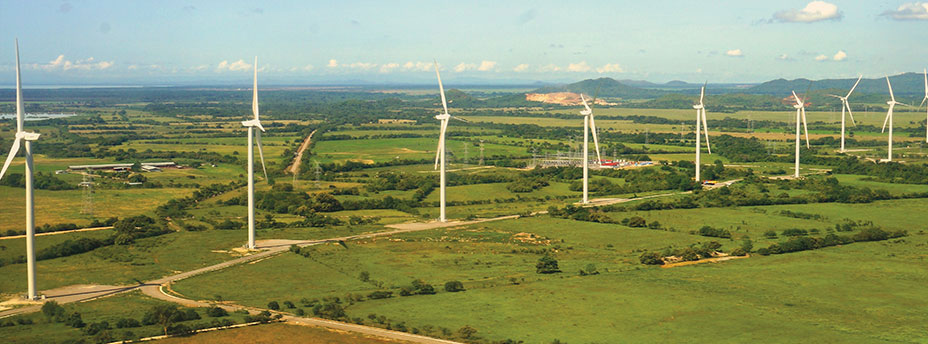
Climate change will hit developing Climate-Change-Story-Bannercountries hardest — posing significant threats to their efforts to tackle water, energy, and food-supply needs.

Developing countries will need large sums of money to cope with climate change: up to $1 trillion a year. The private sector has an indispensable role to play, and IFC is at the forefront in mobilizing private capital to address climate change.

We provide finance and advice for energy-efficient and renewable-energy solutions — such as green buildings and solar power. Since 2005, we have made long-term investments totaling more than $13 billion in climate-related projects. This includes $2.3 billion in 103 projects in 31 countries in FY15. We also mobilized $2.2 billion from other investors.

Continue reading

Building Resilience: Agribusiness Feeding the World Sustainably

Article originally published in the IFC’s Annual Report 2015.

By 2050, the worldwide demand Agrabusiness-Story-Bannerfor food and crops will double. That poses a formidable challenge for the global community: how to feed the world’s expanding population without depleting its already scarce resources.

IFC is partnering with the private sector to address the challenge. Through our agribusiness investments, we aim to increase the supply of affordable and nutritious food, and ensure it is available to those who need it most.

In FY15, our agribusiness-related investments across the food supply chain totaled $3.2 billion, including funds mobilized from other investors. These investments in production, food processing, logistics, and distribution helped benefit 3.4 million farmers worldwide.

Continue reading

eConsultant2: Mid-term review for the Kenya Investment Climate Program (Phase II)

Deadline: 01-Oct-2015 at 11:59:59 PM (Eastern Time – Washington D.C.)

The Kenya Investment Climate Program (KICP II) is in the middle of its implementation span, and seeks to engage a consulting firm to undertake a Mid-Term Review (MTR). KICP II aims at stimulating private investment (domestic, FDI and PPPs), leading to job creation and economic growth in the country. The MTR will provide an assessment of the program design, implementation progress and results accomplished towards intended targets to date.

Continue reading

eConsultant2: Strategy and Transaction support Cornubia PPP South Africa

Deadline: September 22, 2015

The World Bank is providing technical support public-Private-Partnershipto eThekwini regarding how to advance the cit’s urban regeneration goals. This solicitation for site-specific financial and real estate development advisory services is one component of that effort. The municipality requires support to: Identify business models and transaction structures that are market-viable, cost-efficient, and that facilitates the Citys policy goals; and support the municipality in commencing implementation of the selected business model — including support for negotiating a formal agreement (about provision of bulk infrastructure) among the municipality, the existing land owner/developer, and other major stakeholders. Continue reading

eConsultant2: STCs for IFC PPP Advisory Services – Asia Pacific

Deadline: September 20, 2015

IFC Seeks to hire up to five (5) Short Term public-Private-PartnershipConsultants (STCs) to help originate and execute Public Private Partnership (PPP) projects across the Asia pacific Region. These consultants will work as core team members in IFC Business Develop Initiatives and PPP Project Execution related activities. The consultants will be based across Asia-Pacific region with the following tentative locations, which are subject to change: Continue reading

Examining the World Bank’s radical procurement overhaul

Article published by the Chartered Institute of Procurement & Supply (CIPS) magazine Supply Management on September 8, 2015.

Will Green looks at how the World Bank’s radical overhaul of its procurement processes will affect the organisation and its clients.

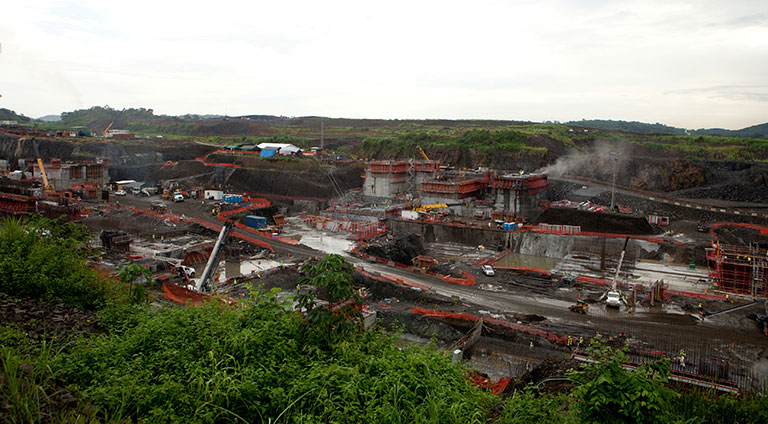
Construction works for the Panama Canal expansion project – one of the infrastructure projects financed by the World Bank. © Gerardo Pesantex/World Bank

Construction works for the Panama Canal expansion project – one of the infrastructure projects financed by the World Bank. © Gerardo Pesantex/World Bank

How many organisations spend $44 billion each year in 178 countries, including the most war-torn nations, finance enormous infrastructure projects such as the Panama Canal expansion scheme and support social development in the poorest countries?

Then ask, how would you go about developing a procurement strategy for such an organisation? This is the challenge the World Bank faced as it set about reforming a procurement system unchanged since the 1970s.

Continue reading

World Bank to extend loans to Greek companies

Article originally published in Het Financieele Dagblad on September 7, 2015 by Gerben van der Marel. This is an abstract, full article available through the FD website.

The World Bank will offer more help to relatively wealthy countries going through a crisis, like Greece. Talks are underway with the Greek private sector regarding a ‘substantial’ package of investments, according to Frank Heemskerk, Executive Director at the development bank in Washington.

FotoBehind the scenes, the World Bank has been active in Greece for some time, says Heemskerk. ‘Many institutions don’t work. The country is corrupt. We have allowed that to happen in Europe. We have all looked the other way.’ The Greek crisis has a large impact in the region, he says. Countries like Bulgaria, where the World Bank has been a player for a long time, feel the pain.
Remainder in Dutch.

Continue reading

Ethiopia – Second Agricultural Growth Project signed

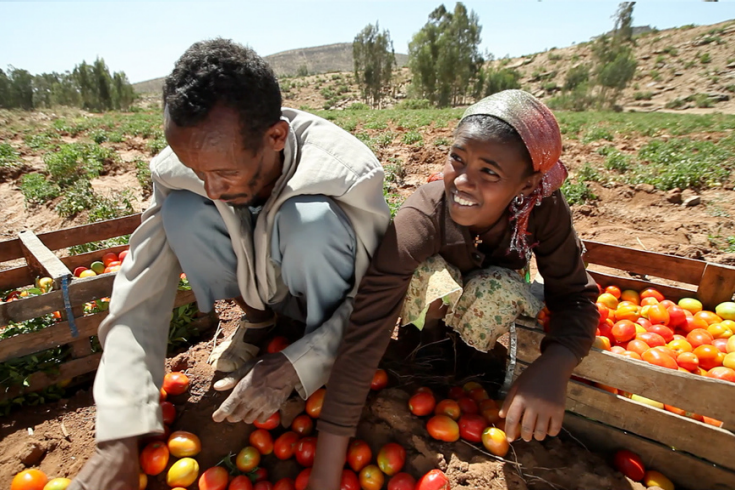
Ethiopia’s second agricultural growth Ethiopia agproject, which was adopted by the World Bank Board of Directors on March 31, 2015, has now been signed. The project involves a total of $365 million, of which $350 million is provided by the World Bank.

The development objective of the Second Agricultural Growth Project for Ethiopia is to increase agricultural productivity and commercialization of small holder farmers targeted by the project. The project comprises of five components: Continue reading

eConsultant2: Let’s Work Zambia – Strengthening Value Chains for Jobs

As part of the wider Lets Work program in production__south_africa_2Zambia, which aims to support job creation in partnership with the private sector, the World Bank intends to contract a consultancy to carry out a series of jobs-focused value chain studies in Zambia. This program will be managed by the Lets Work Program through the Jobs CCSA. Lets Work is a global partnership dedicated to providing effective solutions to the jobs challenge by harnessing the private sectors role in creating more, better jobs that are inclusive.

Expression of Interest Deadline: 21-Sep-2015 at 11:59:59 PM (Eastern Time – Washington D.C.)

Continue reading