
How to bid, finding opportunities, what makes a successful bid!
 In this video, Christopher Browne, Chief Procurement Officer of the World Bank shares reasons why businesses should consider bidding on World Bank projects, where to find opportunities to bid, key innovations under the World Bank’s new Procurement Framework, and advice for developing a successful bid. Starting in 2016, the World Bank is implementing a new Procurement Framework. Value for money, sustainable development and integrity are the vision of the new approach. The new Framework will help clients get better development results as it gives the World Bank the space and capacity to significantly increase its support to help countries develop their own procurement systems. For the first time, the World Bank will allow any contract award decisions to be based on criteria other than lowest price, including quality and sustainability.

 2015, modernizes the procurement policy and maximizes the strategic role of procurement in achieving key development effectiveness goals.
 Accounting and Valuation of Ecosystems (WAVES). The WAVES GPP promotes implementation of natural capital accounting (NCA) following UN Statistical Division (UNSD)s 2012 Standard for System of Environmental Economic Accounting (SEEA 2012). Indonesia WAVES Program development objective is to strengthen the capacity of Government of Indonesia to regularly and systematically (i) implement NCA, and (ii) use the developed accounts in policy analysis in natural assets utilization and development planning. WAVES Program will provide technical assistance support to achieve the programs intermediate outcomes and increase capacity to compile, understand, and use NCA to inform development planning.
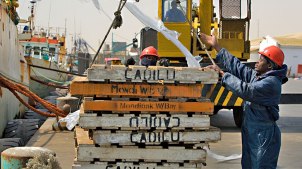 Germany meet the quality standards of global logistics operators, compared to only 40% in Bolivia? Or that importing goods into Georgia requires traders to deal with just one agency, but in Madagascar, traders must deal with 10?
![medical-appointment-doctor-healthcare-clinic-health-hospital-medicine[7]](https://nl4worldbank.org/wp-content/uploads/2015/09/medical-appointment-doctor-healthcare-clinic-health-hospital-medicine7.jpg?w=205&h=137) cadre are required to cope with the workload of a given health facility and catchment area, as well as to assess the workload pressure of the health workers in that facility. This data collection will not only occur in the facilities themselves but also in the catchment areas where the facilities are located. The WISN data collection in the catchment areas will seek to document the roles of community-based and volunteer workers delivering HIV prevention and treatment services and detail how that links to broader primary care delivery efforts in the respective regions.
cadre are required to cope with the workload of a given health facility and catchment area, as well as to assess the workload pressure of the health workers in that facility. This data collection will not only occur in the facilities themselves but also in the catchment areas where the facilities are located. The WISN data collection in the catchment areas will seek to document the roles of community-based and volunteer workers delivering HIV prevention and treatment services and detail how that links to broader primary care delivery efforts in the respective regions. ent a new Procurement Framework in July 2016, an initiative aimed at modernizing procurement under Bank projects to better meet the needs of client countries.
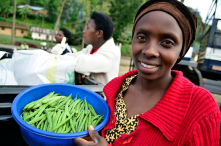 competition in Zambia. In line with this support, as well as ongoing support to the CCPC, the World Bank Group (WBG) intends to undertake a baseline perception survey on competition in Zambia. The survey is intended to set a baseline on the perceptions and understanding of competition law and policy by the business community (individual firms and business associations), government officials in charge of market regulation, civil society organizations (CSO), academia and consumers.
 Netherlands for the World Bank
You must be logged in to post a comment.