
Those subscribed to the newsletter automatically received it in their inbox. If you did not receive the newsletter, you will find it here.
If you would like to automatically receive the next newsletter when it is published, please subscribe here.

Deadline: 13-Dec-2016 at 11:59:59 PM (Eastern Time – Washington D.C.)
The objective of the assignment is to assess the capacity and infrastructure needs for improving the production quality and dissemination of agricultural statistics to inform policy makers and the private sector for agricultural transformation in Kenya.
As part of the strategic partnership ‘Food for All’ between the World Bank Group and the  Netherlands, the Netherlands Enterprise Agency, IFC, and IUCN organized an event on GAFSP and the impact of Climate Smart Agriculture on October 28, 2016. Climate change affects companies in the agro-food and beverage sectors all around the world. They face increasing risks: from reduced productivity, new laws and policies, to reputation risks or volatile market prices. Effectively managing risks and opportunities of climate change is vital to secure long-term viability of companies and value chains. Integrating climate smart agricultural techniques and projects in business operations can help firms to become more climate-resilient and in the meantime reduce pressure on forests and other ecosystems and the services they provide. Especially in developing countries, climate change implies challenges to food security and sustainable food production and trade.
Deadline: 29-Nov-2016 at 11:59:59 PM (Eastern Time – Washington D.C.)
The overall objective of the Assignment it to identify promising finance, agriculture and livestock insurance opportunities (including parametric insurance) at different stages of the value chains of 4-5 agricultural commodities in Nigeria.
The Assignment should:
(a) Identify and analyze the value chains
(b) Assess the nature of farmers and production methods
(c) Develop cash flow and financial profiles for value chain players
(d) Analyze the demand and supply of finance and index insurance,
(e) and identify any constraints that may have prevented/hindered the supply of adequate index insurance products
Continue reading
Deadline: 30-Nov-2016 at 11:59:59 PM (Eastern Time – Washington D.C.)
The objective is to assess how logistical costs and bottlenecks constrain the development 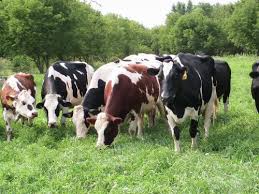 and performance of high value/value adding agro-food value chains in Eastern Indonesia and recommend reforms, investments, capacity building and other measures to increase the competitiveness of those value chains, increase production and finally improve the associated livelihoods in otherwise lagging regions. It is to a large extent about creating sufficient volumes for logistics to work with a focus on short and medium term actions that need to be undertaken to reduce logistics costs for selected products in reaching domestic and/or international markets and stimulate increased production. Continue reading
STORY HIGHLIGHTS
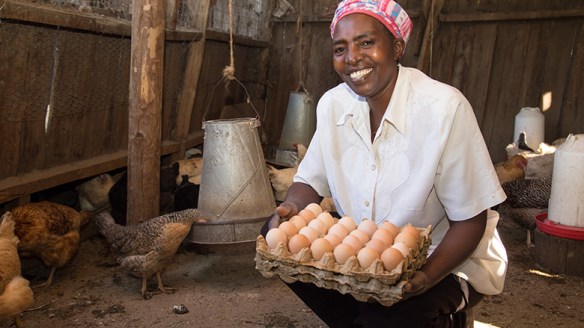
A challenging area in agricultural water management is the assessment of policy and investment options in irrigated agriculture for conserving water and adapting to increasing water scarcity, in particular when the linkages to groundwater resources and their management are to be considered and incorporated.
Deadline: 24-Oct-2016 at 11:59:59 PM (Eastern Time – Washington D.C.)
The IFC Indonesia Agriculture Insurance project objective is to contribute to increased 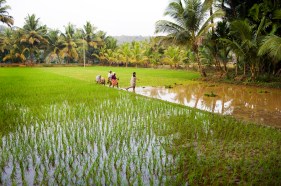 investments in agriculture and rural communities by introducing insurance solutions to reduce the risks faced by farmers and lenders/businesses working with farmers due to adverse weather events/risks related to climate change (drought/flood/hurricane, etc.).
IFC invites proposals from qualified consultants/firms to conduct Value Chain Mapping of Agriculture commodities in Indonesia, with the objective of identifying promising Agriculture (index) insurance opportunities at different points along the value chain of at least 3 to 4 Agriculture commodities for this project.
The mapping is to provide a clear picture on: 1) Key agriculture commodities to target; 2) Market size/potential – number of farmers & premium volume; and 3) Distribution partners (Agribusinesses, banks, farmers organizations).
Deadline: 10-Oct-2016 at 11:59:59 PM (Eastern Time – Washington D.C.)
The overall objective of this consultancy is to strengthen the capacity of the Government of Zimbabwe to integrate climate change considerations into the planning, design and implementation of development projects in the agriculture and irrigation sectors.
Continue reading
 Netherlands for the World Bank
You must be logged in to post a comment.