
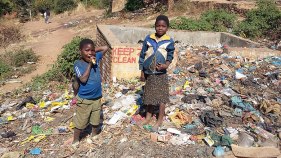
 Malawi, a small country in Africa, has a population of over 18 million. According to World Bank estimates, Malawi had 52.2% of the total population between 15 and 64 years as of the beginning of 2017. However, Malawi has a high level of unemployment among the productive population which is largely composed of young people.
Tag Archives: Africa
eC2:Lighting Tanzania: Business Skills Training for Solar Entrepreneurs in Tanzania
Deadline: 23-Apr-2018 at 11:59:59 PM (Eastern Time – Washington D.C.) 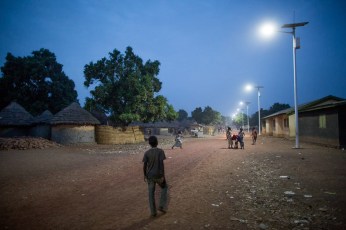
Objective: Lighting Africa, a World Bank Group program, seeks to accelerate the development of commercial off-grid lighting markets in Sub-sahara Africa as part of the wider efforts to improve access to energy. Lighting Africa is helping mobilize the private sector to build sustainable markets to provide the rural and urban poor in Sub-Saharan Africa with safe, affordable, and modern off-grid lighting. In Tanzania, given the large geographical size of the country and the dispersed population, off-grid energy is well positioned to play an important role in reaching the rural population. Lighting Tanzania program would like to scale up the adoption of solar technology through building the technical and business skills of SMEs engaged in the activities of installation, spare part sales, maintenance service and retail of quality-verified solar lanterns and solar home systems to enable them reach the rural population.The overall objective of the assignment is to train approximately 25 distributors/importers in Dar es Salaam and Arusha and 300 retailers/ sales agents in 6 zones (Arusha, Dodoma, Dar es salaam, Mwanza, Mbeya and Mtwara) to enhance their knowledge of off-grid solar products, business management and technical capacity. This will be achieved by providing training of business management courses and Lighting Global quality framework.
Millennials Welcome! Young women are revolutionizing the startup scene despite conflicts in MENA
 The start-up scene in the Middle East and North Africa region is booming. The growing number of incubators and accelerators that can be found from Beirut, Ramallah, Gaza to Cairo and Casablanca have gained recognition beyond the region. Our team at the MENA Youth Platform has been studying the emerging trends, and one thing is clear: the next revolution will look very different, and young women are at the forefront of innovation such as artificial intelligence. Impressively, a new startup-ecosystem index shows how Tunis and Amman lead the MENA crowd based on an assessment of available human capital, access to finance, the vibrancy of the startup scene, available ICT infrastructure, an enabling macro-context, and global market access.
For billions without formal land rights, the tech revolution offers new grounds for hope
Many of today’s increasingly complex development challenges, from rapid urban  expansion to climate change, disaster resilience, and social inclusion, are intimately tied to land and the way it is used. Addressing these challenges while also ensuring individuals and communities are able to make full use of their land depends on consistent, reliable, and accessible identification of land rights.
For billions without formal land rights, the tech revolution offers new grounds for hope
Many of today’s increasingly complex development challenges, from rapid urban  expansion to climate change, disaster resilience, and social inclusion, are intimately tied to land and the way it is used. Addressing these challenges while also ensuring individuals and communities are able to make full use of their land depends on consistent, reliable, and accessible identification of land rights.
eC2: Open Cities Participatory Mapping in Saint-Louis, Senegal
Deadline: 02-Apr-2018 at 11:59:59 PM (Eastern Time – Washington D.C.)
Objective: Open Cities Africa will be carried out in 8-10 cities in Sub-Saharan Africa, to engage local government, civil society, and the private sector to develop the information infrastructures necessary to meet 21st century urban resilience challenges. Each project will: 1) Create and release open spatial data about the built environment, critical infrastructure, and natural hazards; 2) Develop targeted products and/or tools to assist key stakeholders to utilize risk information towards addressing natural disaster risk in the selected city; 3) Enhance the local capacity and institutional development necessary to support the design and implementation of evidence-driven urban resilience interventions; and 4) Promote peer mentorship and build regional networks across cities.
eC2: Efficiency of county health systems in Kenya
 Deadline: 15-Mar-2018 at 11:59:59 PM (Eastern Time – Washington D.C.)
The purpose of this consultancy is to conduct an in-depth analysis of county health systems to better understand the causes of (in) efficiencies in four selected case study counties and identify potential mechanisms to improve performance. The study is expected to take place between March to August 2018.
Why technology will disrupt and transform Africa’s agriculture sector—in a good way
 Agriculture is critical to some of Africa’s biggest development goals
 . The sector is an engine of job creation: Farming alone currently accounts for about 60 percent of total employment in sub-Saharan Africa, while the share of jobs across the food system is potentially much larger. In Ethiopia, Malawi, Mozambique, Tanzania, Uganda, and Zambia, the food system is projected to add more jobs than the rest of the economy between 2010 and 2025. Agriculture is also a driver of inclusive and sustainable growth, and the foundation of a food system that provides nutritious, safe, and affordable food. At the same time, Africa’s agriculture sector is facing mounting challenges.
eC2: Scoping for gender & private sector engagement opportunities in three Sub-Saharan Africa countries- DRC, Cote d Ivoire, Mozambique
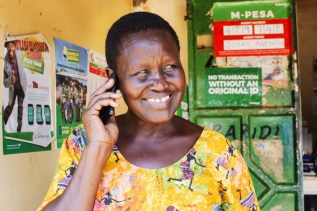 Deadline: 08-Feb-2018 at 11:59:59 PM (Eastern Time – Washington D.C.)
Objective: IFC would like to conduct a private sector gender analysis in three countries – Democratic Republic of Congo, Cote DIvoire and Mozambique. This work will interrogate the role of the private sector in enabling equal opportunities for women to participate in economic development and the gaps thereof. In doing so, it shall consider various gender dimensions in relation to the private sector. These diagnostics will feed into the design of a private sector focused multi-year, multi-sectoral gender program to be led by IFC.
Infrastructure & Africa’s development—the PPP imperative
Africa is a continent rich in natural resources and boasts a large young, ambitious, and entrepreneurial-minded population. Harnessed properly, these endowments and advantages could usher in a period of sustained economic growth and increased well-being for all Africans. However, a lack of modern infrastructure is a major challenge to Africa’s economic development and constitutes a significant impediment to the achievement of the Sustainable Development Goals.


You must be logged in to post a comment.