
The World Bank’s new Procurement Framework, approved by the Board on July 21,  2015, modernizes the procurement policy and maximizes the strategic role of procurement in achieving key development effectiveness goals.
Mandatory for all new lending operations after July 1, 2016, the new Framework emphasizes choice, quality, and greater value for public spending, while enabling adaptation to country contexts.
Please visit the links below to access either the old Policy, Procedures and Guidelines or the new Policy and Regulations.
Projects Prior to July 1 2016 Projects After July 1, 2016
With the new Framework, the World Bank aims to maximize the strategic role of procurement in achieving development effectiveness goals by:
- Recognizing that countries are looking to be more efficient in their public spending so that they can invest more in basic public services such as education, health and infrastructure services and enrich development outcomes.
- Modernizing procurement to emphasize fit-for-purpose, choice, quality, and greater value for public spending, while enabling adaptation to country contexts.
Promoting strengthened national procurement systems that are empowered to support sustainable development objectives. - Increasing transparency in public spending by taking advantage of ICT tools in public procurement.
 Accounting and Valuation of Ecosystems (WAVES). The WAVES GPP promotes implementation of natural capital accounting (NCA) following UN Statistical Division (UNSD)s 2012 Standard for System of Environmental Economic Accounting (SEEA 2012). Indonesia WAVES Program development objective is to strengthen the capacity of Government of Indonesia to regularly and systematically (i) implement NCA, and (ii) use the developed accounts in policy analysis in natural assets utilization and development planning. WAVES Program will provide technical assistance support to achieve the programs intermediate outcomes and increase capacity to compile, understand, and use NCA to inform development planning.
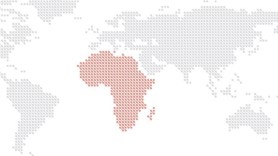 institutions that support growth and poverty reduction in Africa shows some progress for a few countries but flat or deteriorating scores for the majority, according to a new World Bank Review.
 estimates of gross national income (GNI) per capita for the previous year is revised. As of 1 July 2016, low-income economies are defined as those with a GNI per capita, calculated using the
 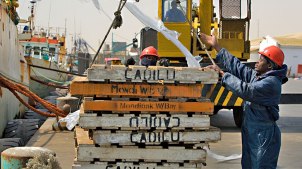 Germany meet the quality standards of global logistics operators, compared to only 40% in Bolivia? Or that importing goods into Georgia requires traders to deal with just one agency, but in Madagascar, traders must deal with 10?
 India is the world’s largest producer as well as consumer of milk and milk products. India nevertheless faces a shortage of milk and milk products due to increasing demand from the fast growing middle class in the country.

You must be logged in to post a comment.