Deltares and the World Bank: examples of close collaboration in the Philippines

Deltares is a leading independent institute for applied research and high-end consultancy, operating worldwide in the field of water and subsurface. More than 800 specialists develop innovative insights to make living safe, sustainable and economically successful. Through many collaborative missions, seminars and projects Deltares shares its breakthroughs on Flood Risk Management, Environment, Water and Subsoil Resources, Delta Infrastructure, Adaptive Delta Planning and advanced Software Products with the World Bank.

Through the Water Partnership Program (WPP, a joint partnership between the World Bank and the Governments of the Netherlands) Deltares has supported the World Bank in the Philippines by providing technical assistance on dredging operations in river basins, developing advanced flood inundation models (using Lidar datasets) meanwhile capacitating local engineers in advanced modeling techniques. Another project included a coastal engineering study to prevent flooding in Manila and carrying out detailed assessments on upgrading of pumping stations in Manila.
Continue reading

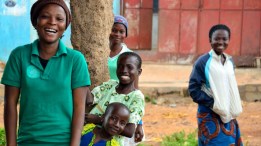
MTV Shuga Soap Opera Turns Edutainment into a Tool to Fight HIV and Gender-Based Violence

  • A study in Nigeria finds that young people who watched MTV Shuga were twice as mtv-feature-story-family-picture-780x439likely to get an HIV test.
  • Chlamydia infections dropped by 58% among women.
  • The show is an example of “edutainment” – the use of mass media to educate people and promote positive behavior change

Continue reading

How to test water quality? Here are some low-cost, low-tech options

Sustainable Development Goal 6 (SDG6) calls for “universal and equitable access to safe waterand affordable drinking water” by 2030, which is quite different from access to an “improved” water source, which has been our primary focus with the Millennium Development Goals. This makes water quality monitoring essential: how can we assess progress towards #SDG6 without knowing whether water is safe to drink?

Continue reading

Better Agriculture Regulations Could Help Feed World’s Growing Population, Says WBG Report

WASHINGTON, February 7, 2017 –Improving agriculture regulations in low and middleland-administration-page income countries could go a long way toward feeding the world’s growing population and improving farmers’ livelihoods around the world, says the latest edition of the World Bank Group’s Enabling the Business of Agriculture (EBA) 2017 report, released today.
The report argues that, while many countries are already home to strong, commercially-oriented agriculture, more needs to be done, for example, by lowering transaction costs for farmers and firms engaged in domestic trade and exports, by improving water permit systems for irrigation, or by providing better conditions for microfinance institutions. Smart regulations that ensure safety and quality control while avoiding burdensome and inefficient requirements are highlighted in the report as good practices that governments may wish to consider as part of their reform efforts.

Continue reading

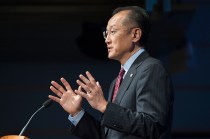
Education for Growth and Prosperity: A Keynote Speech by President Jim Yong Kim

World Bank Group President Jim Yong KimWorld Government Summit, Dubai, United Jim Kim SpeechArab Emirates

Good afternoon, your Excellencies, distinguished guests, ladies and gentlemen.

I am grateful to the people of the United Arab Emirates and to His Highness Sheikh Mohammed bin Rashid Al Maktoum for inviting me again to this year’s World Government Summit.

I can’t think of a more fitting place than Dubai to give this speech.

Continue reading

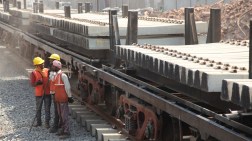
Green Signal for Faster Development: India’s New Freight Corridor

STORY HIGHLIGHTSin-edfreightcorridor3
  • India’s Dedicated Freight Corridor (DFC) program is building dedicated freight-only railway lines along highly congested transport corridors.
  • The World Bank is supporting India’s Eastern DFC from Ludhiana to Kolkata in three phases.
  • Freight-only corridors will make it cheaper, faster, and more reliable to move goods between the industrial heartland in the north and ports on the eastern and western coasts.

Continue reading

Chickens don’t use toilets: Why we should deal with animal feces for better sanitation

­

<!– <!– /sites/all/themes/blogs/templates/header/js/jquery-1.4.4.min.js –>Those who have tried toilet training a pet dog or cat know that it is a difficult proposition.

Raising poultry

How about toilet training a flock of 30 chickens?

“Why would I want to?” Because in poor countries, chickens are everywhere, they are pooping wherever they want, and chicken feces is dangerous for young children.

Continue reading

WBG Corporate Procurement Presentation

On Wednesday, January 25th, 2017 the World Bank Group corporate proci-love-procurementurement team held a information session webinar. The webinar was used to explain the updates, changes and to answer any questions about corporate procurement at the World Bank. We have attached the presentation and included contact information.

WBG Corporate Procurement Information Session Presentation

Website: www.worldbank.org/corporateprocurement

General questions email: gprocurement@worldbank.org

eConsultant2 questions: wbgeconsultant@worldbank.org


Grantee Interview: Making Energy Subsidy Reforms Work for Women and Men

Sophia Georgieva, Social Development Specialist in the Europe and Central Asia region, was the ufge-interviewee-3lead author of the UFGE-funded study Toward Gender-Informed Energy Subsidy Reforms: Findings from Qualitative Studies in Europe and Central Asia. The report presents findings from eight countries on women’s coping strategies and challenges in interacting with public institutions in the face of rising energy costs. The study’s methodology has also been translated into a toolkit to provide a step-by-step guide to conducting qualitative assessments and stakeholder analyses to look more deeply into households’, individuals’, and group’s specific circumstances to better understand impacts on their lives and factors that drive their attitudes and decisions affected by energy policy decisions. Building on this work, Ms. Georgieva is contributing to the global Energy Subsidy Reform Assessment Framework, leading its component on qualitative research tools.  

Other interesting reports:

Voices of Europe and Central Asia: New Insights on Shared Prosperity and Jobs

Gender innovation lab: EMPOWERING GIRLS TRIGGERS THEIR BROTHERS TO COMPETE

Continue reading