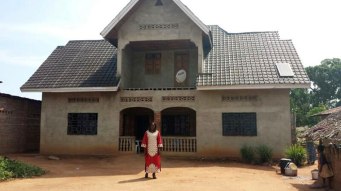
Investing in Institutional, Human and Social Capital to Build Morocco’s Future

STORY HIGHLIGHTS Moroccan flag over Djemaa El Fna Square in Marrakech, Morocco
  • The Morocco Economic Memorandum 2017 builds on the Kingdom’s assets to propose an ambitious albeit realistic pathway to achieving upper middle-income status in the next 25 years.
  • Promoting a more open and inclusive society is one of the key pathways Morocco must take to achieve stronger economic growth, enhance job creation, and gradually close the development gap with more advanced countries.
  • The Memorandum also seeks to address the issue raised by His Majesty, King Mohammed VI, in his 2014 Throne Speech on how intangible capital could become the “fundamental criterion in the development of public policies so that all Moroccans may benefit from their country’s wealth”.
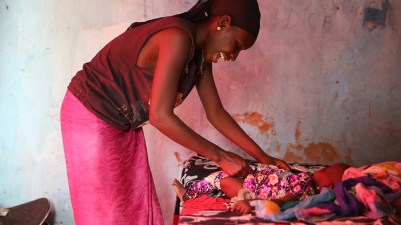
In Senegal, a New Approach to Nutrition Drops Childhood Stunting

Ndeye Ngom is a first-time mother in Senegal’s Fatick region, 150 kilometers southeast of scale-1000x1000Dakar, the capital city of Senegal. And like any parent, upon hearing the news that her daughter, 9-month-old Khady Faye, was underweight, Ndeye grew immediately worried. “I panicked when they told me the baby is malnourished,” Ndeye remembers. “This is not a disease we know.”

Continue reading

eC2:Cross-Cutting Advisory Solutions Clean Energy & Resource Efficiency Unit Strategy Consultant

Deadline: 24-May-2017 at 11:59:59 PM (Eastern Time – Washington D.C.) medical-appointment-doctor-healthcare-clinic-health-hospital-medicine[7]

The World Bank, in consultation with the M&E Unit of the Punjab Social Protection Authority (PSPA), is seeking to hire a Consultant to prepare and conduct two highly technical impact evaluations for each of pilot intervention: (i) The Punjab Health and Nutrition CCT (H&N CCT), and (ii) the Punjab Youth Employment Pilot (PYEP).

Continue reading

Innovating for Growth in Latin America

STORY HIGHLIGHTSpsd-peru-students-780

  • The World Bank Group is helping countries across Latin America improve their policies and programs to encourage innovation.
  • To become competitive in global markets, companies need to adopt new technologies and better management practices.
  • Universities and the private sector are opening the lines of communication to align research with business and broader societal needs.

Continue reading

After 20 Years of Isolation, Congolese Cities and Urban Centers Experience a Revival

STORY HIGHLIGHTScd-reconnecting-cities-and-conurbations-isolated-for-more-than-20-years-feature-780x439

  • Much of the Democratic Republic of Congo’s vast territory is poorly connected.
  • For many such as Christine Monga, a businesswoman in Buta, communication between Kinshasa, the capital, and other provincial cities is challenging with access to rural areas near impossible.
  • To address this situation, the International Development Association (IDA) is financing the Pro-Routes Project that has already rehabilitated over 2,400 kilometers of priority roads.

Continue reading

eC2: Senior Water Efficiency Expert

Deadline: 31-May-2017 at 11:59:59 PM (Eastern Time – Washington D.C.) water

International Finance Corporation (IFC), through its Advisory Services in Europe and Central Asia (ECA) implements the ECA Energy and Water Solutions for Corporates program. The Program delivers IFC services in energy and resource efficiency area via two components: (1) firm level advisory engagements and (2) market/sector-level activities with groups of firms. The Program is looking to hire an individual short-term consultant senior technical expert – to strengthen the Program teams technical expertise in water efficiency.The consultant is expected to provide technical input in delivering individual client engagements and sector-level activities.
Continue reading

Lagging lands, violent lands

Today, over 2 billion people live in lagging and violent lands with the processes ofeconomic isolation and violence closely linked. In Africa, close to 600 million people live within 90 minutes of violence. The issue of “lagging lands, violent lands” was examined at a World Bank seminar on April 22. The session focused on identifying options for stimulating sustainable and inclusive economic growth in lagging lands and urban spaces to bridge economic and social divisions and mitigate conflict and human vulnerability. An integrated policy framework combining the main thrusts of the World Development Report (WDR) 2009 on Reshaping Economic Geography and the WDR 2011 on Conflict, Security, and Development was at the core of diagnosing challenges and identifying solutions.
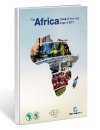
Competitiveness Boost Urgently Needed to Meet Africa’s Demographic Challenges

DURBAN, South Africa, May 4, 2017—Without urgent action to address stagnating psd-africa-competitiveness-report-2017-levels of competitiveness, Africa’s economies will not create enough jobs for the young people entering the job market, according to a report released today. If current policies remain unchanged, fewer than one-quarter of the 450 million new jobs needed in Africa in the next 20 years will be created.

Continue reading

Moving Away from Humanitarian Appeals to Managing Droughts in Ethiopia

STORY HIGHLIGHTSafr-moving-away-from-humanitarian-appeals-to-managing-droughts-in-ethiopia-feature-780x439.jpg
  • The World Bank has approved another $100 million for a program in Ethiopia that focuses on long-term practical measures to prevent famine.
  • Despite these measures, this year’s widespread drought in the Horn of Africa has badly affected Afar and Somali pastoralists in eastern Ethiopia.
  • Ethiopia routinely supports people during prolonged droughts like this one, but has issued an appeal for international aid this year.

Continue reading

eC2: Support to Reforms and Governance in the Health Sector in Ukraine Consulting services: Independent Anticorruption Capacity Development and Monitoring for the SPIH project

Deadline: 12-May-2017 at 11:59:59 PM (Eastern Time – Washington D.C.) medical-appointment-doctor-healthcare-clinic-health-hospital-medicine[7]

Independent Anticorruption Capacity Development and Monitoring for the SPIH project

The preference will be given to local NGOs or consortiums of NGOs and non-for-profit organizations, but participation from other types of organizations is not limited.

Continue reading