eC2:SUPPORT TO WATER SECTOR REFORM IN ANGOLA THROUGH A PUBLIC-PRIVATE PARTNERSHIP TRANSACTION IN CABINDA

Deadline: 05-Jul-2017 at 11:59:59 PM (Eastern Time – Washington D.C.) water

The assignment is to assist the Government of Angola in defining the options and the strategy for structuring a Public-Private Partnership (PPP) in the province of Cabinda.

The expected results of the activity are to:

(i) Draw Lessons from Other PPPs in the Water Sector in Angola;

(ii) Undertake an assessment of Cabinda water utility operations;

(iii) Carry out a stakeholder engagement analysis;

(iv) Prepare options and strategy for structuring a PPP scheme in Cabinda;

(v) Support the preparation of the preferred PPP project option; and

(vi) Provide lessons learning and capacity building support

Continue reading

As Natural Disasters Rise, Countries Call for Action on Resilient Crisis Recovery Planning

STORY HIGHLIGHTSvn-communitybased-disasterrisk-780x439
  • Each year, natural disasters, compounded by climate change and conflict, cause more than $500 billion in losses
  • Yet governments, supported by the World Bank, increasingly understand that investing in disaster recovery enables them to “build back better”
  • The international community sees the World Reconstruction Conference (WRC3) as a call to action on recovery to make countries even more resilient to disasters

Follow up: Webinar on “How to Complain?”

Thursday June 8, 2017 from 08:00am – 10:00am Washington, DC , the World Bank held a indexPrivate Sector Webinar on “How to Complain”.

We attended the webinar and have included the Complaint Webinar PowerPoint Presentation and the Complaint guidance document.

Description

The 2016 Procurement Framework has enhanced the mechanism for handling of procurement-related complaints. The enhancements are aimed at providing fair, timely and meaningful relief to complainants while avoiding undue delays and disruptions to project implementation.


The webinar was conducted by the following staff:

  • Diomedes Berroa, Lead Specialist
  • Belita Manka, Senior Counsel Registration.

Join the World Bank Cities Boomerang Challenge!

Can you make a #Loop4Dev?

Ever notice how cities can really encapsulate many of the things that make life Afbeeldingsresultaat voor instagram logoenjoyable? Green spaces to enjoy the outdoors, access to jobs, affordable housing for all, a well-connected public transportation system, access to healthy food, schools for all children, and so on. Some cities achieve this better than others, but creating a city that works for all of its citizens can be a challenge for governments and communities alike.

Why? Let’s look at some numbers: Up to 1 billion people living in slums in the cities of the world are in need of better services; Cities consume 2/3 of the world’s energy and account for 70% of greenhouse gas emissions; 66 out of 100 people will live in cities by 2050, which tells us the global population is becoming increasingly urban.

Global Growth Set to Strengthen to 2.7 percent as Outlook Brightens

WASHINGTON, June 4, 2017— The World Bank forecasts that global economic growthWorld Bank building will strengthen to 2.7 percent in 2017 as a pickup in manufacturing and trade, rising market confidence, and stabilizing commodity prices allow growth to resume in commodity-exporting emerging market and developing economies.
According to the World Bank’s June 2017 Global Economic Prospects, growth in advanced economies is expected to accelerate to 1.9 percent in 2017, which will also benefit the trading partners of these countries. Global financing conditions remain favorable and commodity prices have stabilized. Against this improving international backdrop, growth in emerging market and developing economies as a whole will pick up to 4.1 percent this year from 3.5 percent in 2016.

Continue reading

Urban Transport Program Helps Keep Kabul Clean

STORY HIGHLIGHTSKUTEI (Kabul Urban Transport Effciency Improvment)
  • Improved drainage is one of the many benefits of a newly rebuilt main road in Kabul.
  • Commuters and residents alike are benefiting from the improved traffic flow, clean environment, and safer traffic conditions as a result of the reconstruction project by Kabul Municipality under the Kabul Urban Transport Efficiency Improvement Project.
  • The main road is one of six that have been resurfaced to improve road conditions, transport, and access in the capital city.


Continue reading

Youth Gain Information and Communication Skills to Improve Afghanistan’s Future

STORY HIGHLIGHTS AFG-ICTMay25.jpg
  • Young men and women interested in information and communication technology (ICT) are being identified and trained to meet the coming needs of the ICT sector in Afghanistan.
  • The training is part of the plan under the Afghanistan ICT Sector Development Project to encourage start-ups, innovation, and use of technology.
  • The project, implemented by the Ministry of Communication, Information and Technology, supports the overall development of the ICT sector in Afghanistan.

Continue reading

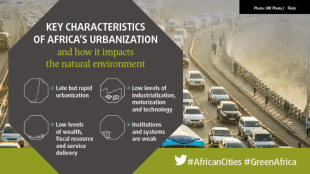
Changing the Environmental Trajectory to Build Sustainable Cities in Africa

STORY HIGHLIGHTS scale-750x750.png

  • A fast urbanizing Africa is rapidly degrading the natural capital of its cities. Unique features of Africa’s urbanization – such as substantially lower per capita incomes, high reliance on biomass fuels, extensive informal settlement with poor service levels, and the exposure of cities to environmental disasters, such as floods – are putting pressure on African cities’ natural environment and eroding the value of environmental assets
  • As a result, there is a significant risk that Africa’s cities may become locked into a “grow dirty now, clean up later” development path that may be irreversible, costly, inefficient, and reducing citizen’s welfare
  • However, there are important opportunities to change the trajectory that African cities are on, and to move toward a more harmonious relationship between the natural and built environments through green urban development policies


Continue reading