
In many countries, women walk over six kilometers to collect water. Between 2006 and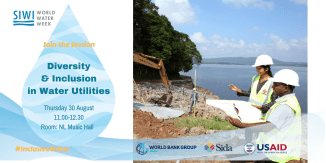 2012 in Niger, women traveled an hour, on average, to fetch water. Worldwide, 4.5 billion people lack access to safely managed sanitation services and 2.1 billion people lack access to safe drinking water services.
Category Archives: WBG News & Reports
What lessons for social protection from universal health coverage?
It’s not so long since the days when speaking of ‘universal health coverage’ used to ![medical-appointment-doctor-healthcare-clinic-health-hospital-medicine[7]](https://nl4worldbank.org/wp-content/uploads/2015/09/medical-appointment-doctor-healthcare-clinic-health-hospital-medicine7.jpg?w=180&h=120) provoke shockwaves. Happily, the principle that “… everyone having access to the health care they need without suffering financial hardship” is now widely recognized and documented. And although few countries have achieved this goal in practice, it is clearly within reach, including in low-income countries like Rwanda.
provoke shockwaves. Happily, the principle that “… everyone having access to the health care they need without suffering financial hardship” is now widely recognized and documented. And although few countries have achieved this goal in practice, it is clearly within reach, including in low-income countries like Rwanda.
Social protection seems to be on a similar trajectory, with universality now enshrined in commitments and declarations. Yet the provision of universal social protection (USP) is hotly contested — take the debates around Universal Basic Income and Employment Guarantee Programs.
From Parts to Products: Why Trade Logistics Matter
STORY HIGHLIGHTS
- The sixth edition of Connecting to Compete reveals a persistent gap between high-income and low-income countries on logistics performance. High-income countries score, on average, 48% better on logistics than low-income countries.
- Logistics relates to how efficiently countries can move physical goods across and within borders. A country’s performance in this area can determine how it participates in international markets.
- Emerging trends in logistics include eco-friendly logistics options, labor shortages in both developed and developing countries, and preparedness for cyber threats.
The ripple effects of war: How violence can persist after formal peace is declared
When I first visited the Democratic Republic of the Congo in 2007 as a public health 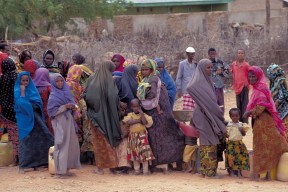 researcher, I was trying to understand the complex issue of how young men get recruited into rebel groups in war-torn regions of central Africa. What I learned was both surprising and heartbreaking: a person who experienced war violence as a child could be more likely to engage in conflict as a young adult. Young men who had experienced extreme war violence in their past would often state this as a reason to take up arms. Even more tragically, these same young men would often struggle to reintegrate peacefully into their communities when hostilities ended. The violence they had experienced their whole lives through war persisted within their homes and communities even when formal peace was declared.
4 education trends countries everywhere should know about
Recently, we reached out to education experts around the world to hear what they  considered the most pressing issues facing our sector today. Surprisingly, they all said that little has changed in terms of our most common challenges. What was changing, they agreed, were the innovative ways that the global community has begun tackling them.
Our discussions frequently came back to advances in neuroscience, Massive Open Online Courses (MOOCs), Blockchain, and the consequences of negative population growth — as well as the ways that these phenomena are changing and challenging the way we think about education. Some of these changes have received more attention than others, but we are convinced of their importance — and education stakeholders around the world should be paying attention.
World Water Week 2018
World Water Week in Stockholm is the annual focal point for the globe’s water issues.  Experts, practitioners, decision-makers, business innovators and young professionals from a range of sectors and countries come to Stockholm to network, exchange ideas, foster new thinking and develop solutions to the most pressing water-related challenges of today.
The World Bank Group will convene and participate in several sessions of World Water Week 2018, taking place from August 26-31. Below are a list of World Bank Group (co)-convened sessions and sessions with World Bank Group participating speakers. You can also follow along via Twitter using #wwweek.
Please also find a list of World Bank Group participants.
Will you be employed? Skills demanded by the changing nature of work
In 1997, Garry Kasparov, one of the greatest chess players in history, lost a chess match  to a supercomputer called Deep Blue. Some years later Kasparov developed “advanced chess,” where a human and a computer team up to play against another human and computer. This mutation of chess is mutually beneficial: the human player has access to the computer’s ability to calculate moves, while the computer benefits from human intuition.
This is the future of work – not just machines replacing humans but also machines augmenting humans. The future is: Human & Machine.
Investing in People to Build Human Capital
Scientific and technological advances are transforming lives: they are even helping 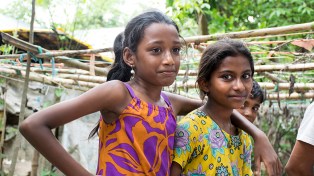 poorer countries close the gap with rich countries in life expectancy. But, poorer countries still face tremendous challenges, as almost a quarter of children under five are malnourished, and 60 percent of primary school students are failing to achieve even a rudimentary education. In fact, more than 260 million children and youth in poorer countries are receiving no education at all.
Investing in People to Build Human Capital
Scientific and technological advances are transforming lives: they are even helping  poorer countries close the gap with rich countries in life expectancy. But, poorer countries still face tremendous challenges, as almost a quarter of children under five are malnourished, and 60 percent of primary school students are failing to achieve even a rudimentary education. In fact, more than 260 million children and youth in poorer countries are receiving no education at all.
There is a moral case to be made, of course, for investing in the health and education of all people. But there is an economic one as well: to be ready to compete and thrive in a rapidly changing environment. “Human capital” – the potential of individuals – is going to be the most important long-term investment any country can make for its people’s future prosperity and quality of life.
Toward Great Dhaka: Seize the golden opportunity
Had you looked across Shanghai’s Huangpu River from west to east in the 1980s, you  would mostly have seen farmland dotted with a few scattered buildings. At the time, it was unimaginable that East Shanghai, or Pudong, would one day become a global financial centre; that its futuristic skyline, sleek expressways, and rapid trains would one day be showcased in blockbusters like James Bond and Mission Impossible movies! It was also unimaginable that the Shanghainese would consider living in Pudong.
How wrong that would have been! Pudong is now hosting some of the world’s most productive companies, and boosting some of the city’s most desirable neighbourhoods. And Shanghai has become China’s most important global city, lifting the entire hinterland with it.
 Netherlands for the World Bank
You must be logged in to post a comment.