eC2: Next generation drought index conceptual study

Deadline: 09-Jan-2019 at 11:59:59 PM (Eastern Time – Washington D.C.) water

Assignment Description

The proposed study consists in taking stock of current existing datasets and technologies, identifying their potential and limitations and enhancing or developing new, robust index or set of indicators specifically for crop insurance (or financial) applications. Latest satellite technology will in particular be explored.

Continue reading

eC2: FLOOD RISK AND COASTAL ASSESSMENT OF THE TOCUMEN RIVER

Deadline: 20-Dec-2018 at 11:59:59 PM (Eastern Time – Washington D.C.)Bangladeshi villagers repair a vital flood-protecting embankment

This consultancy assignment focuses on the carrying out of a comprehensive flood and coastal risk assessment for the Tapia and Tocumen River basins. The flood hazard and risk analysis should provide information that could help inform urban planning, including options for identifying areas unsuitable for urban expansion. It is important to note that this work will produce a general overview assessment of flood risk and an analysis of risk mitigation options. Further detailed site-specific analysis will be conducted by the country authorities when determining specific vulnerability, risk and mitigation actions, as well as cost estimate as and when they decide to pursue further action.

Continue reading

eC2: Development of a generic damage evaluation and claims management platform for disaster-related losses – Conceptual development project with applications to Indonesia, Morocco, Philippines and Vietnam

Deadline: 27-Dec-2018 at 11:59:59 PM (Eastern Time – Washington D.C.) 29098244797_4d265740f6_k

The World Bank through the action of the Disaster Risk Financing and Insurance Program (DRFIP) team supports a number of countries in their efforts to understand and to manage the risks and costs of natural disasters.
In order to anticipate needs for damage assessment and claims management systems, the World Bank DRFIP is now exploring the development of a comprehensive claims management platform, which would consist in a generic framework for damage and loss assessment, and claims handling, processing and monitoring, illustrated through four country case studies (Indonesia, Morocco, Philippines and Vietnam).

Continue reading

eC2: Hydro-economic Modeling and Analysis to Inform River Basin Planning and Investment in Bangladesh

Deadline: 17-Dec-2018 at 11:59:59 PM (Eastern Time – Washington D.C.) water

The Water Global Practice (Water GP) in the South and South East Asia region (Water for SEA) of the World Bank is working on the Bangladesh Water Platform and Strategy Development, which involves both analytical and partnership efforts. The objective of this World Bank activity is to: develop a medium-term strategic framework for the World Bank to assist Bangladesh achieve enhanced GDP growth and human capital development through effective water sector management via adaptive delta management (ADM) approach, and establish a mechanism to lead and coordinate investment and knowledge activities with all the Bank GPs that carry out water or water-related lending projects, diagnostic/analytical work, or policy advice work. Part of the analytical work includes conducting Hydro-economic Modeling and Analysis to Inform River Basin Planning and Investment in Bangladesh. The consultancy objectives and activities are twofold: (1) Undertake national-level analysis; and (2) Undertake River Basin Planning (RBP) and Investment analyses for the Jamuna River.

Continue reading

eC2: Development of Gender Strategies and Action Plans for ECOWAS, ECCAS and SADC under the Building Resilience to Natural Hazards in Sub-Saharan African Regions, Countries and Communities Program

Deadline: 24-Dec-2018 at 11:59:59 PM (Eastern Time – Washington D.C.) vn-communitybased-disasterrisk-780x439

The Bank is seeking the services of a firm to carry out activities for the inclusive preparation of Gender Strategy and Action Plans (GSAPs) for the following Regional Economic Communities (RECs): The Economic Community of West African States (ECOWAS); The Economic Community for Central African States (ECCAS); and The Southern African Development Community (SADC). They have expressed the need for support for developing comprehensive and effective guidelines for mainstreaming gender considerations into disaster risk management policies, plans of action and programs. Tasks include preparation of individual Inception Reports for each REC; gender analysis and stakeholder consultations; REC-level discussions and feedback events; and finalization of customized Gender Strategies and Action Plans in Disaster Risk Management for each REC.

Continue reading

eC2: Preparation of Drought Risk Mitigation Investment Plan for Sindh Province

Deadline: 18-Dec-2018 at 11:59:59 PM (Eastern Time – Washington D.C.) bf-hauling-water-on-bike-cifor-flickr

The main objective of this study is to prepare a drought mitigation investment plan informed by a comprehensive assessment of climate induced drought risks for Sindh province. Identification of drought prone areas at regional and local scales as well as adaptive and mitigation interventions will be recommended based on scientific drought assessment. Along with other methods, this study will explore the remote sensing potential in terms of data and methods in order to quantify drought and assess drought features. Satellite data driven quantitative and spatio-temporal approach will be investigated for the development of the study resulting in data that could be used for generating climate change scenarios through the Global Climate Change Model.

Continue reading

eC2: Financing Options Analysis for the ASEAN Rolling Pipeline of Priority Infrastructure Projects

Deadline: 31-Dec-2018 at 11:59:59 PM (Eastern Time – Washington D.C.)

To enhance connectivity and attract more public and private investments for
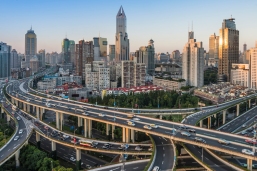
modern city with highway interchangeinfrastructure in ASEAN, MPAC 2025 recommended the establishment of a rolling priority pipeline list of potential ASEAN infrastructure projects and sources of funds.

The Initial Pipeline consists of 16-20 projects submitted by the ASEAN Member States and selected and prioritized by the World Bank based on a screening and scoring process assessing key project factors such as strategic relevance, impact on regional connectivity, environmental and social impact, project feasibility, and the contracting agency’s implementation capacity.

In the next phase, the World Bank will undertake a financing options analysis of each of the projects in the Initial Pipeline to determine the best procurement option for the project i.e., to determine whether the project should be publicly funded, privately financed or funded/financed through a Public Private Partnership. Where a project already has a robust and recently conducted pre-feasibility or feasibility study, the information and data required to undertake such analysis should already be available. However, for those projects that do not have such a study available, it will be necessary to undertake the relevant studies and review.

Continue reading

eC2: Port Community System

Deadline: 13-Dec-2018 at 11:59:59 PM (Eastern Time – Washington D.C.) general-transport-mosaic-main

The Macroeconomics, Trade and Investment (IFC MTI) Global Practice of the World Bank Group is seeking the services of an experienced consultant (the firm) individual or firm to support the PNSW initiative by conducting a Situation Analysis of the logistics and international supply chain related activities taking place at the ports (including airports seaports , off-dock terminals as well as inland dry ports and land border crossing points selected by the Client)in collaboration with the relevant regulatory authorities (Customs, Ministry of Ports and Shipping, Civil Aviation Authority, Karachi Port Trust, NLC, Pakistan Railways etc.) and private sector operators, collectively referred to in this document as the Stakeholders.

Continue reading

eC2: Enabling Environment and Development of PPP Framework in Urban Sanitation

Deadline: 20-Dec-2018 at 11:59:59 PM (Eastern Time – Washington D.C.)

The Water supply and sanitation subsector is among the focus areas that the Federal untitledDemocratic Republic of Ethiopia (FDRE) has considered among the pro poor sectors. With this understanding the World Bank is extending its support through different interventions. The World Bank Group is supporting the Federal Democratic Republic of Ethiopia to achieve its national targets set under GTP II through availing resources to different sectors and sub sectors.
One of the major interventions of the World Bank is the support extended to improve the services delivery in Addis Ababa and 22 secondary towns under the Second Urban Water Supply and Sanitation Project (SUWSSP). Implementation of the project is an opportunity to improve sanitation services delivery and water supply in Addis Ababa and in the secondary and regional towns. This project is a logical continuation of the Ethiopian Urban Water Supply and Sanitation project which was closed in December 2017. Unlike the prior projects the SUWSSP has a wider perspective of reaching different segment of the community by adopting City Wide Inclusive Sanitation (CWIS) approach. The model provides opportunity to start with understanding the context, planning for cost effective solution, and consultation with end users. Except Addis Ababa, all project beneficiary towns had limited experience of delivering sanitation focused project and their current staffing for sanitation is also limited.
The SUWSSP has three major components (i) Addis Ababa sanitation and operational efficiency improvement, (ii) Secondary cities and towns sanitation, water supply, and operational efficiency improvement, and (iii) Program management (Federal and regional level). The first two components further divided into three sub-components focusing on sanitation services improvement, water utilities performance improvement and utility modernization and institutional capacity strengthening.

Continue reading