eC2: Achieving Energy Access through Off-Grid Solar: The Use of Public Funding

Deadline: 22-Apr-2020 at 11:59:59 PM (Eastern Time – Washington D.C.)Solar-street-lights-in-Guinea1
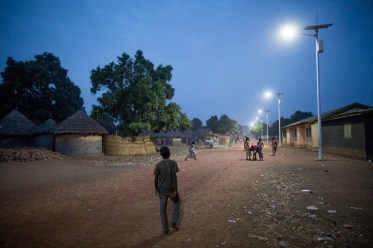
The World Bank Group under the Lighting Global Team is seeking to hire a firm to support the publication of a working paper that will provide in-depth technical advice and guidance regarding different ways in which public funding can be deployed to support uptake of off-grid solar. Based on case studies and key informant interviews with development professionals and public officials, it will identify the advantages, disadvantages, risks and opportunities involved in each approach. The paper will present, two broad categories of public funding mechanisms supply side and demand side. The main public funding mechanisms to be presented in the working paper are expected to include: tax exemptions, grants, RBF, concessional financing, credit guarantees, and various demand-side subsidies. The key deliverable will be critical inputs to the working paper itself., working closely with the Lighting Global team.
Continue reading

eC2: Waste Management Sector including Marine Plastics Debris Sources Deep Dive Study for selected Eastern Caribbean countries.

Deadline: 20-Apr-2020 at 11:59:59 PM (Eastern Time – Washington D.C.) index

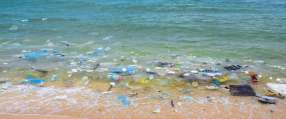
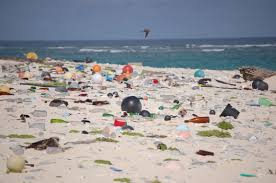
Assessment to further understand the sources of solid waste/marine litter in the Caribbean region and to provide a comprehensive picture of marine pollution at national and regional levels. The assessment will help inform policy makers to protect their valuable coastal and marine natural capital and to obtain the full benefits of a Blue Economy. The selected firm will carry out the following activities: (i)Solid Waste and Sewage Waste Sectors rapid assessment/roadmap for selected countries;(ii) Diagnostic of plastic management inventory in OECS countries; and (iii) Assessment of plastics abatement policies, investments, and regional solutions. Contract with selected firm is expected to be signed by May 1, 2020. Services are expected to be carried out between May 2020 and October 2020.

Continue reading

eC2: Actuarial modelling of financial losses from Flood Risk in Morocco

Deadline:  30-Mar-2020 at 11:59:59 PM (Eastern Time – Washington D.C.)floods

The World Bank DRFIP framework aims to strengthen the capacity of governments to take informed decisions on disaster risk finance, based on sound financial/actuarial analysis and to support stakeholders with better risk information for financial resilience. To support Morocco’s Solidarity Fund and more broadly other World Bank clients in need for actuarial modelling of financial contingent liability, the DRFIP seeks to develop a flood risk model for the Moroccan territory (which could eventually be reused to other countries or contexts). This model should allow the estimate of the probabilistic loss distribution for various risk categories or protection scheme beneficiaries, for Morocco as a whole (ground up losses), as well as for FSEC specifically.

Continue reading

eC2: Strengths and limitations of satellite-derived soil moisture for drought risk financing

Deadline:  25-Mar-2020 at 11:59:59 PM (Eastern Time – Washington D.C.) afr-moving-away-from-humanitarian-appeals-to-managing-droughts-in-ethiopia-feature-780x439

The main objective of this project is to support World Bank Crisis & Disaster Risk Finance activities in the area of anticipatory and/or parametric climate risk financing with tailored data- and research-driven approaches applied to promising satellite-derived datasets that have so far not been considered for operational purposes. In the context of the Next Generation Drought Index project, the World Banks Disaster Risk Financing and Insurance program is developing a technical toolbox to guide users at both micro and macro level through the entire process of data selection, index design, calibration, validation and related methods to strengthen sensitivity analysis and historical skill analysis. There is scientific evidence about the added-value of satellite-derived soil moisture products to close critical gaps between rainfall anomalies and the response of the land surface. However, a quantitative and qualitative analysis in 2-3 specific areas of interest is required to identify and explain the individual strengths and limitations of different products that may differ in sensor technology (radar/radiometer/combined), method (remote sensing vs. data assimilation), output variable (surface or root-zone soil moisture, soil moisture-based rainfall estimations), timeliness (annual updates vs. NRT products), revisit period (depending on area of interest) and spatial resolution (<1 km to >25 km). Since anticipatory financing mechanisms that decouple insurance payouts from loss assessments are a priority, the work on soil moisture products should highlight the potential predictive skill of various datasets, whereas the integration of both publicly available and, if available, commercial products in the analysis is encouraged.

Continue reading

eC2: Key Factors for Successful Development of Offshore Wind in Emerging Markets

Deadline: 26-Mar-2020 at 11:59:59 PM (Eastern Time – Washington D.C.)

index

The scope of the assignment shall cover the major topics that need to be considered by policymakers and regulators when establishing a new market for offshore wind development. These shall include, but not be limited to, the following points:

Continue reading

eC2: Strategic Assessment of Solid Waste Management Services and Systems with a focus on Plastic Waste and Marine Litter

Deadline: 26-Mar-2020 at 11:59:59 PM (Eastern Time – Washington D.C.) eu-plastic-regels-2019

Objective of this assignment is to develop at a coherent state level strategy/roadmap for municipal waste/plastic waste comprising institutional,policy/regulatory & investment interventions required for improving solid waste management services in cities.Firm is expected to conduct a strategic assessment of SWM services,policies/regulations & institutional systems in partner state of Karnataka with a focus on plastic waste as part of municipal solid waste.The assessment will be carried out in two parts(i)an overall review of sector status of State across the entire value chain under National Missions,including institutional,policy & regulatory framework,financial resources & technical capacity,private sector engagement;(ii)in-depth diagnostics of twenty emerging cities(ten in each state)to assess service & infrastructure gaps,institutional arrangement,financial situation,to propose policy & institutional reforms as well as investments, interventions to address short&long term needs.

Continue reading

eC2: SRL-IFC Advisory-Sierra Leone Agricultural Initiative

Deadline: 23-Mar-2020 at 11:59:59 PM (Eastern Time – Washington D.C.) Florinda

The objective of this assignment is to improve the livelihoods of at least 150 households through improved agriculture (technical and commercial) and household practices (i.e. use of assets, family budgeting, nutrition, gender equity, etc.) and develop access to improved technical know-how by building capacity of 40 lead farmers that will share knowledge of improved technical practices with their peers.

Continue reading

eC2: Natural Hazard Assessment for the Reconstruction of Critical Transport Infrastructure

Deadline: 23-Mar-2020 at 11:59:59 PM (Eastern Time – Washington D.C.)

The World Bank provides technical assistance to the Government of Myanmar to support maldives-blog-hart1technical solutions for Chin State by hiring an international consulting firm to prepare a hazard and vulnerability assessment for road rehabilitation to inform planned investments under the Myanmar Floods and Landslides Emergency Recovery Project in Chin State in Myanmar. The overall objective of the assignment is to contribute to the increase of capacities of the relevant ministries and agencies of the Government of Myanmar in the adoption of appropriate natural hazard assessment approaches in designing transport and infrastructure. The activity will (i) help provide technical solutions on geohazards specifically for Kalay Hakha road, based on an assessment of hazards; (ii) draw out lessons along the above process, including data gaps and recommend technical and monitoring solutions for improvement; (iii) and provide capacity building for the Ministry of Construction on this practice. The assignment is expected to be completed within the period of an estimated six months upon mobilization.

Continue reading

eC2: Women Startup/Acceleration Program in High-tech Sector

Deadline: 16-Mar-2020 at 11:59:59 PM (Eastern Time – Washington D.C.)

WBGs Advisory Project aims to design and deliver startup/acceleration program for afghanistan-school-gender-girlscompetitively selected women-owned SMEs in high-tech sector in three regions. It will consist of a mix of individual and group mentoring, coaching and technical advisory aimed to improve business skills, investment readiness, and soft skills (negotiation, confidence, pitching, and so on) of beneficiaries as well as access to larger business networks and funding. The program will also include a series of networking events, aimed at expanding women-owned SMEs linkages to financial institutions and new business networks. Particular focus will be placed on creating links between women-owned SMEs and (1) financial institutions to address accessing to finance constraints; and (2) large firms/corporates to facilitate women integration in supply chains and access to business networks. The expected impact is the improved performance of women entrepreneurs in terms of revenue, funding obtained, jobs created.

Continue reading

eC2: TechEmerge Health East Africa Program

Deadline: 19-Mar-2020 at 11:59:59 PM (Eastern Time – Washington D.C.)

IFC is seeking a consulting firm to provide support on Component 4, specifically to maternal-and-child-healthcare-shofco-dec18-4489support the pilot implementation phase of the TechEmerge Health East Africa program.

It is estimated that there may be around 15+ pilot projects supported under the program, with East African healthcare providers working with shortlisted Innovators to pilot new technologies that can improve their reach, operations, healthcare delivery and/or patient outcomes. The majority of Providers participating in the program are in Kenya, however, it is expected that there will be a few pilots implemented in Uganda and Ethiopia, supporting the Providers that are participating from those markets.

Continue reading