
 The news headlines are grim. A male pilot whale dies on a Thai beach having swallowed 80 plastics bags; images of turtles stuck in six-pack plastic rings; a sad photo of a tiny seahorse clinging to a plastic ear-bud goes viral. Plastic products wash up daily on beaches worldwide –from Indonesia to coastal west Africa, and waterways in cities are increasingly clogged with plastic waste.
Continue reading
Author Archives: NL4WorldBank

eC2: Design support for developing a Farmer Loyalty Program
Deadline: 25-Jun-2018 at 11:59:59 PM (Eastern Time – Washington D.C.) 
The International Finance Corporation (IFC), in collaboration with its global partners – Bayer AG, Netafim and Swiss Re – launched the Better Life Farming Alliance (BLFA) in April 2018. The objective of BLFA is to support smallholders sustainably improve farm yields and incomes and improve their lives. India is one of the countries covered under the BLFA where two projects are under implementation – in Uttar Pradesh and Jharkhand – for smallholder farm yield improvements. IFC and the BLFA partners are interested in developing a farmer loyalty program such that there are incentives or benefits for farmers to continue to engage with the BLFA partners. The farmer loyalty program should have a clear business rationale for the BLFA partners, as well as clear and articulated value for the farmers who choose to engage in BLFA projects. IFC is planning to recruit a specialized firm to design the farmer loyalty program for a pilot deployment with India BLFA farmers with potential to scale-up.
eC2: Natural Hazard Assessment for the Reconstruction of Critical Transport Infrastructure
Deadline: 21-Jun-2018 at 11:59:59 PM (Eastern Time – Washington D.C.)
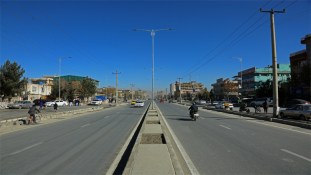
The World Bank provides technical assistance to the Government of Myanmar to support technical solutions for Chin State by hiring an international consulting firm to prepare a hazard and vulnerability assessment for road rehabilitation to inform planned investments under the Myanmar Floods and Landslides Emergency Recovery Project in Chin State in Myanmar. The overall objective of the assignment is to contribute to the increase of capacities of the relevant ministries and agencies of the Government of Myanmar in the adoption of appropriate natural hazard assessment approaches in designing transport and infrastructure. The activity will (i) help provide technical solutions on geohazards specifically for Kalay Hakha road; (ii) draw out lessons along the above process, including data gaps and recommend solutions for improvement; (iii) and provide capacity building for the Ministry of Construction on this practice. The assignment is expected to be completed within the period of an estimated six months upon mobilization.
eC2: BEY Airport – Technical Consultant
 Deadline: 21-Jun-2018 at 11:59:59 PM (Eastern Time – Washington D.C.)
IFC PPP Transaction Advisory has been retained by the Lebanons High Council for Privatization and PPP (HCP) to act as lead advisor on attracting private investment through a Public-Private Partnership for the expansion of the Rafic Hariri International Airport (BEY Airport). IFC will provide advisory services to HCP to engage the private sector to optimize the operations of the existing facilities of the BEY Airport in order to solve the current capacity constraints, as well as operate and maintain the airside and landside facilities. The future operator shall also develop new facilities through a phased approach over the term of the contract to cope with the forecasted increase in passenger traffic and cargo over the next few decades.
eC2: Myanmar Distributed Generation Scoping Study
Deadline: 28-Jun-2018 at 11:59:59 PM (Eastern Time – Washington D.C.) 
The International Finance Corporation (IFC) is seeking consultancy services to undertake an analysis of the current market and key barriers for distributed clean power generation solutions in Myanmar. This study will primarily focus on the potential for distributed PV solutions providing power to clients on a commercially viable scale, including both grid-connected and off-grid facilities. In particular, it should focus on the market for commercial and industrial customers, rather than minigrids or other residential applications. The result of this study will be an overview of the commercial and regulatory environment for these types of projects, and the potential business models that would be viable in the Myanmar context; as well as a market mapping of the main companies active in this space in Myanmar and potential customers that could serve as a pipeline of projects for suppliers and investors in the future.
eC2: NATIONAL HEALTH FACILITY SURVEY (NHFS) IN NIGERIA
Deadline: 20-Jun-2018 at 11:59:59 PM (Eastern Time – Washington D.C.)
The consultant will conduct facility surveys at primary health facilities and referral secondary hospitals using the methodology approved by the World Bank in the selected sample facilities. These surveys will be in approximately 3,300 randomly selected facilities in total, with a minimum of 90 facilities in each of the 36 states and the FCT. The survey instrument comprises 5 modules. The survey firm will work with World Bank Consultants and FMOH staff to review the survey instruments, training materials and field manual; program electronic devices for data collection; deploy trained enumerators and supervisors for field work using CAPI; provide supervision and oversight over data entry and ensure compliance with quality standards; produce full clean database of the survey information; and full report and presentation summarizing the results using an agreed outline.
Newsletter June 2018: A Sustainable Future
 We are excited to bring you the June 2018 edition of the NL4WorldBank newsletter, A Sustainable Future which was published the on the 7th of June.
In this edition we feature a story about the Institute for Future of Living which signed an MoU with the World Bank India. The goal of this partnership is to create a strong partnership to support global Smart City development in conjunction with implementing the Sustainable Development Goals of the United Nations.
Gains in Financial Inclusion, Gains for a Sustainable World
 Mary Banda in Zambia runs a small restaurant in one of Lusaka’s oldest markets. Before she learned that financial services could make the way she did business easier, her profits were low. But today, her profits have increased, both because she banks her money and because she uses mobile money transfer services.
Using financial services has simplified managing her business and increased profits. And business proceeds now pay her children’s school fees.
eC2: Developing a Unitary Human Resources Management System within the Public Administration in Romania

Deadline: 18-Jun-2018 at 11:59:59 PM (Eastern Time – Washington D.C.)
As part of the baseline diagnostic exercise and initial stakeholder exercise, a survey will be conducted with the aim of examining factors that influence HRM, and the attitudes and experiences of employees. In particular, the survey will focus on issues that are priority areas of reform for the government (e.g. the recruitment process, competencies, and performance management). The data collected through the survey will allow to investigate the main HRM issues that the public administration is currently facing through quantitative and qualitative analyses.
Building safer, more inclusive, and more resilient cities
Cities are where most people live and most economic activity takes place. Cities bring opportunities, but not equally for all residents. A lack of access, rights, and opportunities for people within cities undermines the positive role cities can play. 


You must be logged in to post a comment.