
Deadline: 30-May-2018 at 11:59:59 PM (Eastern Time – Washington D.C.) 
IFC seeks to procure a firm to research the business case for gender-lens investing for private equity (PE)and venture capital (VC)funds in emerging markets. Gender-lens investing, the use of gender as a category of analysis in investment decision making, is relatively small, but the market for integrating gender into the investment selection process is growing in both size and sophistication. Women are heavily under-represented when it comes to PE fund managers, angel and VC investors, and as fund investees. Yet, we also know that financial performance of companies is correlated to gender diversity. Limited representation of women may be hurting fund performance portfolios. PE/VC funds play a critical role in enterprise growth, job creation, innovation, and financial security and can play a catalytic role in closing economic participation gaps between men and women. The research will support IFC efforts to close gender gaps in access to jobs and assets.
 It is broadly understood that public-private partnerships (PPP) are a procurement tool that encompass design, financing, construction and long-term operation of a public infrastructure by the private sector. They can be cost-effective thanks to adequate risk transfer and performance criteria, and help bridge Africa’s large infrastructure gap in many sectors.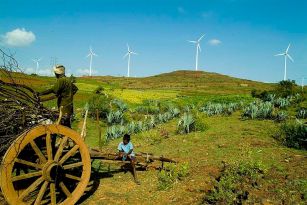
 Deadline: 24-May-2018 at 11:59:59 PM (Eastern Time – Washington D.C.)
 regardless of your background? The ability to move up the income ladder, both in one’s lifetime and with respect to one’s parents, matters for fighting poverty, reducing inequality, and even for boosting growth. Yet, mobility has stalled in recent years in large parts of the world, with the prospects of too many people across the world still too closely tied to their parents’ social status rather than their own potential, according to the findings of a new World Bank report launched today. Mobility is also much lower, on the average, in developing economies than in high-income economies. The developing world accounts for 46 of the bottom 50 economies in terms of mobility in education from the bottom to the top.
 Deadline: 21-May-2018 at 11:59:59 PM (Eastern Time – Washington D.C.)
 power, storage capacity, and access to knowledge — foreshadowing stunning possibilities.
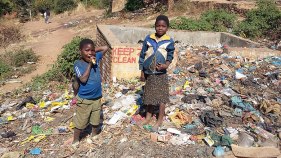 Malawi, a small country in Africa, has a population of over 18 million. According to World Bank estimates, Malawi had 52.2% of the total population between 15 and 64 years as of the beginning of 2017. However, Malawi has a high level of unemployment among the productive population which is largely composed of young people.
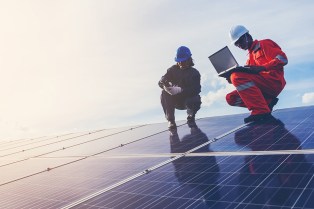 There are many drivers of climate change, but few would disagree that energy infrastructure built according to “business-as-usual” standards is a major one. Meeting the lofty goals set at the 2015 Paris Climate Accords requires powering our homes, businesses, and government agencies with a cleaner mix of energy that includes more renewable sources. It also requires promoting standards that encourage energy efficiency—for example, for appliances or building codes—as a low-cost and high-impact way to reduce greenhouse gas (GHG) emissions.
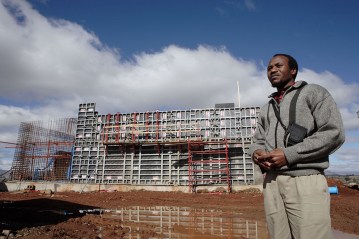
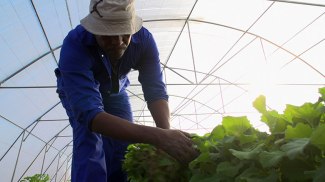 I met Thabo Lefatle on a cold winter day in Lesotho. We – a team from the World Bank Communications Department – had driven an hour and a half south of the capital Maseru to get to his farm. As we traveled through different parts of the small mountainous kingdom, we met several farmers to find out exactly how the Smallholder Agriculture Development Project (SADP) impacted their lives.
 Netherlands for the World Bank
You must be logged in to post a comment.