“Waste not, want not.” This old saying rings so true today, as global leaders and local communities alike increasingly call for a fix for the so-called “throwaway culture.” But beyond individuals and households, waste also represents a broader challenge that affects human health and livelihoods, the environment, and prosperity.
And with over 90% of waste openly dumped or burned in low-income countries, it is the poor and most vulnerable who are disproportionately affected.
In recent years, landslides of waste dumps have buried homes and people under piles of waste. And it is the poorest who often live near waste dumps and power their city’s recycling system through waste picking, leaving them susceptible to serious health repercussions.
Continue reading →


![medical-appointment-doctor-healthcare-clinic-health-hospital-medicine[7]](https://nl4worldbank.org/wp-content/uploads/2015/09/medical-appointment-doctor-healthcare-clinic-health-hospital-medicine7.jpg?w=219&h=146)

 that hosts energy data provided by the WBG and other development partners) to develop new apps to respond to existing and upcoming needs from our clients, the private sector, and key development partners, and also consolidate those apps already developed and provide a more standardized user experience. ESMAP proposes to issue a new Master Agreement contract covering the development of new apps, consolidation of existing apps, curation of new and existing datasets, user interface improvements and routine maintenance of the ENERGYDATA site and all its current and future subdomains.
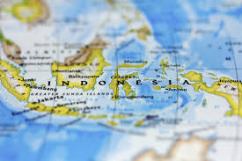 flood risk management and investment needs in Indonesia. This technical assignment will assist with the development of a conceptual framework design for a national urban flood risk reduction investment program, which could comprise risk reduction investments, technical capacity building, knowledge sharing, and innovation generation. The key output will be a conceptual framework and sustainable implementation model for the proposed program that addresses the identified needs through proposed financial and organizational arrangements; makes recommendations for any needed regulatory/institutional/financial arrangements; and propose an overall action plan and timeline to put the program into effect. The team will be expected to provide technical advice on public financial management, municipal finance, disaster risk management, flood risk management, and urban development.
 seven participating cities in the Mekong Delta under World Bank SUUP Project to incorporate green infrastructure principles to urban planning and infrastructure design. Main tasks include review of Vietnamese legal and regulatory framework on green infrastructure design and development, assessing baseline and needs in the cities, sharing global experiences, review and advising on detailed infrastructure design, preparation of design guidelines, providing training, and recommendations of incorporating green infrastructure principles and design into various city plans and regulations.
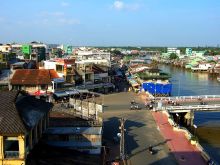 seven participating cities in the Mekong Delta under World Bank SUUP Project to incorporate universal accessibility to urban planning and infrastructure design. Main tasks include review of Vietnamese legal and regulatory framework on universally accessible infrastructure design and development, assessing baseline and needs in the cities, sharing global experiences, review and advising on detailed infrastructure design, preparation of design guidelines, providing training, and recommendations of incorporating universally accessible infrastructure principles and design into various city plans and regulations.
 goal of ending poverty by 2030 and pointing to the need for increased pro-poor investments, the World Bank finds.
 Netherlands for the World Bank
You must be logged in to post a comment.