
Deadline: 29-May-2018 at 11:59:59 PM (Eastern Time – Washington D.C.) 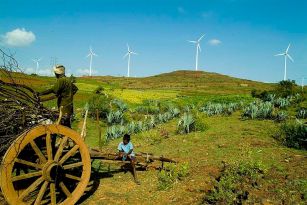
IFC seeks to hire the services of consulting firm to design an online, publicly available, one-stop information hub for the off-grid energy space in Zambia, of relevance to a range of off-grid technologies and business models. The portal will provide information on Zambia’s off-grid opportunity (including GIS and other data); policy and regulatory environment, including permitting and licensing processes, the tariff framework, applicable standards and specifications; financing and support options; and procurement of off-grid solutions. IFC does not intend to host the information hub over the long-term, but will develop and transfer the hub to the appropriate governmental agency in Zambia to manage and update the information hub on a regular basis to ensure that it remains relevant and accurate.
 Deadline: 24-May-2018 at 11:59:59 PM (Eastern Time – Washington D.C.)
 regardless of your background? The ability to move up the income ladder, both in one’s lifetime and with respect to one’s parents, matters for fighting poverty, reducing inequality, and even for boosting growth. Yet, mobility has stalled in recent years in large parts of the world, with the prospects of too many people across the world still too closely tied to their parents’ social status rather than their own potential, according to the findings of a new World Bank report launched today. Mobility is also much lower, on the average, in developing economies than in high-income economies. The developing world accounts for 46 of the bottom 50 economies in terms of mobility in education from the bottom to the top.
 Deadline: 21-May-2018 at 11:59:59 PM (Eastern Time – Washington D.C.)
 power, storage capacity, and access to knowledge — foreshadowing stunning possibilities.
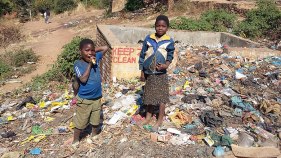 Malawi, a small country in Africa, has a population of over 18 million. According to World Bank estimates, Malawi had 52.2% of the total population between 15 and 64 years as of the beginning of 2017. However, Malawi has a high level of unemployment among the productive population which is largely composed of young people.
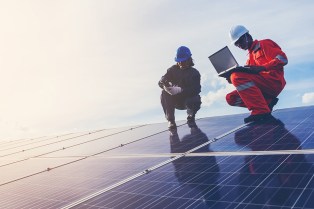 There are many drivers of climate change, but few would disagree that energy infrastructure built according to “business-as-usual” standards is a major one. Meeting the lofty goals set at the 2015 Paris Climate Accords requires powering our homes, businesses, and government agencies with a cleaner mix of energy that includes more renewable sources. It also requires promoting standards that encourage energy efficiency—for example, for appliances or building codes—as a low-cost and high-impact way to reduce greenhouse gas (GHG) emissions.
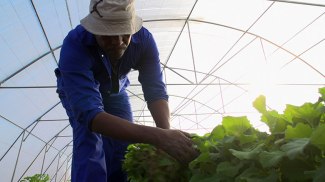 I met Thabo Lefatle on a cold winter day in Lesotho. We – a team from the World Bank Communications Department – had driven an hour and a half south of the capital Maseru to get to his farm. As we traveled through different parts of the small mountainous kingdom, we met several farmers to find out exactly how the Smallholder Agriculture Development Project (SADP) impacted their lives.
 A few weeks ago, I felt a sense of déjà vu. I was at a roundtable on agriculture in Delhi, in the same conference hall where, ten years ago, I participated in the consultations on the Bank’s World Development Report 2008 on
 Netherlands for the World Bank
You must be logged in to post a comment.