
Parents are 2.5 times more likely to google “Is my son gifted?” than “Is my daughter  gifted?” A gap like this—in perceptions and expectations—is not new. Myths about ‘gendered’ learning gaps have persisted since at least the Victorian era. Could these be true?
Yearly Archives: 2017
Well-Designed Early Childhood Development Programs Can Pay Big Dividends
STORY HIGHLIGHTS
- 250 million children under the age of five suffer from stunting and extreme poverty.
- The rate of return on investing in a package of nutrition interventions at scale is estimated at 17 percent.
- Well-designed early childhood development programs include a focus on quality, complementarities between interventions, and behavioral change.
Mapping and Valuing Ecosystems Services, and Prioritizing Investments in Select Watersheds in Nepal and Pakistan to support Sustainable Hydropower
Deadline: 20-Apr-2017 at 11:59:59 PM (Eastern Time – Washington D.C.) 
To help Nepal and Pakistan promote smart hydropower development through catchment area management in support of countries green growth strategies, the World Bank is initiating an activity whose main components are to: (i) create awareness and influence among policymakers across energy, water resources, and forestry ministries on the role of catchment area management and PES schemes in promoting sustainable hydropower and as a source of green and inclusive growth; (ii) generating know-how on how integrated catchment area management can promote smart hydropower development and green inclusive growth through (a) the application of ecosystem services-based modeling tools to map and value ecosystem services and to develop cost-effective catchment area management plans in selected catchments; and (iii) strengthen capacity of technical officers to apply catchment area management tools.
Meeting Indonesia’s Urban Sanitation Needs
STORY HIGHLIGHTS
- Indonesia’s rapid urbanization brings challenges to meeting sanitation needs of the urban population.
- Access to improved sanitation facilities, with human excreta hygienically separated from human contact, has increased but 95% of fecal sludge is not treated and contaminates the environment.
- Indonesia is taking a new approach to meet its target of universal sanitation access by 2019.
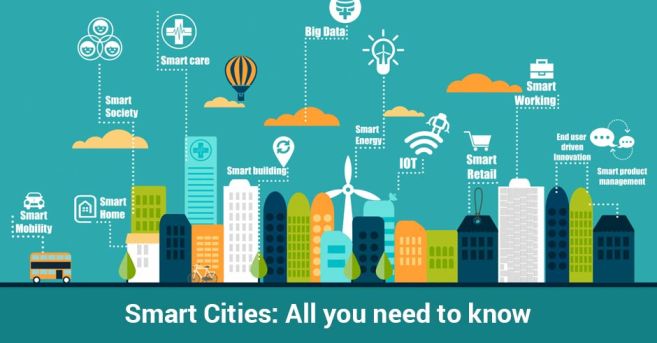
April Smart City Events
Legislation and Laws – General and Sector Specific

The Legal Framework Assessment provides a summary of key areas of a host country’s existing laws that will need to be reviewed when a government embarks on an infrastructure project, particularly one involving the private sector.
Below are summaries and samples of legislation/ specific legislative provisions relevant to infrastructure PPP projects, together with links to legislation that has been enacted in different countries and different sectors to promote private sector involvement in infrastructure PPP projects. It is not an exhaustive set of samples. For further assistance, please contact ppp@worldbank.org .
Global Tracking Framework 2017 – Progress Toward Sustainable Energy
STORY HIGHLIGHTS 
- Pace of progress on sustainable energy goals on energy access, renewable energy and energy efficiency fell short of what is needed to meet global objectives by 2030.
- But in just about every area of sustainable energy, some countries are outperforming the world, indicating that greater policy focus could result in significant payoffs.
- Progress on energy efficiency is gaining momentum, thanks to decreasing intensity of final energy consumption in industry, agriculture, services, and transport.
Enabling the Business of Agriculture
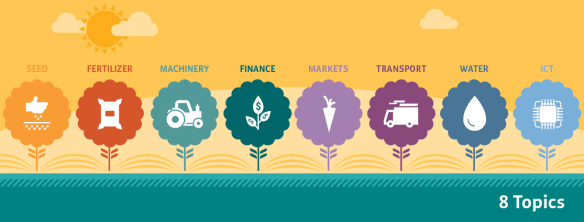 EBA 2017 is the third report in the series, presenting data that measure legal barriers for businesses operating in agriculture in 62 countries and across 12 topic areas. It provides quantitative indicators on regulation for seed, fertilizer, machinery, finance, markets, transport, information and communication technology (ICT), and water. Two overarching themes—gender and environmental sustainability—continue to be included in the report analysis to ensure that the messages developed by EBA encourage inclusive and sustainable practices. This year scoring was piloted for the land topic for 38 countries in which data were collected. The data for the remaining 24 countries will be collected next year and the team will refine the methodology further. EBA also collected data on the livestock topic, focusing on veterinary medicinal products (VMPs).
Read the full report here.
eC2:Afghanistan Energy Study Activity2: Financial, Economic and Community Modality Assessment
Deadline: 04-May-2017 at 11:59:59 PM (Eastern Time – Washington D.C.) 
The study would identify the relative merits of electrification options as measured against social, environmental, technical, financial, economic and operational factors and provide guidance on making electrification choices. The analysis will consider the following:
a. Economic cost-efficiency in delivering electricity using various technologies through a community driven development (CDD) approach;
b. Financial viability and long term sustainability;
c. Other attributes that affect sustainability of these schemes including, functionality and reliability, effectiveness in providing management and operations and maintenance (O&M), cost recovery, environmental (local and global) impacts, and social acceptance, among others;
d. It will characterize risks;
e. The assessment will consider community modalities necessary for electricity supply.
Continue reading
eC2: Assessment of floating PV potential for Pakistan
Deadline: 15-Apr-2017 at 11:59:59 PM (Eastern Time – Washington D.C.)
The International Finance Corporation (IFC), a member of the World Bank Group (WBG), is  seeking a qualified consulting firm to undertake a market assessment of floating PV.
The purpose of the proposed study is twofold: 1. assess the commercial readiness of floating PV in general, as well as the key issues and potential business models; and 2. identify suitable sites in Pakistan.
The proposed terms of reference (TOR) are attached.
 Netherlands for the World Bank
You must be logged in to post a comment.